
- Campaign
- Great Hunt
- Primary target
- Terentateks
- Duration
- 3995–3993 BBY
- Jedi role
- Specialized hunting teams
The Great Sith War ended when Exar Kun was defeated, but the biological products of Sith alchemy did not disappear with their creators. In 3995 BBY, the Jedi Order launched the Great Hunt, a coordinated campaign to locate and destroy terentateks and other dangerous Sithspawn scattered across worlds touched by dark-side activity.
3995 BBY · Legends · Postwar evidence
The Jedi Great Hunt begins
Source-supported history
After the Great Sith War, terentateks and other dangerous Sith-altered creatures survived in places linked to dark-side activity. Jedi relief missions reported disappearances, and the creatures' attacks on Force-sensitive victims led the Order to organize a campaign of hunters in 3995 BBY. The source record gives an institution-wide response rather than a reliable roster of every early team.
Institutions, identity and consequences
The Great Hunt reveals a difference between ending a war against leaders and managing what those leaders have left behind. Dangerous animals created or transformed through Sith practice became a problem involving ecology, safety and political memory. Later hunters' missions took them to Onderon, Tython, Yavin 4, Tatooine, Kashyyyk and Korriban. A claim of total extermination would be misleading because terentateks survived.
Did the Great Hunt permanently eliminate every terentatek?
No. Despite the campaign and its official end in 3993 BBY, remaining terentateks were the subject of a confidential Jedi expedition and later encounters.
Source basis: The New Essential Chronology; Knights of the Old Republic Campaign Guide. Review the publication reference and source trail →. The hero image is original IDS symbolic artwork, not a frame or cover from that source. Specific panels or page references should be checked against the original edition.
The enemy survives as ecology
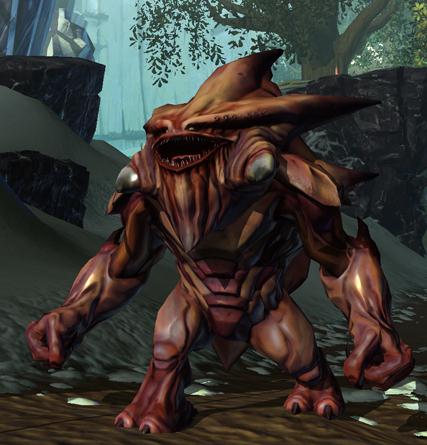
Terentateks were enormous predators associated with dark-side environments and a particular appetite for Force-sensitive prey. They could remain dangerous after the political organization that created or spread them had collapsed.
The Jedi therefore faced a postwar threat that did not negotiate, surrender, or sign treaties.
Jedi form specialized hunting parties
Hunting teams traveled to worlds including Onderon, Tatooine, Kashyyyk, and Korriban. Their missions combined combat skill, tracking, local knowledge, and tolerance for environments saturated with dark-side history.
The campaign created a temporary Jedi subculture organized around hunting rather than diplomacy or ordinary guardianship.
Eradication becomes official policy
The Order treated terentateks as living Sith weapons whose survival represented unacceptable danger. That framing justified extermination rather than containment.
The category matters. Once an organism is defined primarily by the violent purpose of its creators, its status as a living species can become politically invisible.
The Hunt creates its own legends
Jedi who died during later missions became part of the Great Hunt's memory. Duron Qel-Droma, Shaela Nuur, and Guun Han Saresh are remembered partly because later explorers encountered traces of their failed missions.
The Hunt therefore survived in stories, corpses, equipment, and abandoned sites as much as in official reports.
Event sequence
The Jedi organize the Great Hunt.
Terentateks are hunted on Onderon and other worlds.
Operations continue while the Republic rebuilds.
Tatooine cleansing produces an official declaration of victory.
A covert Korriban mission proves surviving terentateks remain.
Explore this entry
Were terentateks natural animals?
Legends ties them strongly to Sith alchemy and dark-side environments. Their exact origins are less consistently described than their use and behavior.
Why were Jedi especially vulnerable?
Terentateks were associated with hunting Force-sensitive beings, making Jedi both the people tasked with eliminating them and unusually attractive prey.
Did the Great Hunt actually eliminate them?
No. The Order declared the campaign complete in 3993 BBY, but surviving terentateks were immediately discovered and later appeared again.
Anthropological assessment
The Great Hunt is an example of postwar classification shaping violence. Labeling a creature 'Sithspawn' makes its origin politically central and can eclipse questions about ecology, behavior, or whether every individual poses the same threat.
The campaign also shows how wars leave biological inheritances. Engineered organisms can persist long after governments fall, creating security problems that no treaty can resolve.
After the Great Sith War / source-critical history
Why a successful war created another kind of campaign
Exar Kun's death and the collapse of his movement did not remove the terentateks left in the galaxy. Jedi assisting with reconstruction encountered attacks by creatures especially dangerous to Force-sensitive people. In 3995 BBY the Order moved from scattered responses to an organized hunting effort. This work required different skills from naval command: specialists had to identify animals in hostile terrain, coordinate small teams and often rely on fragmentary information from residents or earlier travelers.
The Great Hunt's official objective was near eradication of the creatures. Its declaration of success in 3993 BBY would prove premature, and the secret Korriban mission that followed ended in deaths. This distinction matters because the Order was creating a history of its own security policy as the operation unfolded. Announcing that an enemy had been eliminated could encourage the redeployment of Jedi even when hidden threats and uncertain evidence remained.
Did the defeat of Exar Kun automatically kill every terentatek?
No. Terentateks persisted and were the target of a separate two-year Jedi campaign after the Great Sith War.
Primary and reference record: Star Wars: The Old Republic, Galactic History 63; Knights of the Old Republic; Legends Great Hunt account. This is Legends history. Claims about private thoughts, precise unnamed casualties and unsupported sequences are not invented.
Sources and further reading
- Knights of the Old Republic Campaign Guide.
- “Shadows and Light,” Star Wars Tales #23.
- Star Wars: Knights of the Old Republic.