
contract
protection
personhood and care
- Year
- 9 ABY
- Continuity
- Canon
- Location
- Arvala-7 and Nevarro
A bounty becomes an unexpected responsibility
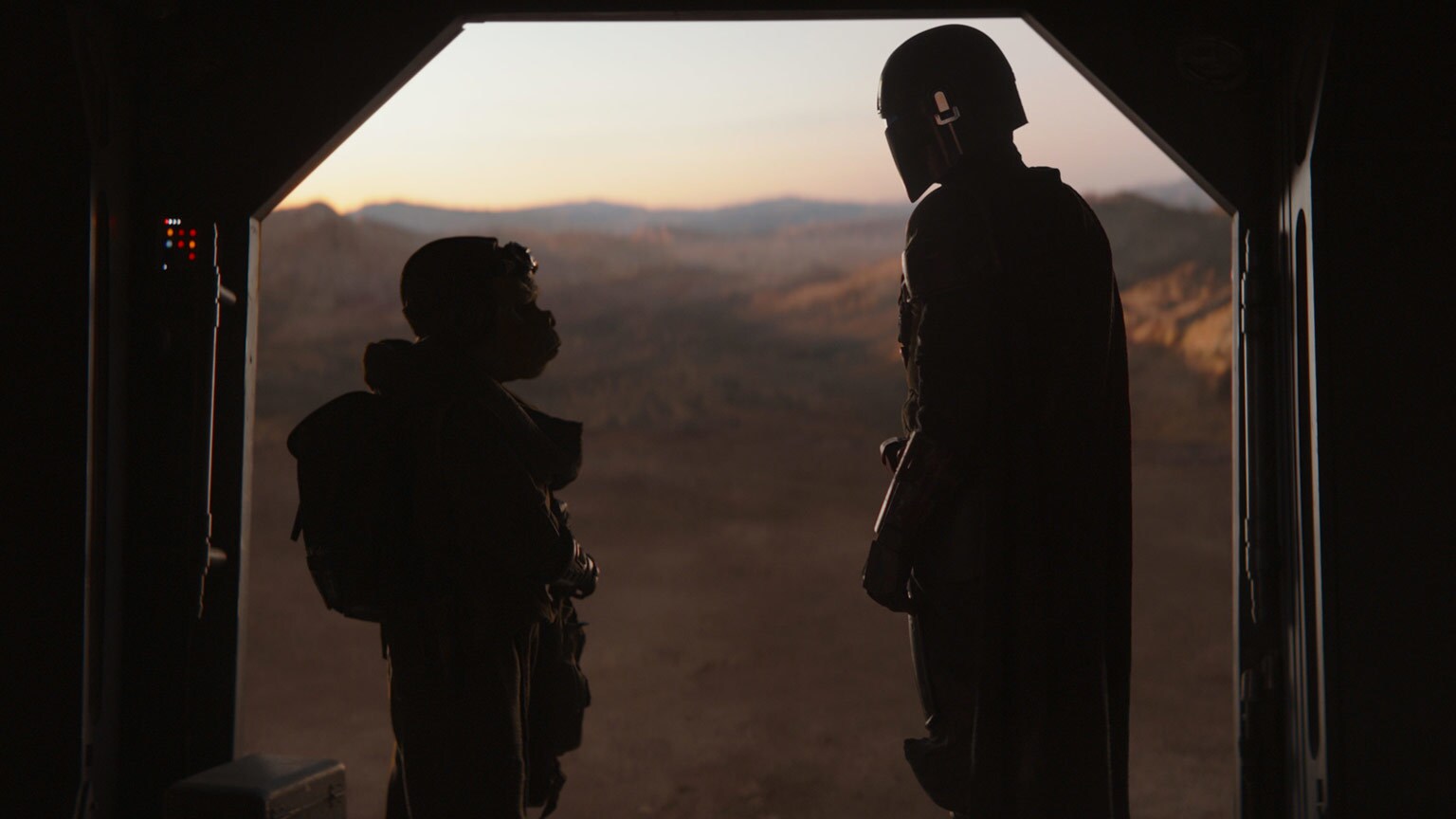
In 9 ABY Din Djarin accepted a mysterious contract connected to surviving Imperial officers. On Arvala-7 he discovered that his target was not an ordinary criminal but a fifty-year-old child of Yoda's species. The assignment put a vulnerable individual within a market that treated living captives as transferable goods.
The choice not to complete the bargain
Din initially delivered Grogu to the Client on Nevarro and received beskar as payment. He then reversed his decision, rescued the child and turned against the bounty hunters' code of enforcing contracts without questioning their consequences.
An Imperial remnant wants the child
Remnant officers sought Grogu because of his unusual Force abilities and biological value. Din's rescue created a continuing conflict with those forces while beginning a relationship that would eventually become a Mandalorian clan of two.
Anthropological assessment
The episode explores the limits of contract obligations when those transactions concern a person. Din reclassifies Grogu from bounty to dependent companion, changing how he understands both professional honor and family responsibility.
Interactive history lab
Did Din receive Grogu as a free gift from his birth family?
No. Din found him while executing a bounty contract and subsequently chose to protect him.
Explore three perspectives:
Protection replaces a bounty contract
Din's Arvala-7 assignment initially treats the unnamed child as a target to be delivered for payment. IG-11 and Din reach the compound, and Din prevents the droid from killing the child. His later return to reclaim Grogu from Imperial-linked clients changes a commercial relationship into a protective commitment.
The child is not an object merely because a client offers money for his capture. Din's actions illustrate how caretaking obligations can arise through choices rather than biological descent. The Mandalorian concept of a foundling becomes relevant to their developing relationship, but Grogu's species does not establish a Mandalorian ethnicity or political allegiance.
Source and chronological limits: This entry follows the Canon story, and the listed year is not an independently established calendar day. Institutional and anthropological claims are editorial analysis. Lucasfilm source and context.
Test your historical judgment
Answer both questions to receive a score, individual explanations and a research takeaway.
Canon · c. 9 ABY · Primary-source investigation
A bounty contract becomes a guardianship
The first three chapters of The Mandalorian establish separate stages that a chronology should not collapse. Din Djarin accepts a job from an enigmatic client associated with the Imperial remnant, travels to Arvala-7, and discovers that the target is a small Force-sensitive child rather than the criminal he may have anticipated. The bounty hunter droid IG-11 is prepared to kill the child; Din prevents the killing. He nevertheless initially delivers the child to the client. Only after observing the consequences of that transaction does he return to take the child away. The initial rescue and the later break with the contract are related choices, not the same event.
The setting matters. Arvala-7 includes a fortified compound, a local helper named Kuiil and a market in captured beings operating beyond effective New Republic protection. Din's bounty-puck instructions do not give the viewer a full legal record of the client's intentions. The official Grogu Databank identifies the Imperial interests pursuing him, but the first episode does not reveal all the later details of Moff Gideon's experiments. A responsible timeline avoids reading subsequent revelations backward as if Din already understood them during his first approach to the compound.
IDS interprets this episode through the tension between a paid contract and responsibility for a dependent person. The child's treatment as an object of exchange is shown; an anthropology of guardianship is a later interpretation of that depiction. The Calodan meeting later clarifies Grogu's identity, while the Imperial cruiser rescue shows how the search for him develops.
Verification: Lucasfilm's Grogu Databank. The named episode is the original story; the official editorial material is a second reference. Cultural interpretations are identified as IDS analysis. The 9 ABY grouping is approximate and does not prove the month or date of this event.
Sources and continuity
The Mandalorian, Chapters 1–3; StarWars.com Grogu Databank. Read more about this event →.