
- Seer
- Krynda Draay
- Year
- 3988 BBY
- Organization
- Jedi Covenant
- Problem
- Ambiguous interpretation
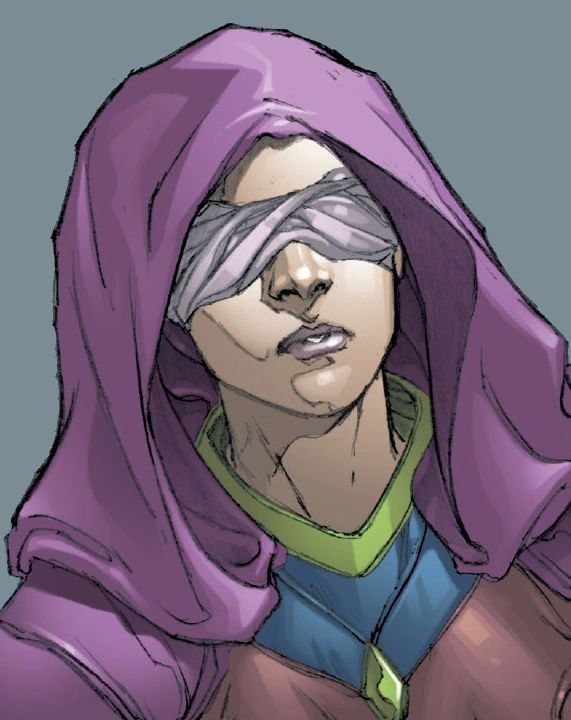
In 3988 BBY, Jedi Master Krynda Draay experienced a Force vision that became known as the Prophecy of the Five. She foresaw five figures associated with light, darkness, mixed allegiance, and isolation, with the warning that what had been built between them would fall. The young Togruta seer Raana Tey overheard the vision.
3988 BBY · Legends · Historical source notes
A prophecy becomes a suspicious person's file
What the record establishes
Krynda Draay experienced a vision of five symbolic figures and a threat to what had been built among them. The images were not a named list of conspirators, and the Togruta Raana Tey heard the prophecy without receiving unambiguous evidence of a future crime. Members of the Jedi Covenant later tried to assign identities to the images and treated their own readings as warnings that demanded action.
People, institutions and interpretation
Prophetic interpretation became an administrative form of risk classification. Because the Covenant was founded to prevent another Sith catastrophe, its members could interpret uncertainty as evidence that surveillance and intervention were urgent. The later tragedy emerged partly from the institution's decision to substitute a prediction for information about what its young members had actually done.
Did Krynda's vision explicitly name five guilty Padawans?
No. It used symbols; the Covenant's later identification of people was an interpretation, not a documented confession.
Source trail: Knights of the Old Republic #24; Jedi Covenant history. Publisher or compiled bibliography →. Printed page details need primary-edition review. Art: original IDS symbolic reconstruction, not a verified comic panel.
Ambiguous language becomes a security framework
The vision did not identify names or specific events.
Covenant members nevertheless used prophetic patterns to guide real-world surveillance and intervention.
Fear of repetition
The Covenant had been founded after the Great Sith War.
Krynda's vision appeared to confirm the organization's assumption that another Sith crisis was inevitable.
A vision does not interpret itself
Krynda's vision used symbolic figures rather than names, dates, or unambiguous instructions. The Covenant nevertheless built later decisions around attempts to identify who those figures represented.
The crucial historical problem is therefore not simply whether the prophecy was 'true.' It is how an institution transformed ambiguous imagery into categories of suspicion and then treated those categories as grounds for action.
Explore this entry
Who were the five figures?
The Covenant spent years trying to map the symbols onto real people. The ambiguity is central to the story, and later members repeatedly misread what the vision required.
Why is prophecy politically dangerous?
Because a forecast about possible future harm can be used to punish people in the present before ordinary evidence exists.
Anthropological assessment
The Prophecy of the Five shows how ambiguous information can acquire authority when institutions already expect danger.
Interpretation becomes political when uncertain visions justify surveillance or coercion.
3988 BBY · Legends · Source audit
The Five: how uncertain visions became categories of suspicion
The event established by the sources
Krynda Draay experienced the Prophecy of the Five in 3988 BBY. Her vision described five figures through symbolic relationships to light and darkness rather than giving a list of criminal names or a confirmed timetable. The young Togruta seer Raana Tey overheard it. In the subsequent history of the Jedi Covenant, the vision became a central piece of evidence for efforts to anticipate another Sith crisis. However, translating symbols into identified suspects was a decision made by interpreters, not information explicitly supplied by the vision itself.
Institutions, culture and power
The case turns on the authority of prediction. A prophecy may carry weight within Jedi religious experience, but an institution still has to decide how to interpret it and whether interpretation justifies coercive action. Members of the Covenant treated uncertainty as an urgent threat to be managed. Their procedures created categories of people whose behavior could be scrutinized before anyone had committed the imagined offense. The later Padawan Massacre of Taris shows the danger of transforming ambiguous expectations into apparent proof of responsibility.
Where the evidence stops
The Covenant was founded before the prophecy, around 3993 BBY. It should not be represented as having been founded in 3988 BBY because of this particular vision. Likewise, the vision's categories are not a confession by the later individuals whom Covenant members thought they recognized.
Check your interpretation: Did Krynda name five guilty Jedi and order their execution in the prophecy?
Correction and insight: No. She saw symbolic figures. The Covenant's later identifications and actions were interpretations, not named evidence in the vision.
Source trail: Star Wars: Knights of the Old Republic 24 (Dark Horse); related Covenant chronology. Source bibliography ↗. Publication-page verification is still required.
Sources and further reading
- Knights of the Old Republic 24.