
- Date
- 29 ABY
- Continuity
- Legends only
- Location
- Zonama Sekot and Ossus
An end to imperial Yuuzhan Vong rule
The Yuuzhan Vong hierarchy collapsed following the defeat of Shimrra and Onimi. Surviving leaders accepted the Sekot Accords and an end to the invasion, while many people of their species traveled to the living world Zonama Sekot.
Peace without uniform blame
The war had involved genocidal conduct, forced displacement and destruction on an enormous scale. Yet the surviving Yuuzhan Vong included workers, Shamed Ones and individuals who had opposed the Supreme Overlord's system. A peace based entirely on inherited collective guilt would risk reproducing the harm it sought to answer.
Luke convenes the New Jedi Order
Luke Skywalker called a Jedi conclave on Zonama Sekot to consider what the Order should become after the conflict. The Jedi debated leadership, ethical responsibilities and their institutional relationship with the Galactic Alliance.
Rebuilding on Ossus
The Jedi Order's future was connected to Ossus and to a renewed effort to operate without repeating its wartime divisions. Reconstructing communities of learners and guardians would require more than restoring a single building or declaring a new set of rules.
Anthropological assessment
The peace settlement distinguishes state accountability from individual belonging. The destruction of a conquering regime does not eliminate the humanity of people raised inside its culture. The Jedi conclave likewise shows an institution examining how its own categories and duties changed through conflict.
Interactive archival analysis
Did the end of the war mean every Yuuzhan Vong was physically eliminated?
No. Surviving Yuuzhan Vong were allowed to seek a different future on Zonama Sekot.
Switch between three interpretive lenses. The response appears immediately below the controls.
Sources and evidence
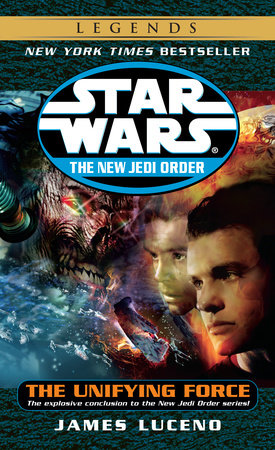
James Luceno, The Unifying Force; Conclave on Zonama Sekot and Sekot Accords, 29 ABY. Read book or source details →. The sociocultural interpretation is independent analysis, not an invented quotation or story scene.