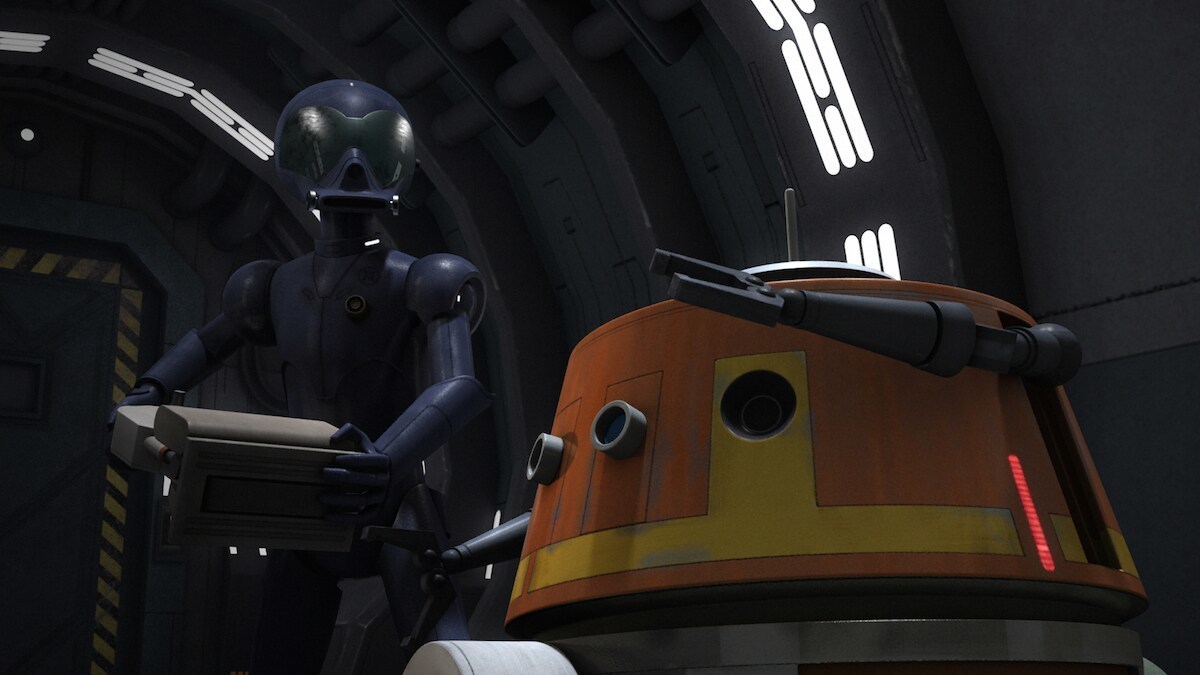
C1-10P, usually called Chopper, is a battered astromech droid who has served Hera Syndulla for decades. Recovered from a downed Y-wing on Ryloth, he becomes Hera's companion and later an essential member of the Ghost crew. His cranky sounds and aggressive improvisation hide a consistent pattern of care: he keeps the ship, the mission, and his people moving.
Chopper's story expands the meaning of rebel labor. Maintenance, slicing, gunnery, infiltration, and sabotage are not secondary tasks beneath the heroic plot. They are the infrastructure that allows a small crew to resist a much larger state.
Character in social context
Chopper enters the archive as a droid whose social position is created through long-term relationship. The technical category astromech explains what he was designed to do, but it does not explain why Hera trusts him, why the crew relies on him, or why his absence would feel like the loss of a family member.
His presence also reveals the hidden labor of rebellion. The Ghost cannot fly, hide, or fight without someone maintaining systems and making fast decisions under pressure. Chopper makes that work visible through a personality that refuses to stay inside the role of obedient equipment.
Formation, training, and social position
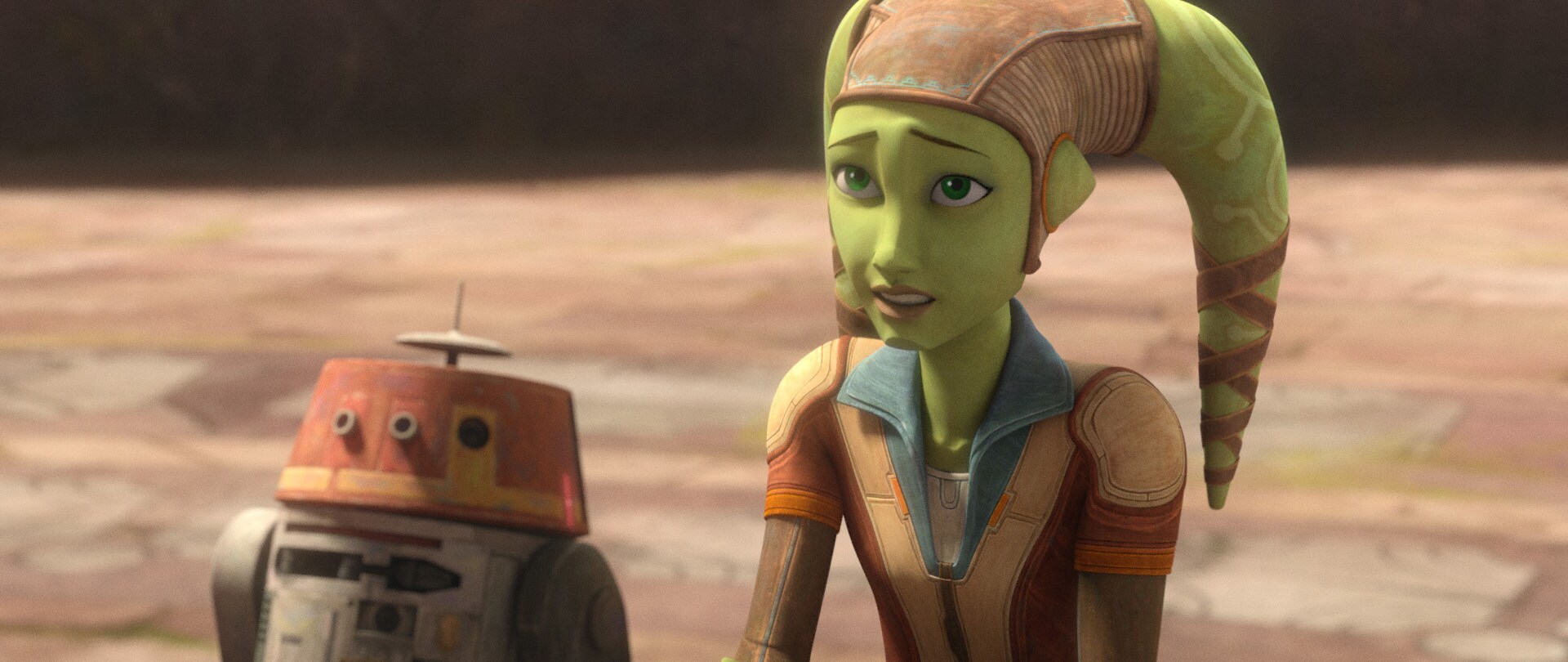
Chopper's formation begins with the Clone Wars-era wreckage from which Hera recovered him. His history is material: a damaged body, a long record of repairs, and accumulated modifications. Service with Hera teaches him a different relationship to command than the standard assumptions attached to military or commercial droids.
He learns through use, improvisation, and attachment rather than a formal academy. The crew's needs become a practical curriculum. Chopper's social position changes because people begin to treat his decisions, preferences, and risks as meaningful rather than as the output of a machine.
Institutions and the distribution of power
The Empire treats droids as tools that can be owned, reprogrammed, searched, or destroyed. Chopper's rebel life exposes the limits of that classification. He can be disguised as Imperial equipment, but he can also exploit the expectations attached to that disguise.
Chopper does not stand outside institutions. He works inside ships, bases, command networks, and repair systems. His power comes from understanding those infrastructures well enough to interrupt them. Slicing, sabotage, and maintenance become political acts because they alter who controls movement and information.
Kinship, community, and belonging
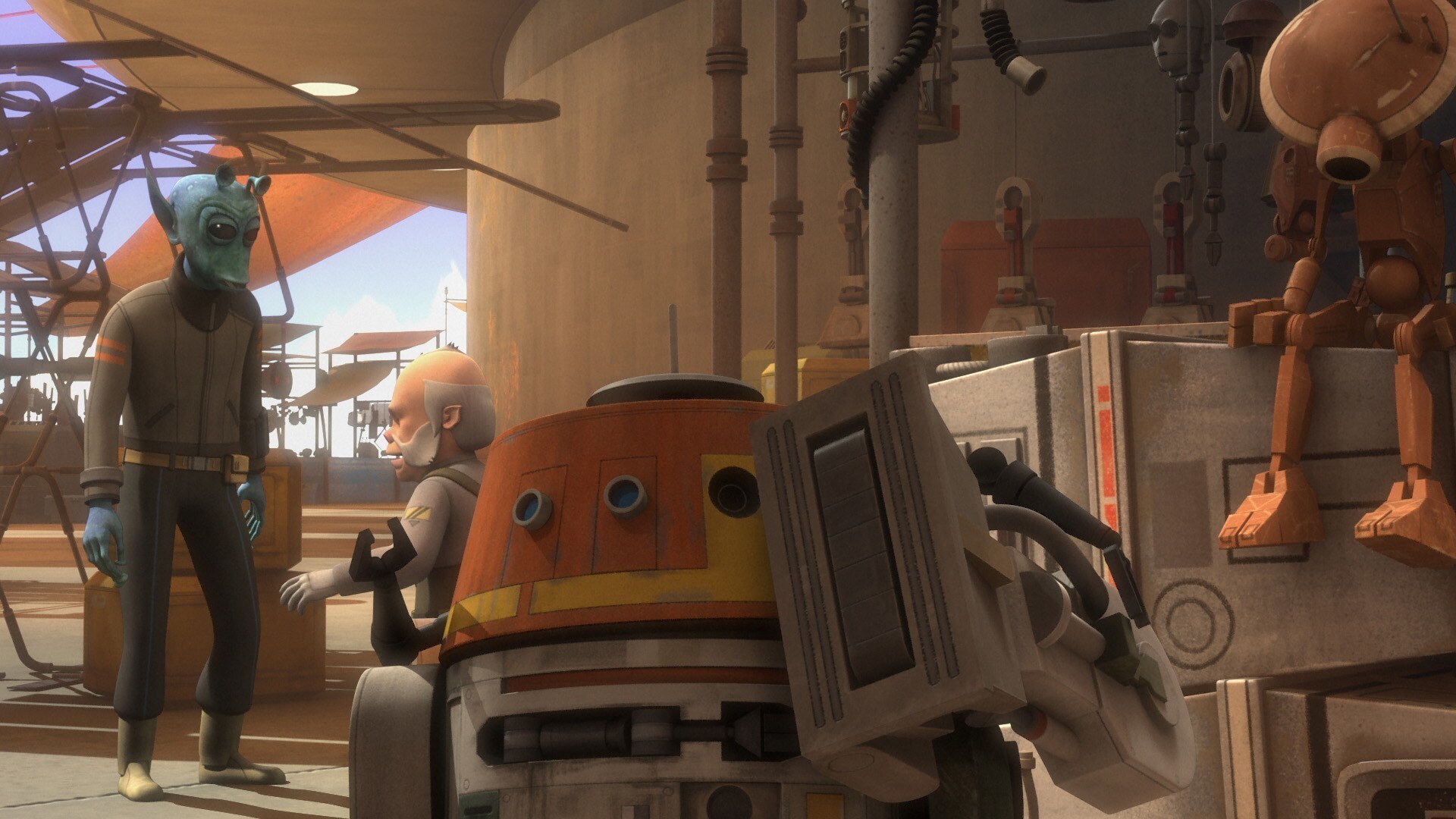
Hera and Chopper's bond begins before the Ghost crew and gives the droid a durable anchor. Ezra, Kanan, Sabine, and Zeb become the people whose habits he knows and whose survival he protects, even when his methods are rude or destructive.
Droid belonging is often conditional in the galaxy, dependent on ownership or usefulness. Chopper's place in the crew is different because care is reciprocal. He maintains the ship, but the crew also repairs him, trusts him, and remembers the history embedded in his patched body.
Labor, tools, and material culture
Chopper's labor includes ship maintenance, gunnery, repair, slicing, reconnaissance, undercover work, and combat. These tasks move across the boundary between domestic and military labor. The same droid who keeps a household functioning can open fire on an enemy or hide a rebel base.
His tool-tipped appendages, interface ports, paintwork, replacement parts, and strut are a record of use. The droid is not a pristine object. He is a working body whose identity is made legible through wear, adaptation, and the stories attached to each repair.
Body, environment, and representation
Chopper's small body is easy for institutions to underestimate. His size and familiar astromech form allow him to move through spaces built for machines while his behavior disrupts assumptions about obedience. The body is both camouflage and instrument.
The Ghost, rebel bases, Imperial ships, and repair bays produce different possibilities for him. In a cockpit he is infrastructure; on a mission he is an operative; among the crew he is a companion. The environment changes whether others see a droid, a weapon, or a person.
Memory, narrative, and historical change
Chopper's memory is distributed across hardware, repairs, sound, and relationship. Decades of service to Hera connect the Clone Wars to the Rebellion, while later appearances place the same droid inside a changing political order. His continuity is carried by a body that has been repeatedly altered.
The archive reads the collector image of Chopper as a material record rather than a simple portrait. Scratches, colors, tools, and the presence of the Ghost crew tell a history of labor. What endures is not an untouched original but the capacity to keep functioning with others.
Anthropological assessment
Chopper's central anthropological importance is that he makes machine personhood ordinary rather than exceptional. His agency is not granted by a single declaration. It is recognized over time through labor, loyalty, memory, and the willingness of a community to treat his choices as part of its shared future.
Canon establishes Chopper's C1-10P designation, history with Hera, astromech function, and Ghost crew service. The interpretation focuses on maintenance, ownership, repair, droid labor, and the social practices through which a tool becomes kin.
Sources and further reading
- Chopper (C1-10P) | StarWars.com Databank
- 20 of the Star Wars Galaxy's Greatest Droids
- Star Wars Rebels Remembered: 10th Anniversary
LEGO collector picks
Chopper in LEGO
Official LEGO Star Wars sets with a direct connection to this character or their signature ship, equipment, or story.

Affiliate disclosure: These LEGO Store links use Imperial Dark Sector's Rakuten Advertising affiliate tracking. IDS may earn a commission from qualifying purchases at no added cost to you.
Maintenance is rebel infrastructure
Chopper’s most important contribution is often technical rather than heroic in the conventional sense. Ships, doors, communications, power systems, and improvised repairs keep the Ghost crew alive.
That labor makes rebellion possible at the scale of everyday operations. The crew can take risks because a droid is constantly preserving the machinery that lets them escape.
A droid inside a found family
Chopper is treated as a member of the Ghost household rather than interchangeable equipment. His personality is abrasive, but the crew understands his moods, history, and loyalties.
That social recognition matters because the same galaxy often treats droids as property. Chopper’s place in the crew shows another model in which technical function and personhood coexist.
Connected archive