The Grand Inquisitor is a Pau'an former Jedi Temple Guard who becomes the leader of an Imperial cadre tasked with hunting survivors of Order 66. He reports to Darth Vader and uses the authority of the Inquisitorius to turn Jedi knowledge, interrogation, and combat into instruments of state terror.
His role is larger than that of a single antagonist. The Grand Inquisitor embodies the Empire's attempt to make the destruction of the Jedi feel administrative and inevitable. His pursuit of Kanan and Ezra reveals a regime trying to control not only living bodies but the possibility that the Jedi tradition might return.
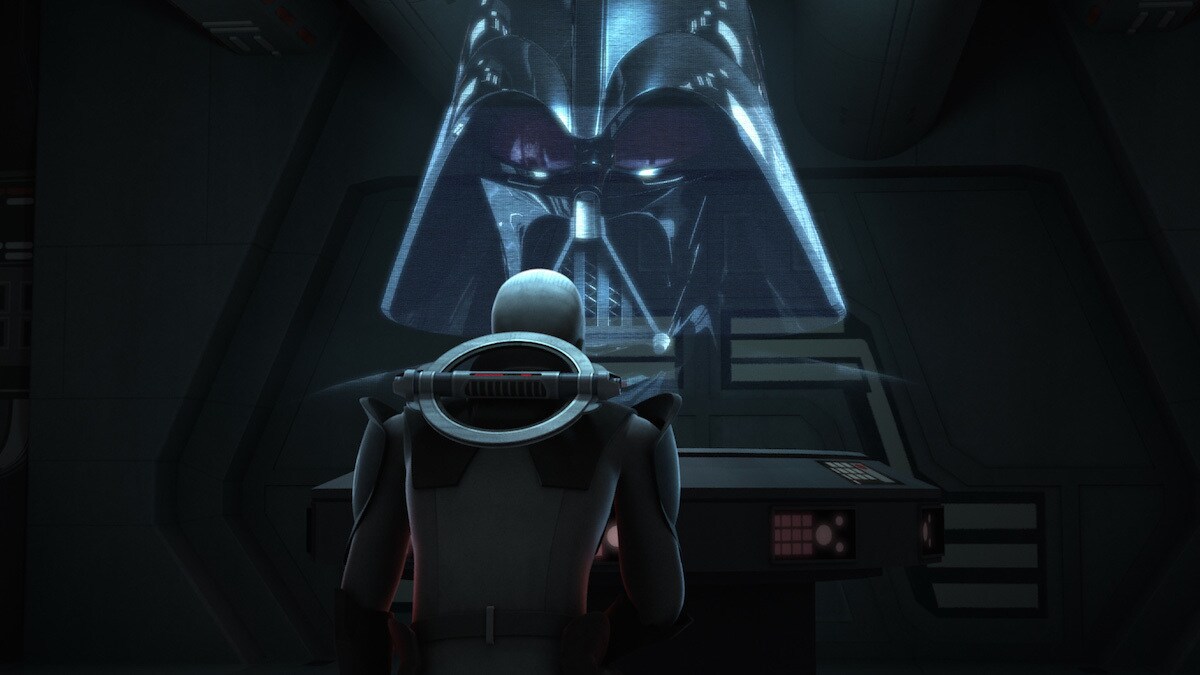
Character in social context
The Grand Inquisitor enters the archive as a person whose identity is almost completely expressed through office. The title suppresses a former life as a Jedi Temple Guard and foregrounds a new role defined by hunting, interrogation, and obedience.
His pursuit of Kanan and Ezra places him inside the social aftermath of Order 66. The Empire is not only defeating an enemy. It is policing the possibility that surviving Jedi, hidden teachings, or young Force-sensitive people might create another political community.
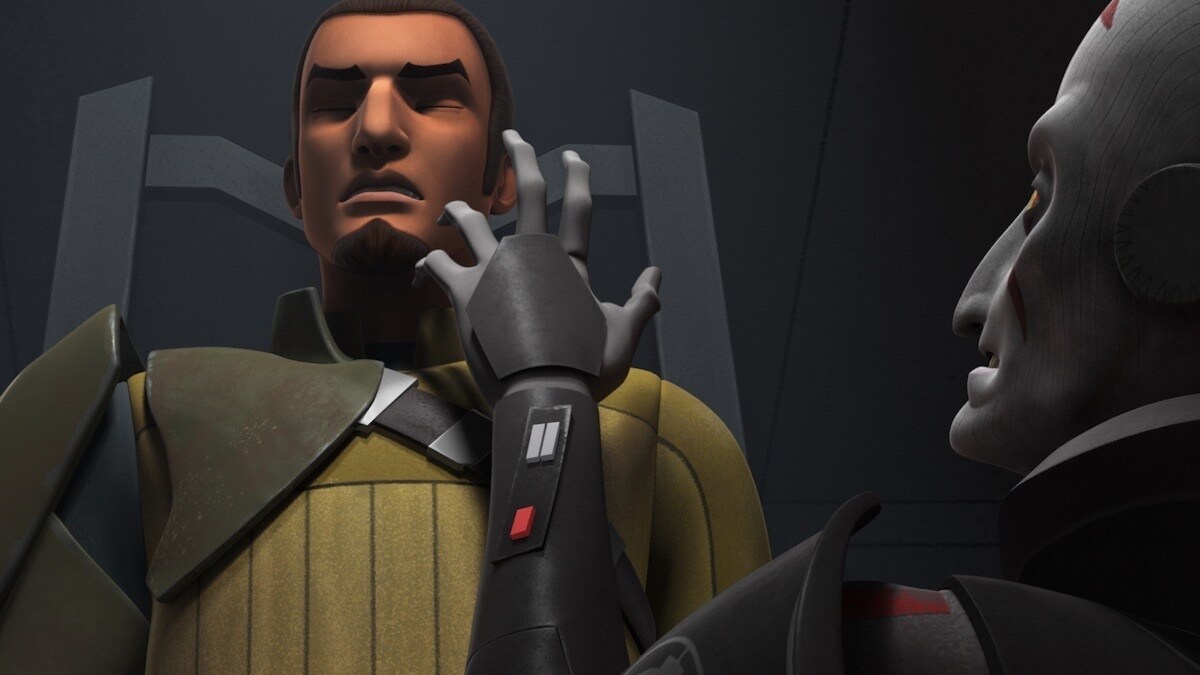
Formation, training, and social position
The Grand Inquisitor's former position as a Temple Guard gave him knowledge of Jedi spaces, routines, and vulnerabilities. Under the Empire, that training is not discarded. It is redirected through a system that rewards betrayal with rank and proximity to power.
The Inquisitorius offers a new path of advancement built from fear rather than communal trust. Its hunters are trained to read flight, resistance, and Force use as evidence of threat. Their professional identity depends on making the old Jedi world legible enough to destroy.
Institutions and the distribution of power
The Grand Inquisitor's authority is delegated by the Empire and ultimately constrained by Darth Vader. He can command hunters and interrogate prisoners, but he remains inside a hierarchy where failure is personal danger. The institution distributes power through fear even among its agents.
His work shows how the Inquisitorius extends Imperial rule beyond ordinary military administration. It turns memory, religious knowledge, and individual bodies into intelligence problems. The target is not just rebellion but unauthorized access to a tradition the Empire wants to monopolize.

Kinship, community, and belonging
The Grand Inquisitor has no visible chosen family comparable to the Ghost crew. His relationships are vertical and instrumental: Vader is superior, other Inquisitors are rivals or subordinates, and Jedi survivors are targets. The absence of reciprocal belonging is part of the office's design.
The Temple Guard identity remains a suppressed form of social memory. When he reveals that he was once a Jedi Knight, the story exposes the cost of a community that has been converted into its own opposite. His authority depends on hiding the kinship he once served.
Labor, tools, and material culture
Inquisitorial labor includes tracking, interrogation, intimidation, combat, and the collection of knowledge. The Grand Inquisitor's work turns movement through the galaxy into a hunt. A prison cell, a Star Destroyer, or an occupied city becomes part of a system for producing confession and fear.
His black clothing, red double-bladed lightsaber, and controlled movement are tools of representation as much as equipment. The spinning weapon makes violence spectacular, while the uniform tells observers that a former religious authority has been absorbed into an Imperial office.
Body, environment, and representation
The Grand Inquisitor's Pau'an body is used to communicate age, severity, and otherness. His silhouette is made even more intimidating by dark clothing and the absence of visible vulnerability. The body is arranged as an institutional sign before it is encountered as a person.
Jedi temples, Imperial ships, Mustafar, and Lothal's occupied spaces produce different meanings for him. In the Temple he is a keeper of boundaries; aboard the Star Destroyer he is an interrogator; in the final duel he becomes a former guard facing the tradition he betrayed.
Memory, narrative, and historical change
The Grand Inquisitor's history survives as a gap the Empire cannot fully close. The title attempts to replace the Temple Guard, but the story keeps bringing the older identity back into view. His defeat therefore reads as the collapse of an office built from stolen authority.
Later stories that revisit the Inquisitorius extend this memory beyond Star Wars Rebels. The character's historical importance lies in the continuity of the institution: even when one hunter is gone, the system that made such a role possible can continue to recruit, train, and intimidate.
Anthropological assessment
The Grand Inquisitor's central anthropological importance is that he makes institutional conversion visible in one body. Jedi knowledge, Imperial hierarchy, and spectacular punishment become a single office. His story asks what happens when an institution's guardians are trained to enforce its destruction.
Canon establishes his former Jedi identity, leadership of the Inquisitorius, service to Vader, pursuit of Kanan and Ezra, and defeat aboard the Imperial vessel. The interpretation focuses on bureaucratic violence, religious authority, surveillance, and the politics of memory.
Sources and further reading
- The Grand Inquisitor | StarWars.com Databank
- The Grand Inquisitor's Lightsaber | StarWars.com Databank
- Star Wars Rebels Remembered: 10th Anniversary
Jedi knowledge turned into a purge apparatus
The Grand Inquisitor’s former life as a Temple Guard gives him knowledge of Jedi practice, training, and psychology. The Empire turns that knowledge against the people it once served.
His role demonstrates how authoritarian regimes often depend on insiders who can translate institutional memory into methods of surveillance and repression.
Hierarchy beneath Darth Vader
The Inquisitorius gives former Jedi and Force-users limited status while keeping them subordinate to Vader. Rank offers access to power without independence.
That structure prevents the hunters from becoming a competing order. Their authority exists only as long as it serves the Sith hierarchy above them.
Connected archive