
01 · Central reading
What long-form television makes visible
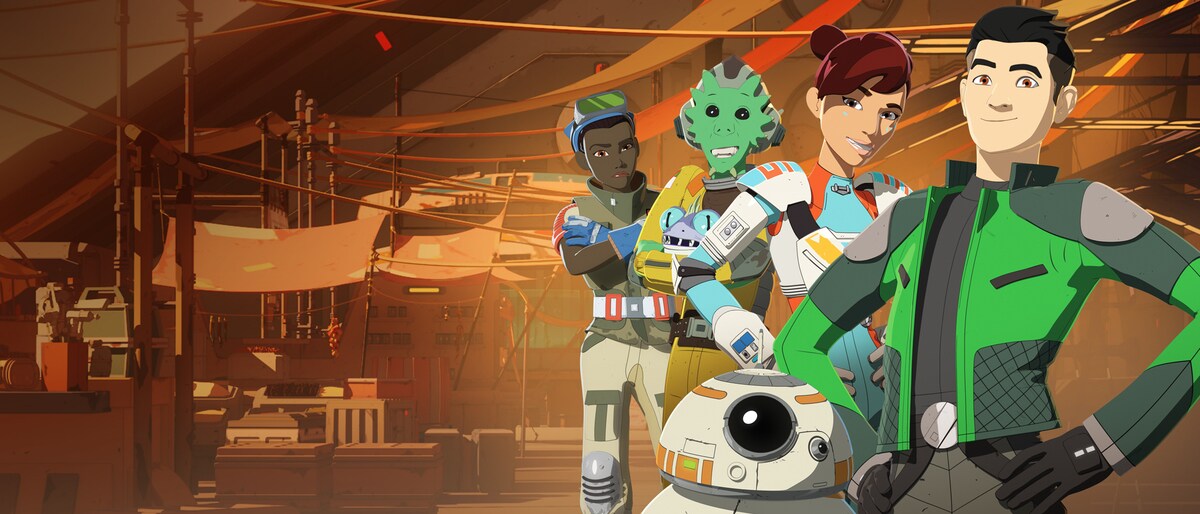
Resistance is strongest as a local study of how a distant political conflict enters an ordinary community. The Colossus is not initially organized around galactic war. Its residents have jobs, rivalries, businesses, families, and competitions that become politicized as First Order influence expands.
This review treats the released series as a fictional social world. It does not rank seasons or assign a score. The focus is on recurring relationships, institutions, forms of authority, material systems, identities, and practices that become clearer because television can follow them across many episodes.
02 · Anthropology lens
The Colossus as a social world
The station is simultaneously workplace, settlement, transport hub, racing venue, and political territory. Mechanics, pilots, merchants, security personnel, families, and visitors occupy different positions. This makes it useful for studying how a community functions before crisis turns everyday roles into political ones.
03 · Anthropology lens
Espionage and ambiguous belonging
Kaz must gather information while appearing to belong to the community he is observing. Espionage therefore requires performance, trust, secrecy, and divided loyalty. The series shows how political information is produced through relationships rather than only technology.
04 · Anthropology lens
Pilots, status, and competition
Racing creates prestige and local hierarchy. Skill becomes socially visible through competition, sponsorship, reputation, and access to machines. The Ace pilots demonstrate how occupational expertise can become a source of identity and political importance.
05 · Anthropology lens
First Order influence before open rule
The First Order expands through security promises, agreements, intimidation, and administrative presence before full coercion is obvious. This gradual process matters because communities may accept new authority for practical reasons before understanding its larger political project.
06 · Anthropology lens
Displacement and mobile community
When the Colossus is forced into movement, residents carry their community with them. Place is no longer only a fixed location. Social continuity depends on relationships, routines, shared institutions, and collective decisions that can persist during displacement.
07 · Anthropology lens
Youth and political learning
Kaz and other younger characters do not begin with complete political knowledge. They learn through work, friendship, danger, and observation. The series treats political identity as something developed through experience rather than automatically inherited.
08 · Method
How IDS is reading this series
The analysis uses anthropology as an interpretive framework for fictional media. It does not claim that fictional peoples correspond directly to real populations. For ongoing or returning series, the discussion is limited to material already released rather than unreleased story details.
Mentioned in this file