
By approximately 18,000 BBY in the Legends chronology, the growth of interstellar commerce had become complex enough to require a dedicated galactic system for identifying starships and recording the people authorized to operate them. The result was the Bureau of Ships and Services, usually shortened to BoSS. Over the following millennia it became one of the most durable institutions in galactic civilization, surviving Republic governments, the Galactic Empire, and later political transitions while maintaining the records that made regulated space travel possible.
Why the galaxy needed BoSS
Interstellar travel becomes difficult to regulate once thousands of worlds, governments, ports, trading companies, and private owners operate vessels across overlapping jurisdictions. A ship can leave one system, pass through several others, and arrive under a different local government within a single commercial journey.
Without shared records, every port would have to determine a vessel's identity, ownership, legal status, and operating authority independently. That problem grows rapidly as trade expands.
BoSS emerged because commerce had become too large for purely local record keeping.
A bureaucracy of the Great Manifest Period
The foundation of BoSS belongs to the Great Manifest Period, when the Republic was expanding settlement, trade, mapping, and administrative networks beyond the older Core.
Expansion did not require only explorers and colonists. It also required systems capable of identifying ships, standardizing permissions, recording routes, and circulating information among distant ports.
BoSS represents the administrative side of expansion.
Not simply a Republic ministry
Legends usually describes BoSS as supragovernmental or extra-governmental rather than as an ordinary Republic department. That distinction helped it survive political change.
The Bureau cooperated with governments, customs agencies, military authorities, and spaceport officials, but its records had value precisely because they were recognized beyond a single administration.
A transponder identity useful only inside one political border would have little value in a galaxy built around interstellar movement.
Neutrality as infrastructure
BoSS developed a strong tradition of political neutrality. It continued operating through major conflicts and changes of regime because rival governments still needed reliable ship records.
Neutrality did not make the Bureau powerless. It made the Bureau difficult to replace.
Governments could change laws, borders, and flags while remaining dependent on the same underlying identification infrastructure.
The Nimbanese role
Legends sources connect the Nimbanese species of Nimban closely to the Bureau's foundation. Nimbanese culture placed unusually high value on administration, information management, accounting, and bureaucratic expertise.
After contact with wider galactic institutions, Nimbanese specialists found roles inside systems that other cultures often considered frustrating or excessively complicated.
They became instrumental in the early development of BoSS and remained associated with its data-holding traditions for millennia.
Bureaucracy as cultural expertise
Bureaucracy is often treated as an impersonal technology, but BoSS shows that administration also depends on cultural skills. Classification, record keeping, procedural knowledge, and institutional memory must be learned and transmitted.
The Nimbanese reputation for bureaucratic competence was not simply a biological characteristic. It was embedded in social institutions, family competition, training, and cultural expectations.
BoSS converted that expertise into galactic infrastructure.
Giving every ship an identity
One of BoSS's most important functions was assigning and tracking unique transponder codes. A starship's transponder acted as a persistent identity signal containing information such as the vessel's name, type, and registered owner.
In heavily regulated systems, a ship without a legitimate transponder immediately attracted attention.
The code made a vessel administratively visible even when the people aboard it were strangers to local authorities.
Transponders and legibility
A transponder turns a physical spacecraft into a record that can be recognized by bureaucratic systems. The ship becomes more than metal, engines, and cargo. It acquires a state-readable identity.
That process is essential to taxation, policing, customs enforcement, insurance, licensing, and commercial trust.
BoSS therefore helped make galactic mobility legible.
The Ship's Operating License
Later BoSS practice included the Ship's Operating License. This record identified a ship's make, manufacturer, port of origin, transponder code, and registered owner.
Obtaining the license required an inspection, linking paperwork to the physical vessel.
The license created a standardized administrative biography for a ship.
Who is allowed to fly?
BoSS also maintained records connected to pilots and captains. A Captain's Accredited License certified that an individual was authorized to operate a particular starship.
This separated ownership from operating authority. A person could possess a vessel without automatically being recognized as qualified to command it.
The distinction is familiar in complex transportation systems because machines and operators create different forms of risk.
Recording weapons
BoSS records extended to registered weapons loadouts. Arms Load-Out Permits documented the weapons installed aboard legal starships.
This created another layer of administrative visibility. Authorities could compare the weapons physically present on a vessel with the weapons that were supposed to be there.
Illegal modifications therefore became not only a technical matter but a documentary discrepancy.
Navigation data
The Bureau also maintained astrographic and navigational information, including data concerning hyperlanes used by navigation computers.
Reliable hyperspace travel depends on continuously updated knowledge. Routes can become unsafe, systems can change political status, and local conditions can affect what ports consider acceptable passage.
Navigation was therefore both a technical and informational infrastructure.
The galactic databank
BoSS maintained extensive encoded records on millions of registered vessels. Information from those records was distributed to spaceports, systems, and enforcement agencies.
Large ports could keep current information more easily than small or remote facilities. Later sources note that some minor ports purchased updated BoSS data only occasionally because access was expensive.
That delay created gaps that smugglers and other illicit operators could exploit.
Information has a geography
A central database does not mean every location possesses the same information at the same moment. Data must be transmitted, purchased, synchronized, interpreted, and acted upon.
The difference between a major Core port and a remote frontier landing field could therefore be measured partly in information freshness.
Administrative reach had a spatial geography.
Why smugglers cared about BoSS
For smugglers, pirates, fugitives, and intelligence operatives, BoSS was an obstacle because a ship carried an identity that could follow it from port to port.
Changing a ship's appearance was not enough. A false identity had to survive comparison with transponder records and licensing databases.
This is why forged registrations, altered transponders, and outdated port databases became recurring tools of illegal trade.
The Millennium Falcon problem
Later canon and Legends stories both use registration systems to show how spacers manipulate bureaucratic identity. Han Solo, for example, could operate under aliases and false vessel identities because the documentary system itself could be deceived under the right circumstances.
The existence of fraud does not mean the system was ineffective. It demonstrates how important the system had become.
Criminals invest effort in defeating paperwork when paperwork has real power.
An institution that became a family
Legends material describes many BoSS positions as hereditary. Over millennia, offices and data-holding responsibilities could remain associated with particular families or clans.
This gave the Bureau an unusual institutional character. It was simultaneously a regulatory body and a social network whose members inherited traditions, relationships, jargon, and obligations.
The distinction between bureaucracy and kinship became blurred.
Its own customs and language
BoSS was famous for internal customs, specialized procedures, and even distinctive terminology. Outsiders often found its administration difficult to understand.
That complexity helped preserve institutional autonomy. Specialized knowledge made Bureau personnel difficult to replace with ordinary government clerks.
Expertise became a form of organizational protection.
Even the Empire needed it
When the Galactic Republic became the Galactic Empire, BoSS continued to operate. It worked with Imperial institutions without simply disappearing into them.
This is striking because the Empire routinely absorbed, reorganized, or destroyed organizations that limited central control.
BoSS survived because interstellar administration depended on the continuity of its records.
Why BoSS outlived governments
Political regimes often inherit infrastructure created by predecessors because rebuilding it from nothing would be enormously expensive. Roads, legal records, census systems, archives, and transportation standards can survive revolutions for this reason.
BoSS represents the Star Wars version of that institutional durability.
A new government could change who had authority over the galaxy while still needing to know which ship was which.
Administrative power without a fleet
BoSS did not need to dominate the galaxy militarily to exercise enormous influence. Control over essential records created another kind of power.
If a ship's identity disappeared from trusted databases, the vessel could face problems landing, trading, crossing customs checkpoints, or proving ownership.
Recognition itself became a resource controlled through administration.
Invisible infrastructure
The Bureau is easy to overlook because it rarely occupies the center of Star Wars stories. Yet most ordinary interstellar movement presupposes exactly the kind of system BoSS maintained.
Hyperlanes, ports, cargo markets, shipyards, customs stations, passenger travel, and law enforcement all work more effectively when vessel identity can be standardized across systems.
The institution mattered precisely because it was usually invisible when functioning normally.
What BoSS says about the Great Manifest
The Great Manifest Period was not simply an age when the Republic reached more worlds. It was also a period when institutions developed to manage the consequences of that connectivity.
BoSS shows that expansion produces administrative problems. More movement means more identities to verify, more routes to document, more jurisdictions to coordinate, and more disputes to resolve.
Galactic integration required paperwork as much as starships.
Anthropological assessment
The creation of BoSS marks a major change in the social organization of galactic mobility. A spacecraft became an object with a persistent bureaucratic identity. Captains became credentialed operators. Weapons became registered configurations. Routes became managed data. Ports became nodes connected to wider information systems.
From an anthropological perspective, BoSS demonstrates how states and markets depend on classification. Mobility at enormous scale becomes governable only when people and objects can be translated into standardized records.
BoSS did not create galactic travel. It helped create the administrative conditions under which galactic travel could become routine.
Canon versus Legends
Where BoSS fits
Sources and further reading
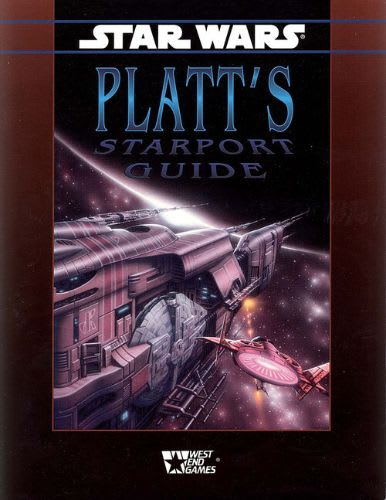
- Peter Schweighofer, Platt's Starport Guide, West End Games, 1995.
- Daniel Wallace and Jason Fry, Star Wars: The Essential Atlas, Del Rey, 2009.
- Rodney Thompson, Gary Astleford, and Owen K. C. Stephens, Starships of the Galaxy, Wizards of the Coast, 2007.
- Galaxy Guide 12: Aliens — Enemies and Allies, West End Games, 1995.
- Bureau of Ships and Services/Legends, Wookieepedia
- 18,000 BBY, Wookieepedia
- Nimban/Legends, Wookieepedia