

Continuity note: This story is Legends, not Canon. Its Fel Empire, Krayt's One Sith and the Skywalker descendants belong to the published Dark Horse Legacy timeline, distinct from events after the Battle of Exegol.
A victory ceremony becomes a coup
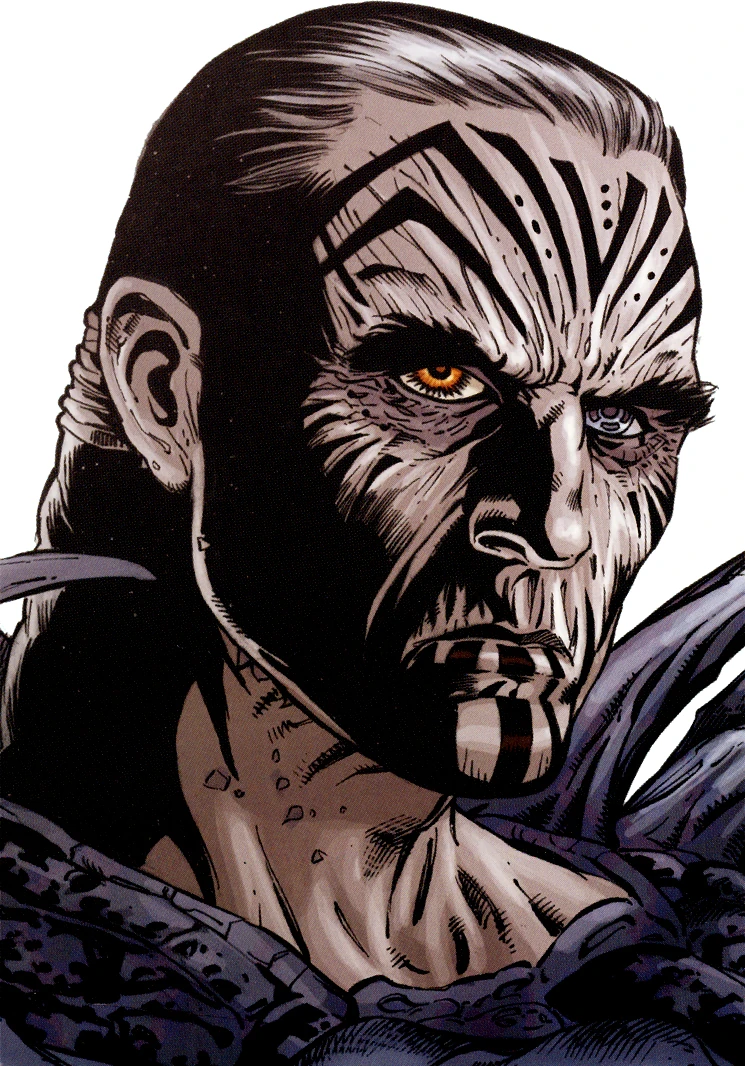
Darth Krayt emerged openly after the Fel Empire's victory over the Galactic Alliance. He demanded power for the Sith forces that had assisted the campaign, and confronted a figure he believed was Emperor Roan Fel.
A decoy is killed
The Emperor's apparent presence in the palace was a deception. Krayt killed the decoy and Imperial Knights protecting the figure, then declared himself galactic ruler. Roan Fel had survived and would establish a rival government supported by loyal Imperial forces.
Two Imperial claims and a remnant
The result was not one stable Empire but a fractured political field. Krayt controlled much of the former Imperial state, Fel retained loyalists around Bastion, and Gar Stazi continued the Galactic Alliance Remnant's resistance.
The One Sith abandons secrecy
Krayt's Order had previously concealed its numbers and intentions while influencing other governments. His accession made the Sith openly responsible for rule and coercion, exposing the gap between Imperial claims of legitimacy and a coup organized by hidden allies.
Anthropological assessment
The usurpation illustrates competing sources of legitimacy: military control, hereditary and institutional claims, and the symbolic authority attached to an imperial title. Krayt could occupy the throne without persuading all Imperials that he had a rightful claim to it.
Interactive evidence lab
Did Krayt kill the real Emperor Roan Fel at the palace?
No. He killed a decoy; Roan Fel survived and led the Empire-in-exile.
Explore the published event from different perspectives.
Ethics and institutions scenario
Choose a research approach to see its implications.
Select one option above.
These are interpretations, not rewritten outcomes for the Star Wars story.Legends · Original comic research · 127–139 ABY
Occupation and legitimate imperial authority were contested
Darth Krayt claimed supreme Imperial authority after the defeat of the Galactic Alliance. The person killed in his palace confrontation was a decoy rather than Roan Fel himself. Fel's survival matters because the conflict between Sith Imperials and Fel loyalists cannot be understood as opposition to a ruler already dead. Krayt could occupy the seat of power on Coruscant without securing the allegiance of every Imperial military and political institution.
Marvel's synopsis of Legacy #13 describes the conflict between Krayt and the Imperials who continued to support the deposed Fel, including a mission intended to break their opposition. This confirms that the divided Empire remained a central concern after the initial seizure. The catalog description does not, by itself, establish every action in the earlier palace confrontation. The 2007 comic's publication date also must not be confused with the fictional year 130 ABY.
The political analysis focuses on competing sources of legitimacy: control of a capital, institutional loyalty and the claims associated with a title. Those are distinct forms of authority. The Alliance's defeat created the immediate opening, while the later coalition victory demonstrates that Fel loyalists continued to participate in opposition to Sith rule.
Publisher record: Marvel Comics issue or collection. Original panels are required for precise scene dialogue and claims not supported by the catalog. The fictional year is not the publication year. Analysis of institutions and cultural practice is IDS interpretation.
Primary comics and research background
Star Wars: Legacy (2006) #0–1; Attack on Emperor Fel; Legends 130 ABY. View issue or continuity details →.