
Continuity notice: This is the Legends Expanded Universe, separate from the modern Canon chronology. Events with similar names must not be combined into a single factual history.
A capital the New Republic cannot ignore
Coruscant was the Empire's political center and a principal junction of galactic trade routes. Capturing the densely populated world would demonstrate that the New Republic had moved beyond scattered rebel outposts and could govern an important Core World. The attack demanded intelligence work because open naval force against the defended city might cause catastrophic civilian losses.
The rebuilt Rogue Squadron
Wedge Antilles assembled an elite team trained in starfighter combat and covert operations. Its pilots came from different backgrounds, creating valuable skills but also problems of trust. The squadron helped isolate the capital and create opportunities for the New Republic's main forces.
Ysanne Isard and the city
Imperial intelligence director Ysanne Isard sought to exploit the approaching transition. Her schemes added danger to the New Republic's takeover and the civilians who would remain on Coruscant after the Empire lost political control. The capital's infrastructure became part of the contest.
Beyond an imperial flag
Winning the city did not guarantee a successful administration. Public services, former officials, refugees and competing political loyalties all required decisions from the incoming rulers.
Anthropological assessment
Coruscant's capture is a study of legitimacy through infrastructure. A victorious force inherits responsibilities toward the people it claims to liberate.
Interactive historical research
Is the 6 ABY capture of Coruscant a current film Canon event?
No. It belongs to the Legends X-Wing storyline.
Choose a perspective:
Primary-source evidence and limitations
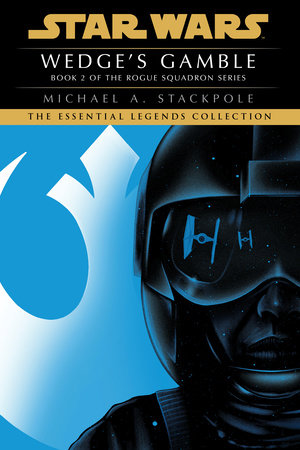
The publisher description of Wedge's Gamble describes Rogue Squadron's hazardous infiltration of the Imperial capital. The following novel, The Krytos Trap, explicitly begins after the New Republic has taken Coruscant. These are two stages of the larger political transition, not proof that every Imperial network was dismantled during the initial capture. Isard's campaign and the Krytos virus illustrate why gaining a capital did not immediately ensure public security.
Read the published evidence: Wedge's Gamble, Michael A. Stackpole (publisher) · The Krytos Trap (publisher).
Legends · Original publication analysis · 6–45 ABY
Taking Coruscant and governing the people left behind
The capture of Coruscant in the Legends X-Wing stories requires an account of clandestine preparation as well as the military outcome. Wedge Antilles and members of Rogue Squadron enter the Imperial capital because a conventional fleet assault risks enormous losses among residents of a densely populated city-world. The publisher's summary of Wedge's Gamble explicitly identifies infiltration and intelligence gathering as necessary before the wider New Republic operation. That distinction makes the pilots more than a uniform body of elite starfighter operators. They also perform dangerous intelligence work in an environment where detection could mean captivity under Ysanne Isard.
Isard exercises authority through intelligence networks, surveillance and control of information. Her ability to plan for the city's loss complicates the apparent simplicity of an Imperial flag being lowered and a Republic flag raised. The New Republic could occupy the seat of government without immediately dismantling all of the old regime's organizations or solving the city's health and security problems. The publisher's subsequent The Krytos Trap description follows a manufactured disease emergency and accusations affecting Rogue Squadron after the capture. This verifies that conquest and secure governance are different stages of the history.
IDS evaluates the capture as a transfer of political authority among populations that did not all belong to one side. Infiltrators, local residents, Imperial officials and the arriving New Republic possessed different information about the campaign. The later Thrawn campaign demonstrates that taking the capital did not end the Imperial threat. The eventual peace agreement belongs to a later phase of contested legitimacy and recognition.
Test the evidence: Did Coruscant's capture immediately end Imperial power and the city's internal crises?
Source judgment: No. Wedge's Gamble documents the infiltration that enables the change of control, while The Krytos Trap establishes a further crisis under the new administration. Military victory is not the same historical claim as complete institutional transformation.
Primary-work publisher record: Michael A. Stackpole, Wedge's Gamble; related issue, volume or series description. The source links establish published books, the narrative premise and specified supporting claims; they do not replace close reading of every novel chapter or comic panel. Historical and institutional conclusions are original IDS interpretation, not additional Legends dialogue.
Source and verification
Michael A. Stackpole, X-Wing: Rogue Squadron and Wedge's Gamble. Publisher source record →.
Next featured Legends history: the Dathomir campaign of 8 ABY →