Cara Dune enters The Mandalorian as someone who has already lived through several political orders. She is Alderaanian, a veteran of the Galactic Civil War, a former Rebel shock trooper, a postwar mercenary, and later a local marshal. Those shifts make her especially useful for understanding what happens to soldiers after a revolution ends and the institutions that organized their lives begin to change.
Alderaan and irreversible loss
Cara hails from Alderaan, a world destroyed by the first Death Star. That makes her military service inseparable from personal loss. The Rebellion is not an abstract political cause in her biography; Imperial violence destroyed her homeworld and eliminated the possibility of simply returning to the society she came from.
Her Alderaanian origin also helps explain why the end of the Galactic Civil War does not produce a conventional homecoming. For many veterans, demobilization means going back to civilian institutions that still exist. Cara’s home society is gone.
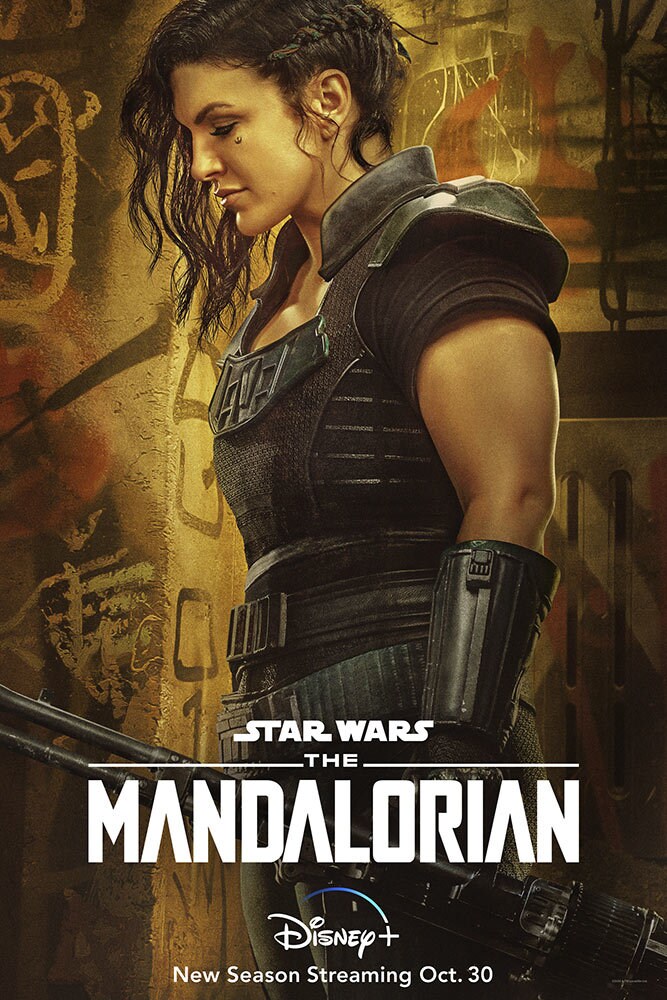
Rebel shock trooper
StarWars.com identifies Cara as a former Rebel shock trooper and veteran of the Galactic Civil War. Shock troopers are associated with difficult combat assignments rather than ceremonial or administrative service, and Cara’s later behavior reflects that background: she is comfortable with heavy weapons, small-unit tactics, direct fighting, and rapid decisions under pressure.
Her military training is not merely backstory. On Sorgan, she helps Din Djarin organize villagers into a defensive force and takes a central role in the fight against raiders and their AT-ST. Her expertise becomes useful outside the military institution that originally trained her.
After the Empire: from soldier to mercenary
The fall of the Empire changes Cara’s legal and occupational position. The official Databank describes her as reinventing herself as a mercenary after the war. That transition reflects a common problem in postwar settings: skills that were legitimate and necessary during conflict can become difficult to place once formal military structures shrink or disappear.
Mercenary work lets Cara continue using the capabilities she already possesses without remaining under military command. It also gives her more control over where she goes and whom she serves, but at the cost of institutional security.
Sorgan and the Common House
Cara meets Din Djarin on Sorgan after both attempt to use the remote world as a place to disappear. Their first interaction begins with mutual suspicion at the Sorgan Common House and quickly becomes a physical fight outside.
Once each realizes the other is not hunting them, hostility becomes cooperation. That change is important. Cara and Din do not become allies because an institution assigns them to work together. They form trust through direct experience, shared danger, and demonstrated competence.
Training the village
When local krill farmers ask for protection from Klatooinian raiders, Cara and Din initially recognize that the villagers face more force than two fighters can easily stop. After discovering the raiders possess an AT-ST, they organize a defensive plan that depends on the villagers themselves participating.
Cara’s role shows the difference between fighting for people and building their capacity to defend themselves. Military expertise is translated into local instruction: positioning, discipline, weapons use, and coordinated action become skills the settlement can temporarily share.
Nevarro and renewed public authority
Cara later reconnects with Greef Karga on Nevarro and becomes part of the settlement’s transition away from its earlier bounty-hunter economy. By Season 2, StarWars.com identifies her as Marshal of Nevarro.
That position is significant because Cara moves from formal military service to private mercenary work and then back into public responsibility—but this time at the local level. Her authority no longer comes from a galaxy-wide rebellion. It comes from helping secure a specific community.
Local government on a weak frontier
Nevarro exists in a period when the New Republic formally governs much of the galaxy but cannot provide equally strong institutions everywhere. Cara’s marshal role helps fill that gap. Local leaders, former fighters, and trusted residents often perform functions that a stronger centralized state might otherwise provide.
This makes her a useful companion file to Greef Karga. Greef represents the conversion of commercial and personal networks into civic leadership. Cara represents the conversion of military experience into local security authority.
The Imperial remnant
Cara’s postwar life repeatedly brings her into conflict with Imperial survivors rather than the old Empire at its peak. On Nevarro she joins Din and Greef against Moff Gideon’s forces, and later participates in the assault on an Imperial facility operating beneath the appearance of a defeated regime.
Her experience demonstrates why declaring a war over does not eliminate the institutions, personnel, weapons, or loyalties created by the defeated government. Imperial power survives in fragments that remain dangerous to frontier communities.
New Republic contact
In “The Siege,” New Republic pilot Carson Teva speaks with Cara after the Nevarro operation. The encounter places her between local frontier authority and the expanding postwar state. She has skills the New Republic recognizes, but her life by that point is rooted in a community rather than simply in a uniform.
This tension fits her larger trajectory. Cara is never defined by rejecting collective responsibility. Instead, she repeatedly chooses which institutions deserve her loyalty and how directly she wants those institutions to control her life.
Why Cara Dune matters
Cara is valuable to the IDS archive because she shows the social aftermath of the Galactic Civil War through one person. She survives state violence, joins an insurgent military, outlives the conflict, works independently, builds trust through informal alliances, and eventually takes responsibility for local public security.
Her story asks what happens after victory. Revolutions produce veterans. Veterans carry skills, memories, losses, and expectations into whatever political order comes next. Cara Dune is one of Star Wars’ clearest examples of that transition.
Sources and continuity
This file covers Cara Dune in Canon, principally through Star Wars: The Mandalorian.
Cara Dune Databank ↗
“Sanctuary” episode guide ↗
“The Siege” episode guide ↗
StarWars.com profile of Cara as a former Rebel shock trooper ↗
From galactic war to local responsibility
Cara’s biography moves through several different forms of political belonging. She serves in the Rebellion during a galaxy-wide war, leaves formal military life after the Empire’s defeat, works as a mercenary, and later accepts responsibility for public security on Nevarro.
That sequence makes her useful for reading the New Republic era from the perspective of a veteran. Peace does not erase military skills or wartime identities. It forces people to decide how those experiences will fit into new institutions.
Alderaan without a homecoming
Cara’s Alderaanian origin gives demobilization a particular weight. The destruction of Alderaan means the usual idea of returning home after a war is impossible for her in a literal sense.
Her later attachments to places like Sorgan and Nevarro can therefore be read as forms of rebuilding belonging after both political upheaval and irreversible displacement.
Connected archive