The bounty guild
Greef initially operates as an intermediary between clients and bounty hunters. His position depends on contracts, reputation, information, and enforcement rather than direct control over every hunter working through the guild.
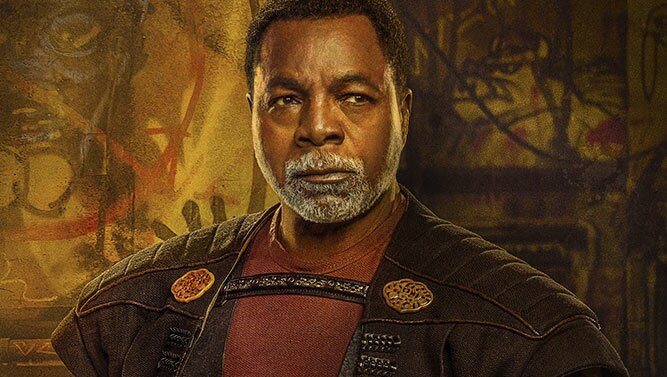
Alliance with Din Djarin
His relationship with Din shifts from business cooperation to conflict and then durable alliance. That change reflects how repeated exchange can become political trust when shared threats alter incentives.
Nevarro's transformation
As Nevarro develops, Greef moves into civic leadership. The settlement's shift from a rough bounty-hunting center toward trade and public administration shows how post-Imperial local government can emerge from people with morally mixed backgrounds.
Frontier governance
Greef's authority depends on limited institutions, local security, outside allies, and negotiation with the New Republic. His problems show the gap between the Republic's formal reach and the practical needs of distant communities.
Why this character matters to the archive
Greef provides a grounded case for postwar state formation, local governance, informal institutions, and the conversion of personal networks into civic authority.
From bounty market to civic government
Greef Karga first appears through the bounty economy of Nevarro. His authority comes from connecting hunters to contracts and managing a system where armed professionals compete for payment. That position is commercial before it is civic.
As Nevarro changes, Greef’s role changes with it. He becomes a magistrate and then a public leader whose legitimacy depends less on distributing jobs and more on creating schools, trade, security, and a settlement people want to stay in.
Frontier order without Imperial rule
Nevarro gives Greef a practical political problem: how does a community create order after Imperial power retreats without simply rebuilding the same coercive structure? His alliances with Din Djarin, Cara Dune, local residents, and later New Republic contacts show governance emerging through negotiation rather than a single inherited bureaucracy.
That makes Greef useful to IDS as a figure of institutional transition. He is not only a friend or former employer. He helps turn a transactional outpost into a community with continuing public obligations.
Connected archive