
01 · Orientation
World overview
Alderaan was a prestigious Core World known for art, education, diplomacy, and republican political traditions before the first Death Star destroyed the planet as a demonstration of Imperial power. IDS treats Alderaan as a lived world rather than background scenery. Its location in Core Worlds, its classification as Core cultural and political world, and its association with Alderaanians and the Organa royal house create a social setting shaped by geography, institutions, mobility, and historical change. The purpose of the file is to connect those conditions instead of reducing the planet to a single battle, character, or visual landmark.
02 · Environment
Landscape, climate, and adaptation
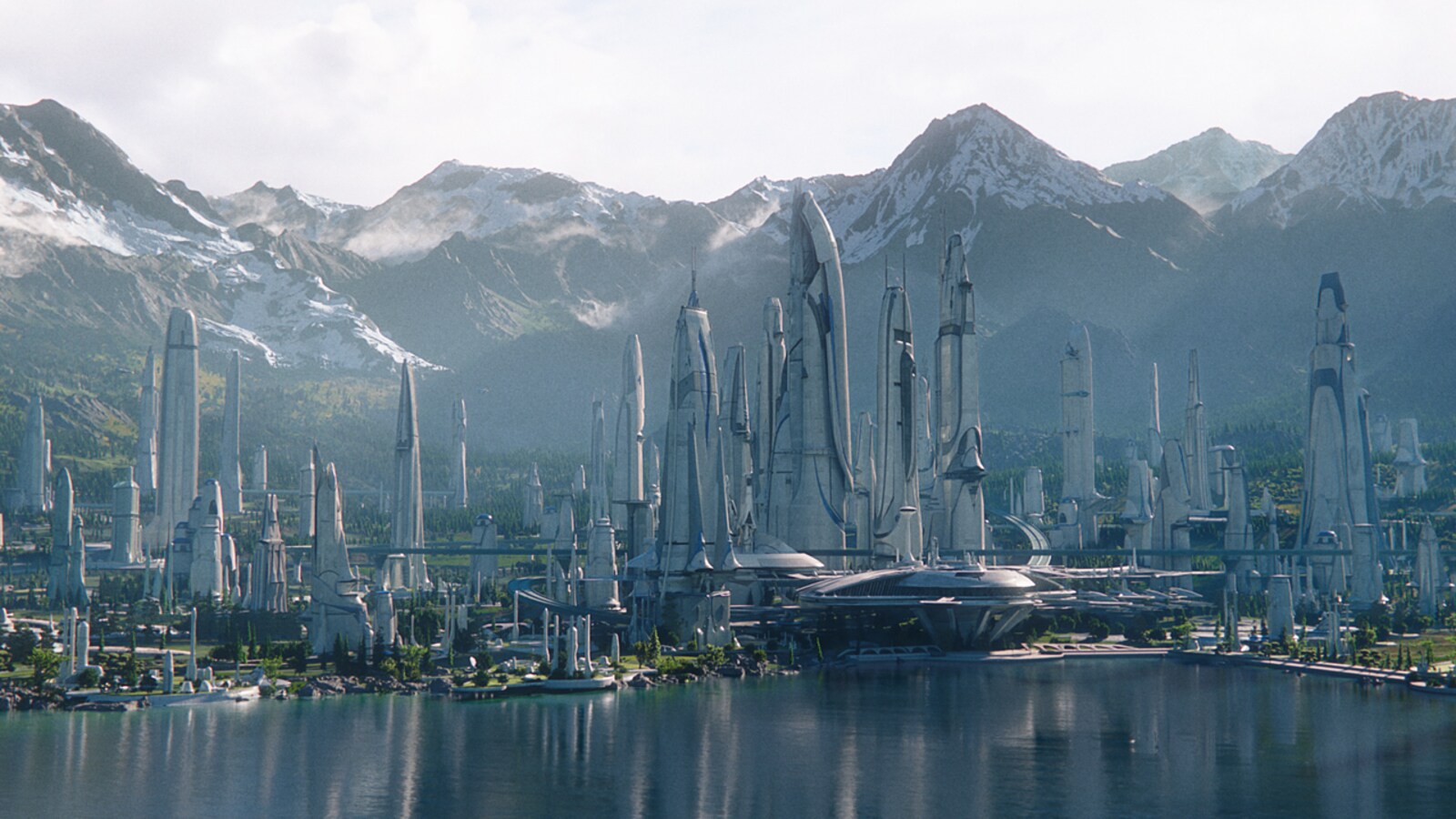
Alderaan combined major cities with protected mountain landscapes, valleys, waterways, and carefully maintained natural environments. Its reputation for beauty became part of its political identity and later intensified the symbolic impact of its destruction. Quick Facts identifies the climate as Temperate and the terrain as Mountains, valleys, forests and cities. Those environmental conditions affect where settlements can develop, how people travel, what resources become politically important, and which forms of infrastructure are practical. Environment does not mechanically determine culture, but it places real constraints on labor, architecture, transportation, defense, and everyday life.
03 · Built environment
Settlement, architecture, and infrastructure
Alderaan’s cities and estates are repeatedly associated with deliberate integration of settlement and landscape. Royal institutions, civic buildings, universities, cultural spaces, and mountain environments support an image of cultivated prosperity rather than militarized urbanism. House Organa’s residence joins family life to diplomacy and resistance politics. After the planet’s destruction, the built environment becomes inaccessible except through recordings, memory, surviving objects, and the recollections of people who once inhabited it.
04 · Society
People, community, and everyday life
Alderaanian society is associated with education, public service, art, diplomacy, and humanitarian action. The royal House of Organa linked aristocratic institutions with republican politics rather than treating them as opposites. The communities most closely associated with this file are Alderaanians and the Organa royal house. The IDS focus is diplomacy, elite politics, rebellion, which means the planet is read through differences in institution, class, occupation, migration, and political experience rather than as a single unified culture. A world can contain neighboring populations with distinct languages, religions, histories, and relationships to state power.
05 · Economy & labor
Resources, work, and political economy
Alderaan is presented as a wealthy Core World with strong education, arts, public institutions, diplomacy, humanitarian work, and elite political networks. Its economy appears less dependent on heavy militarization than many worlds central to the Clone Wars. Wealth also supports relief efforts and political influence, allowing figures such as Bail Organa to move resources through official and clandestine channels. After destruction, Alderaanian economic life is fractured into survivor communities without a territorial base.
06 · Religion & worldview
Sacred landscape, belief, and moral order
Canon emphasizes Alderaan's civic ideals, diplomacy, art, family lineages, and political culture more than a specific shared religion. Memorialization becomes especially important after the planet's destruction, when Alderaanian identity survives through diaspora, memory, and inherited attachment to a lost homeland. Religion and worldview are treated as parts of social life rather than decorative lore. Sacred places, collective memory, ritual, moral authority, and relationships to land can influence how communities understand belonging and legitimate power. Where canon documents no shared planetary religion, IDS keeps that absence visible instead of inventing a uniform belief system for everyone living on the world.
07 · Institutions
Government, authority, and power
Alderaan remained formally within the Empire while Bail Organa secretly supported anti-Imperial networks. Leia Organa inherited both the planet's political status and its resistance commitments, making Alderaan one of the most important bridges between Senate politics and organized rebellion. The major eras associated with Alderaan are Republic, Empire, Age of Rebellion. Political authority can therefore change as governments, militaries, occupations, local elites, resistance movements, or outside institutions gain and lose control. The archive uses diplomacy, elite politics, rebellion to ask who can make decisions, who bears the costs of those decisions, and how planetary institutions connect local communities to larger galactic systems.
08 · Mobility
Movement, travel, and connection
As a prominent Core World, Alderaan is well connected to Republic and Imperial travel networks. Senators, diplomats, relief workers, royal personnel, and later rebel contacts move frequently between the planet and Coruscant or other systems. That mobility helps House Organa sustain political alliances and secret resistance. The destruction of Alderaan reverses the meaning of movement: survivors become a diaspora whose identity is carried through evacuation, exile, migration, and the impossibility of returning home.
09 · Conflict & security
War, policing, occupation, and defense
Alderaan’s political culture is associated with diplomacy and opposition to authoritarianism, but that does not protect it from coercion. During the Empire, resistance activity is concealed behind formal participation in the Senate. The Death Star destroys the planet not because of a battlefield threat but as a demonstration of terror and collective punishment. Security doctrine at the Imperial level therefore converts a civilian population into a target meant to influence audiences across the galaxy.
10 · Points of interest
Places that make Alderaan legible
Places inside Alderaan make large planetary histories concrete. Cities, temples, factories, homes, bases, ruins, and landscapes show where institutions actually operate and where people work, worship, govern, travel, fight, remember, and build community. IDS treats these locations as evidence of social life rather than as a sightseeing checklist. Each point is included because it helps explain how geography, political authority, material culture, religion, or historical change becomes visible on the ground.
Royal Palace of Alderaan
The royal residence connected House Organa’s dynastic position to republican politics, diplomacy, adoption, and resistance networks, making the household itself part of Alderaan’s political infrastructure.
Aldera
Alderaan’s capital represented the planet’s reputation for education, diplomacy, art, and public service. After the planet’s destruction, places like Aldera survived primarily through memory and diaspora identity.
Mountain landscapes
Alderaan’s protected natural scenery became part of how the lost world was remembered. After destruction, landscape shifted from lived environment to a powerful element of exile, mourning, and cultural memory.
11 · Change over time
Historical significance
During the Clone Wars, Alderaan participated in Republic politics and refugee relief. As Palpatine consolidated authority, Bail Organa helped build opposition. Grand Moff Tarkin later ordered the Death Star to destroy Alderaan, killing its population and turning the lost world into a defining symbol for the Rebel Alliance. The principal appearances listed for Alderaan are A New Hope, Revenge of the Sith, The Clone Wars, Obi-Wan Kenobi. Those stories capture particular moments rather than the complete history of the world. IDS reads wars, occupations, migrations, regime changes, reconstruction, and institutional continuity as processes that reshape social life over time. Historical significance therefore comes from what changes for communities, not only from whether a famous event happened there.
12 · IDS lens
What this world reveals
Alderaan shows how cultural memory can outlive a destroyed homeland. After its destruction, identity is maintained through survivors, political causes, family memory, objects, stories, and institutions rather than territory alone. The archive emphasis for Alderaan is diplomacy, elite politics, rebellion. That focus is useful because it connects geography to social organization instead of treating the world as scenery. IDS asks how people experience institutions differently depending on class, community, mobility, political status, access to resources, and historical circumstance, and how those differences become visible in the built and natural environment.
13 · Sources & continuity
Official primary source
The factual baseline for this Alderaan file comes from official Star Wars reference material and the canon appearances listed in Quick Facts. IDS uses those sources for names, geography, political events, communities, and chronology, while the surrounding discussion of institutions, religion, settlement, labor, and social change is independently written analysis. Some aspects of everyday life on this world remain undocumented in current Canon.