The Mos Eisley Cantina sits inside a spaceport economy built around movement. Ships arrive, crews change, cargo changes hands, debts follow people across worlds, and travelers need information quickly. The cantina works because it concentrates many of those needs in one room. A pilot can be hired there. A smuggler can find a client. A bounty hunter can locate a target. A musician can earn a living from a constantly changing audience.
A crossroads built around mobility
Mos Eisley is a major Tatooine spaceport, and the cantina reflects that position. Its clientele is unusually mixed because the local economy depends on people who are passing through. Starship crews, moisture farmers, smugglers, hired guns, fugitives, traders, and other travelers share the same interior without sharing the same loyalties.
That social mixture gives the cantina its value. The room acts as a labor market for transportation and a clearinghouse for information. Obi-Wan Kenobi does not arrive with a reservation or a formal transport contract. He asks around. BoShek helps connect him with Chewbacca, and that introduction leads to Han Solo and the Millennium Falcon. A political escape from Tatooine begins through an informal chain of personal contacts.
Rules without much law
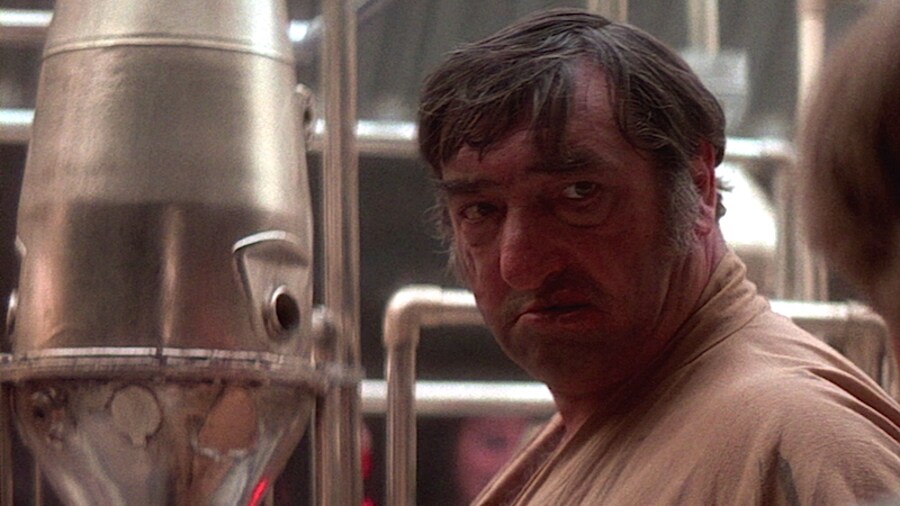
The cantina is often described as lawless, but it is not without rules. Wuher maintains expectations about what is acceptable inside his workplace. Droids are refused service in the original film-era cantina, and patrons are not supposed to settle disputes with blasters. These are house rules rather than state law, but they still organize behavior.
The distinction matters. Weak formal governance does not produce an absence of order. Instead, control shifts toward proprietors, armed patrons, criminal organizations, reputations, and personal networks. The result is unstable. A rule may exist, but enforcing it against a dangerous customer carries risk.
Violence as communication
The cantina's violence is rarely random in a social sense. Ponda Baba and Cornelius Evazan challenge Luke in public. Obi-Wan's intervention immediately changes how the room understands the old traveler beside him. Han's confrontation with Greedo is tied to debt, bounty hunting, and Jabba the Hutt's ability to project power through intermediaries.
These incidents show how reputation is produced in frontier environments. Violence communicates capability, but surviving the aftermath also matters. Patrons watch, reassess danger, and continue their business. The cantina absorbs conflict because violence is part of the environment in which its customers already operate.
Music and ordinary labor
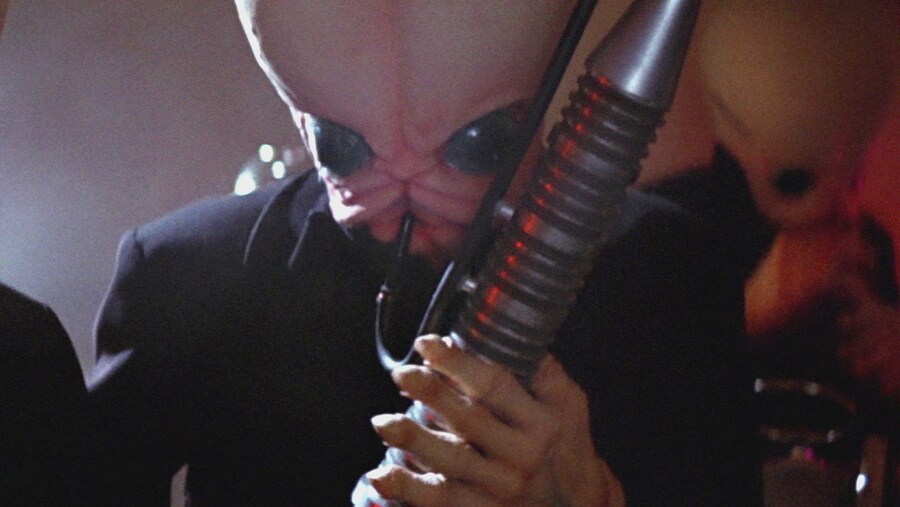
Figrin D'an and the Modal Nodes are easy to remember as visual background, but their presence reveals another layer of the cantina. This is a workplace. Musicians perform, bartenders serve customers, pilots negotiate fares, and people make a living from the flow of bodies through Mos Eisley.
The band also gives the room continuity. Travelers come and go, but recurring workers help turn a transient space into a recognizable local institution. The cantina feels established because not everyone inside it is passing through.
Species, exclusion, and belonging
The cantina's crowd makes the galaxy look socially dense. Bith musicians, humans, Aqualish, Chadra-Fan, Givin, and many other species occupy the same room. That diversity does not mean the space is equally welcoming to everyone. The refusal to admit droids shows that cosmopolitan spaces can still maintain sharp boundaries around who counts as a legitimate customer.
This tension is important to the archive. A setting can be culturally mixed while still being exclusionary. Diversity describes who is present. It does not by itself describe equality, safety, or belonging.
The meeting that changes the war
Luke Skywalker and Obi-Wan enter the cantina because they need transportation. The practical problem is small: find a pilot who can get them off Tatooine. The solution creates one of the central relationships of the Galactic Civil War. Han Solo and Chewbacca are hired for a job, but the encounter eventually links them to Leia Organa, the Rebel Alliance, and the destruction of the Death Star.
This is one reason the cantina matters beyond nostalgia. Large historical changes often depend on ordinary social infrastructure. A bar, a referral, a negotiated fare, and a ship for hire become part of a chain of events with galactic consequences.
A place that survives regime change
The cantina appears across multiple periods, including the Clone Wars, the age of the Empire, and the New Republic era. That longevity gives the location a different kind of historical value than a battlefield or government building. Political regimes change, but people still need places to meet, hire labor, exchange information, drink, perform music, and wait for the next job.
Its continued use makes the cantina a useful example of institutional persistence from below. It is not important because it controls the galaxy. It is important because ordinary movement through the galaxy keeps reproducing the need for places like it.
Connected people
Connected systems and places
LEGO collector pick
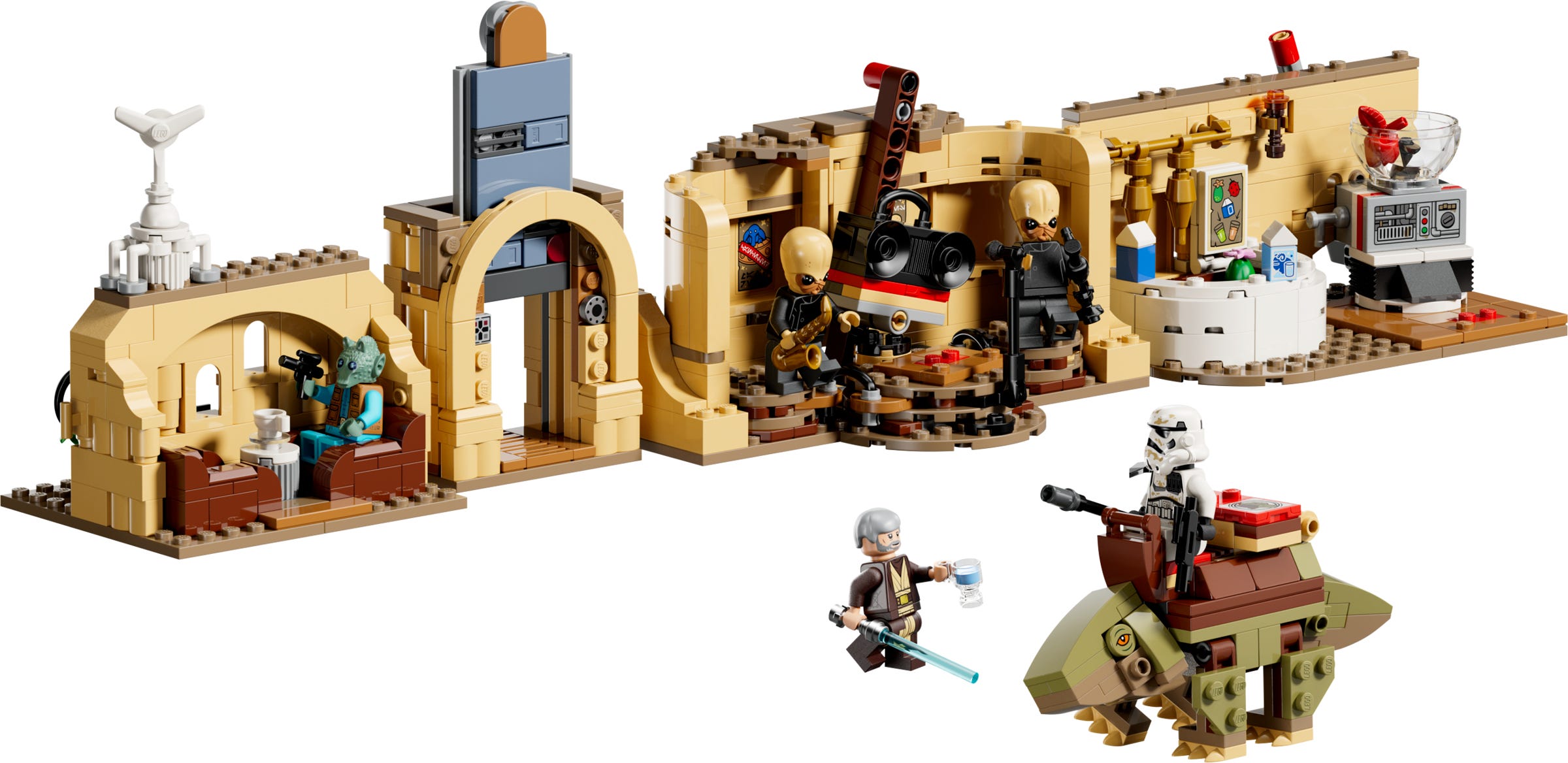
Build the Mos Eisley Cantina
The SMART Play version recreates the location as an interactive LEGO Star Wars set and is the most direct collector match for this place file.
Affiliate disclosure: This LEGO Store link uses Imperial Dark Sector's Rakuten Advertising affiliate tracking. IDS may earn a commission from qualifying purchases at no added cost to you.
Sources and further reading
- Mos Eisley Cantina, StarWars.com Databank
- Mos Eisley Spaceport, StarWars.com Databank
- Wuher, StarWars.com Databank
- Figrin D'an and the Modal Nodes, StarWars.com Databank
- 7 Things You Might Not Know About the Mos Eisley Cantina, StarWars.com
Connected archive