
Around 25,200 BBY, the Rakatan Infinite Empire collapsed. No single battle destroyed it. The empire failed through a chain reaction: internal factional warfare weakened the state, a catastrophic plague killed enormous numbers of Rakata, a mutation of that disease severed survivors from the Force, Force-dependent ships and weapons became unusable, and enslaved peoples across the empire rose against their masters. The Rakata abandoned much of their territory and retreated toward Lehon. Their empire disappeared, but their technology did not.
An empire does not fall in one moment
Later histories often compress the end of the Infinite Empire into a date. That is useful for chronology but misleading as social history. The collapse was a process in which several failures reinforced one another.
Civil war reduced the ability of Rakatan rulers to coordinate. Plague reduced population. Loss of Force sensitivity disabled the technological infrastructure on which military power depended. Revolts severed access to labor and territory. Retreat concentrated the survivors on fewer worlds while former subjects seized what the empire left behind.
The date marks the tipping point at which an imperial system could no longer reproduce itself.

Factional rivalry turns into civil war
The Infinite Empire was never a modern centralized state with equal citizens. Power was concentrated among Rakatan rulers, Predors, warlords, military elites, and competing factions governing conquered populations.
By the final period, rivalry within that ruling system had become open civil war. Knights of the Old Republic preserves Rakatan memory of warlords unleashing weapons of terrible destructive power against one another during the collapse.
The same militarism that had expanded the empire outward was redirected inward.
The Star Forge and the politics of endless war
Later Legends accounts connect the Star Forge to the empire's internal corruption. The station drew on stellar energy and the dark side to produce warships, weapons, and materiel at extraordinary scale.
Its power did not merely solve logistical problems. It rewarded expansion and militarization. A state capable of producing vast quantities of weapons can become institutionally dependent on finding reasons to use them.
The Forge therefore functioned as both infrastructure and political temptation.
The plague
As civil conflict weakened the Rakata, a disease spread through their population. Official Legends history describes billions dying.
Later traditions speculate that an enslaved people may have engineered the disease because of its particular effect on the Rakata, but this remains a theory inside the setting rather than an established fact. IDS does not present intentional biological attack as certain.
What is certain within Legends is that the demographic shock was enormous enough to make the empire far less capable of suppressing rebellion.
The plague mutates
The most consequential stage came when the disease changed. Instead of killing survivors, the mutation cut Rakata off from the Force.
For another civilization this might have been primarily religious or psychological. For the Rakata it was infrastructural. Their ships, shields, weapons, and other major technologies relied directly on Force sensitivity.
A biological crisis therefore became a technological crisis.
When infrastructure recognizes only an elite body
Rakatan technology had been designed around Rakatan Force users. That gave the ruling species extraordinary control while it worked. It also created a catastrophic point of failure.
The system assumed that future Rakata would retain the biological and Force characteristics required to operate it. When that assumption failed, entire technological networks became inaccessible to their creators.
This is an extreme case of infrastructural lock-in: a society builds systems around one privileged form of access until losing that access threatens the society itself.
The enslaved worlds revolt
Conquered populations recognized the empire's weakness. Revolts spread across Rakatan territory.
The uprisings were not a secondary detail after the plague. They were one of the mechanisms that made recovery impossible. Rakatan rulers could no longer rely on enslaved labor, tribute, local collaborators, or garrisons to maintain hundreds of distant worlds.
Imperial authority survives partly because subjects believe punishment is inevitable. Once that expectation collapses, rebellion can spread much faster than an overstretched center can respond.
Liberation was violent
The end of Rakatan rule was not a peaceful transfer of sovereignty. Official Legends history says former slaves rose, killed Rakata, and took their technology. Rakatan survivors were hated and hunted across former imperial space.
That violence has to be understood within a history of mass enslavement and conquest without romanticizing retaliation as automatically just or orderly.
Imperial collapse often creates a period in which old coercive hierarchies disappear faster than new legal orders can replace them.
The technology changes hands
The most important long-term consequence was technological transfer. Former subjects seized Rakatan machines and knowledge.
The Rakata had deliberately kept Force-sensitive slaves away from some of their machinery to protect technological monopolies. That exclusion encouraged subject peoples to reverse-engineer systems in forms that did not require Rakatan Force access.
The collapse destroyed an empire but distributed parts of its technological base.
Removing the Force requirement
Official Legends history names Duros, Herglics, Baragwin, Devaronians, Gossam, and Coruscanti among the peoples experimenting with derivatives of Rakatan technology.
They developed or improved hyperspace cannons, tumbledrives, pulse systems, and other technologies while eliminating Force-dependent components.
This was not simple copying. Reverse engineering transformed who could use the technology and therefore transformed its political meaning.
The end of a knowledge monopoly
Imperial power depends partly on controlling specialized knowledge. The Rakata tried to prevent enslaved populations from understanding the systems that made domination possible.
Once the empire weakened, that monopoly failed. Subject peoples could disassemble machines, compare knowledge across worlds, modify captured systems, and build technologies designed around their own bodies and institutions.
Knowledge escaped the empire faster than the empire's political structures could recover.
Retreat to Lehon
Surviving Rakata withdrew toward Lehon, their ancestral homeworld. A planetary disruptor field and surviving defensive systems helped isolate the world from outsiders.
But isolation came at a cost. The interstellar ruling class fragmented into local groups and tribes separated from much of the technological infrastructure their ancestors had created.
The rulers of hundreds of worlds became inhabitants of a hidden homeworld surrounded by ruins of their own imperial age.
Collapse as loss of historical memory
Over the following millennia, knowledge of the Infinite Empire faded among many populations. Rakatan sites became ruins, myths, archaeological puzzles, or sacred places disconnected from their original political context.
The Rakata themselves also lost enormous amounts of technical and historical knowledge. Their later descendants on Lehon remembered fragments of imperial history through competing traditions.
An empire can disappear twice: first politically and later from collective memory.
Former subjects become regional powers
The vacuum left by Rakatan collapse did not remain empty. Human polities, Herglic territories, Tionese states, Hutts, and other powers expanded into spaces the Infinite Empire could no longer control.
This created a multipolar galaxy. No successor immediately reproduced Rakatan rule on the same scale.
Instead, many regional systems experimented with their own forms of trade, colonization, monarchy, alliance, slavery, and warfare.
The hyperspace problem
Former subjects could imitate Rakatan propulsion, but they faced a problem the Rakata had largely avoided. Rakatan Force-driven hyperdrives could seek worlds through Force signatures. Non-Force systems needed mapped routes, calculations, beacons, and navigation knowledge.
That limitation encouraged the development of a different transportation order based on surveyed lanes rather than Force attunement.
The galaxy's later network of trade routes grew partly from solving a problem created by liberation from Rakatan technology.
From imperial wreckage toward the Republic
Official Legends history explicitly connects this technological and political transition with the distant rise of the Galactic Republic. Former subjects developed territories, shared or competed over navigation systems, and gradually created denser interstellar networks.
The Republic did not emerge immediately in 25,200 BBY. Several centuries still separate Rakatan collapse from the conventional 25,053-BBY Republic founding date.
But the end of the Infinite Empire removed a dominant imperial structure and dispersed the technologies from which a new interstellar political order could be built.
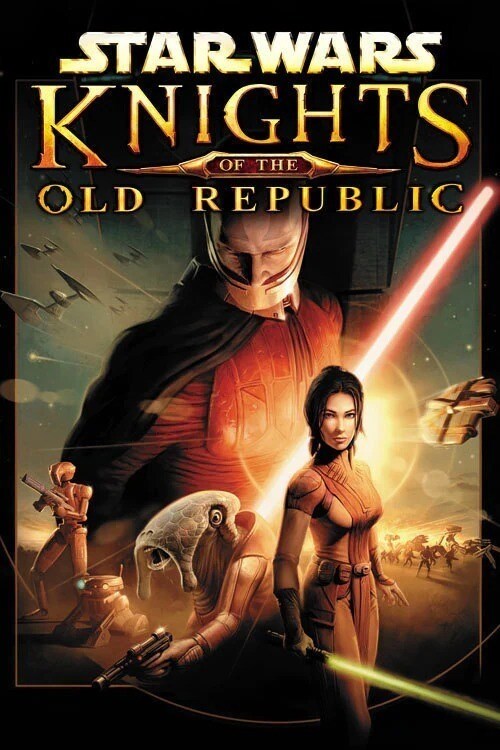
Why KOTOR's Rakata are so diminished
By the time Revan reaches Lehon roughly twenty-one thousand years later, the Rakata no longer resemble the rulers who built the Infinite Empire. Their world is divided among groups living amid technologies they only partly understand.
That contrast is not simply a story of “decline.” It is the result of catastrophic demographic loss, technological lockout, isolation, political fragmentation, and the destruction of interstellar institutions.
Complex societies do not carry their full technical systems inside individual people. When institutions disappear, knowledge can disappear with them.
Empire, disease, revolt, and technological inheritance
The Rakatan collapse shows why large political systems are vulnerable when several kinds of dependence overlap. The empire depended on enslaved labor, Force-sensitive rulers, highly specialized technology, military coercion, and factional elites. Damage to one system increased stress on the others.
Plague alone did not destroy the empire. Revolt alone did not destroy it. Civil war alone did not destroy it. Force blindness alone did not destroy it. Their interaction did.
The most important legacy was therefore paradoxical: the empire disappeared, but pieces of the machinery of empire became tools through which former subjects built new societies.
Canon versus Legends
Where the collapse fits
Sources and further reading
- Star Wars: Knights of the Old Republic, BioWare/LucasArts, 2003.
- Daniel Wallace and Jason Fry, Star Wars: The Essential Atlas, Del Rey, 2009.
- Jason Fry and Paul Urquhart, The Essential Guide to Warfare Author's Cut: The Celestials, StarWars.com, 2013.
- Knights of the Old Republic, StarWars.com
- Infinite Empire/Legends, Wookieepedia
- Rakatan Civil War, Wookieepedia