
Around 27,700 BBY, the Rakatan Infinite Empire moved against Korriban. The Sith species had been unified for centuries under King Adas, a ruler remembered as the Sith'ari and as the center of the “Reign of the Ax.” The Rakata initially offered knowledge, including holocron technology, but their larger aim was conquest. Adas recognized the threat, mobilized the Sith, and drove the invaders from the planet. The Sith won. Adas died. The political order he had built did not survive him intact.
Where the 27,700-BBY date comes from
The strongest chronology appears across several licensed Legends references. Jedi vs. Sith: The Essential Guide to the Force places King Adas's victory over the Rakata at approximately 27,700 BBY and links the event with holocron technology, the Sith shift toward Ziost, and Korriban's later role as a tombworld. The Essential Atlas integrates the invasion into the wider Rakatan timeline, while Book of Sith: Secrets from the Dark Side expands Adas's cultural memory and weapons.
The date is therefore unusually well anchored for this period. The individual sources differ in emphasis, but they agree on the core sequence: Rakatan contact, attempted conquest, Sith resistance, Adas's death, and a major political transformation afterward.
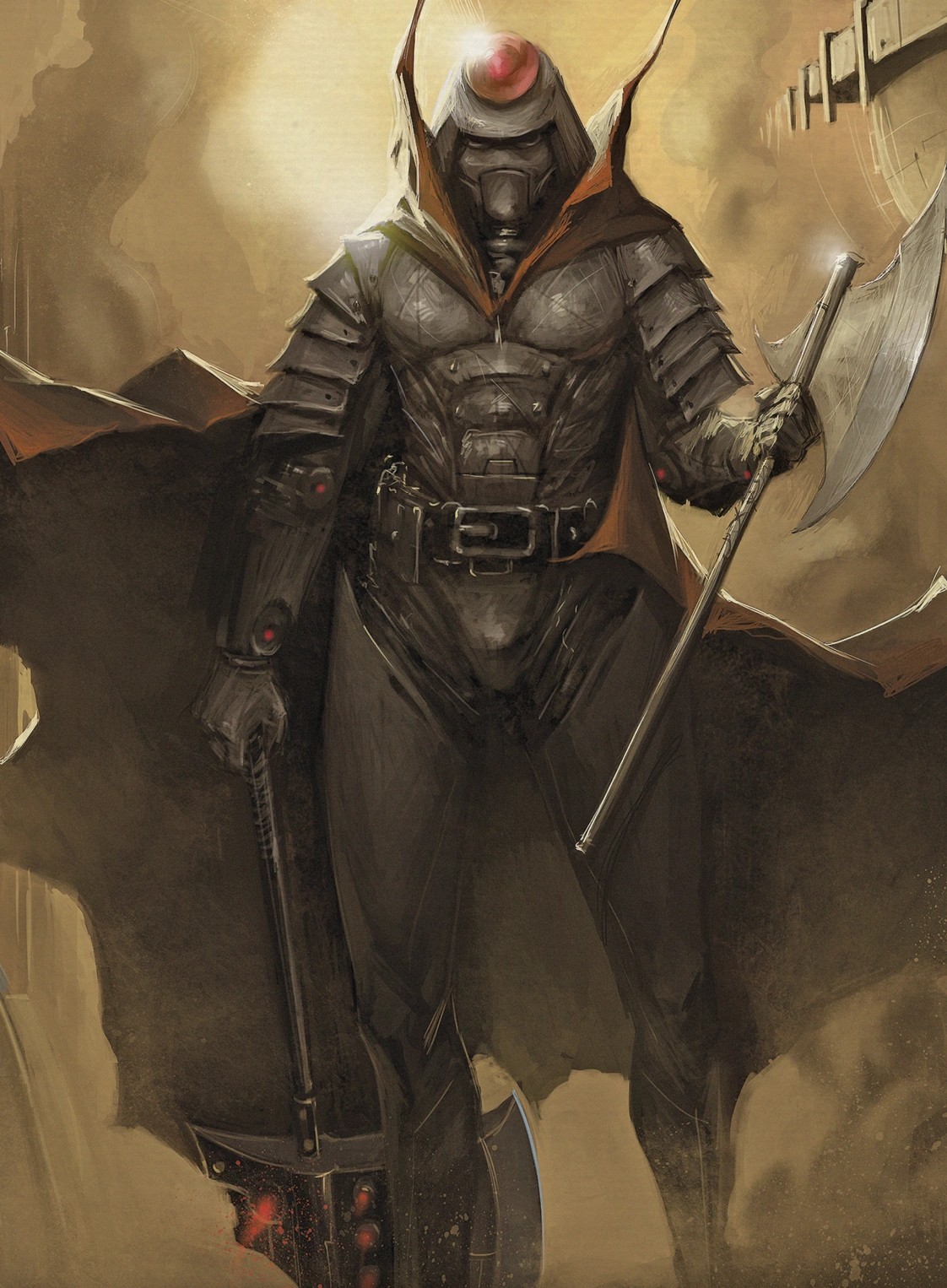
Adas before the invasion
Adas had already transformed Sith political life long before the Rakata arrived. Legends chronology places his unification of Korriban around 28,000 BBY, after campaigns against rival Sith nations and tribes. He became king over a population that had previously been divided among competing polities.
His reign lasted roughly three centuries. The Sith remembered him as unusually powerful, long-lived, and physically imposing. He wore dark armor, wielded massive axes, practiced Sith sorcery, and became associated with the title Sith'ari, commonly glossed as “overlord” in this early context.
The key institutional fact is not that every later story about Adas must be literal. It is that he functioned as the political center of a newly unified Sith order. When he died, the system lost the person around whom it had been organized.
The Sith before “the Sith” meant an order
At this point, “Sith” primarily referred to a species and its cultures, not the later transgalactic dark-side order created after the arrival of the exiled Dark Jedi in 6900 BBY. The people of Korriban already practiced traditions involving the dark side, sorcery, kingship, warfare, ancestor veneration, and ritual authority.
This distinction matters because later histories often project the institutions of Darths and Sith Lords backward onto societies that predated them by tens of thousands of years. Adas was a Sith king because he ruled the Sith people. He was not a member of the later Order of the Sith Lords.
First contact as political strategy
The Rakata did not begin with open invasion. Legends sources say they first offered knowledge and technological instruction. Adas learned how to create a holocron from them and used the technology to record aspects of his knowledge and authority.
That sequence makes Rakatan contact politically sophisticated. Imperial expansion does not always begin with armies. It can begin through gifts, advisers, infrastructure, technical training, religion, trade, or access to prestigious knowledge.
The gift is not neutral when it creates dependency or opens a route for later domination.
The holocron of King Adas
Adas's holocron became one of the most important artifacts attached to his legacy. Later accounts describe it less as an instructional curriculum than as a monument to the king's accomplishments and knowledge. Whatever its exact content, it represented a new method of preserving authority beyond the life of the ruler.
That is socially significant. Oral memory depends on communities of transmission. Monumental architecture fixes memory to place. A holocron allows a curated personality, teaching tradition, or ideological archive to travel.
The Rakata intended technological knowledge to serve their own interests. Instead, the technology became part of Sith heritage long after the empire that introduced it had vanished from Korriban.
The Rakatan invasion
Once Adas understood that the Rakata intended to conquer Korriban, the relationship shifted into open war. The Infinite Empire brought Force-based technology and the military power of one of the galaxy's dominant prehistoric imperial systems.
The Sith nevertheless resisted successfully. Adas fought directly in the defense and became the central symbol of that resistance. Later depictions emphasize his battle-axes and personal combat, while broader chronology emphasizes organized Sith forces capturing Rakatan ships and turning imperial technology against its former owners.
The important historical outcome is clear: Korriban was not incorporated permanently into the Infinite Empire.
A victory that destroys the political center
Adas died during the fighting. His death turned military victory into political crisis. The king had spent centuries suppressing or integrating rival Sith political structures. Once he was gone, there was no equally legitimate successor capable of reproducing the same order.
Korriban descended into internal conflict. Later chronology describes bloody civil war and fragmentation following the loss of the ruler whose authority had held the kingdom together.
This is a classic problem of personal rule. A state can look strong while its institutions depend excessively on one individual. The death of that individual reveals how little succession has been institutionalized.
Korriban becomes a tombworld
The invasion and subsequent conflict devastated Korriban. Political life increasingly shifted away from the planet, especially toward Ziost. Korriban remained enormously important, but its meaning changed.
The world became associated with tombs, sacred ancestry, ritual memory, and the dead. Instead of functioning primarily as a living political capital, it became a ceremonial center whose authority rested increasingly on the past.
This transformation from capital to tombworld is one of the most important cultural changes in early Sith history. Political geography and sacred geography separated.
The move toward Ziost
Ziost provided a new political center for Sith populations displaced or reorganized after the catastrophe on Korriban. The move did not erase Korriban's significance. It created a dual landscape: one world associated with the dead and ancient legitimacy, another with living political authority.
Many societies maintain this division. Sacred capitals, ancestral cities, pilgrimage centers, royal burial grounds, and administrative capitals do not always occupy the same place.
For the Sith, the distinction would echo for thousands of years.
Captured technology and unintended inheritance
The Sith also inherited Rakatan technology through victory. Captured ships and Force-driven hyperdrive systems allowed them to spread through the Stygian Caldera and reach worlds including Ziost, Malachor, and Tund.
This creates a historical irony. The invasion failed politically but succeeded technologically in transforming the people it targeted. Rakatan machines expanded Sith mobility and helped convert a primarily planetary civilization into a broader interstellar one.
Imperial technologies often survive empires because conquered or resisting populations seize, repair, modify, and repurpose them.
The Stygian Caldera and a wider Sith world
After the war, Sith power became distributed across multiple worlds within the Stygian Caldera. This changed what “Sith” could mean geographically. Cultural identity was no longer tied solely to Korriban.
Worlds such as Ziost, Tund, Malachor, and others gained distinct roles. Tund became associated with exile and heterodox traditions. Ziost became a political center. Korriban became increasingly ancestral and funerary.
A multiworld civilization creates new problems of communication, jurisdiction, identity, and orthodoxy. The captured Rakatan technology made expansion possible, but expansion also multiplied internal differences.
Civil war and the limits of unity
Adas had unified the Sith through conquest and personal authority. His death demonstrated that unity imposed from above can be difficult to reproduce institutionally. Rival claims and older divisions reemerged.
The post-Adas crisis should therefore not be treated simply as chaos after a great leader. It was the reappearance of political structures and ambitions that had been subordinated during a long reign.
The invasion destroyed an external enemy on Korriban, but the end of the king reopened internal competition.
Adas becomes greater in memory
Later Sith remembered Adas as more than a ruler. He became an archetype of ancient power, sometimes associated with the Sith'ari ideal and with a lost age before later Dark Jedi transformed Sith institutions.
His holocron allowed his memory to travel across eras. It eventually passed through later Sith and dark-side traditions, making Adas available to people living thousands of years after his death.
This is not simple preservation. Every later user encountered Adas through later political needs. Ancient kings become symbols because later societies repeatedly reinterpret them.
Empire, technology transfer, and succession
The invasion of Korriban brings together three anthropological themes. First, imperial contact can begin through technical exchange before becoming open coercion. Second, defeated or resisting populations can appropriate imperial technologies and use them for their own expansion. Third, political systems built around a charismatic ruler often face severe succession crises.
The Sith victory therefore cannot be reduced to “Adas defeated the Rakata.” The event reorganized political authority, sacred geography, mobility, historical memory, and the distribution of Sith populations across multiple worlds.
The greatest consequence of the war may have been that the Sith survived as something different from what they had been before it.
Canon versus Legends
Where the invasion fits
Sources and further reading
- Ryder Windham, Jedi vs. Sith: The Essential Guide to the Force, Del Rey, 2007.
- Daniel Wallace and Jason Fry, Star Wars: The Essential Atlas, Del Rey, 2009.
- Daniel Wallace, Book of Sith: Secrets from the Dark Side, 2012.
- Star Wars: The Old Republic, BioWare/LucasArts, codex material.
- Invasion of Korriban, Wookieepedia
- Adas, Wookieepedia
- Holocron of King Adas, Wookieepedia