
Around 27,500 BBY, Human populations from Coruscant began a major era of interstellar settlement using sublight sleeper ships. The migration did not happen in one launch window and it did not instantly populate every destination later associated with it. Legends chronology describes a colonization process extending for roughly fifteen hundred years, reaching worlds that would eventually include Kuat, Metellos, Alderaan, Rendili, Koros Major, Csilla, Alsakan, parts of the Tion Cluster, and other Core-region settlements.
The source tradition
The Essential Atlas is the central licensed reference for this early Human expansion. It places Coruscanti sleeper-ship colonization in the period before the widespread adoption of practical hyperdrive navigation and connects the movement to several worlds that later became major centers of Core politics, commerce, shipbuilding, and aristocratic power.
Supplementary histories for worlds such as Kuat, Alsakan, Alderaan, and Coruscant add local details and sometimes slightly different settlement timing. Rather than force every planetary history into one exact launch year, IDS treats 27,500 BBY as the beginning of a broader migration era.
Migration before ordinary hyperdrive travel
The importance of sleeper ships is easy to miss because later Star Wars travel makes interstellar movement appear routine. In the familiar eras, passengers can move between systems in hours or days. A sublight colony ship exists in a different social world.
Journeys become major collective projects. Travelers may enter suspended animation, live aboard a ship for extended periods, or depend on systems capable of maintaining life without outside support for far longer than a conventional passenger vessel. Cargo selection becomes a question of survival. Equipment, seed stock, technical knowledge, medical resources, and replacement parts must accompany people who cannot expect immediate resupply.
A colony ship is therefore not merely transportation. It is a temporary society designed to carry enough biological, technical, and social capacity to reproduce a settlement at the destination.
Why leave Coruscant?
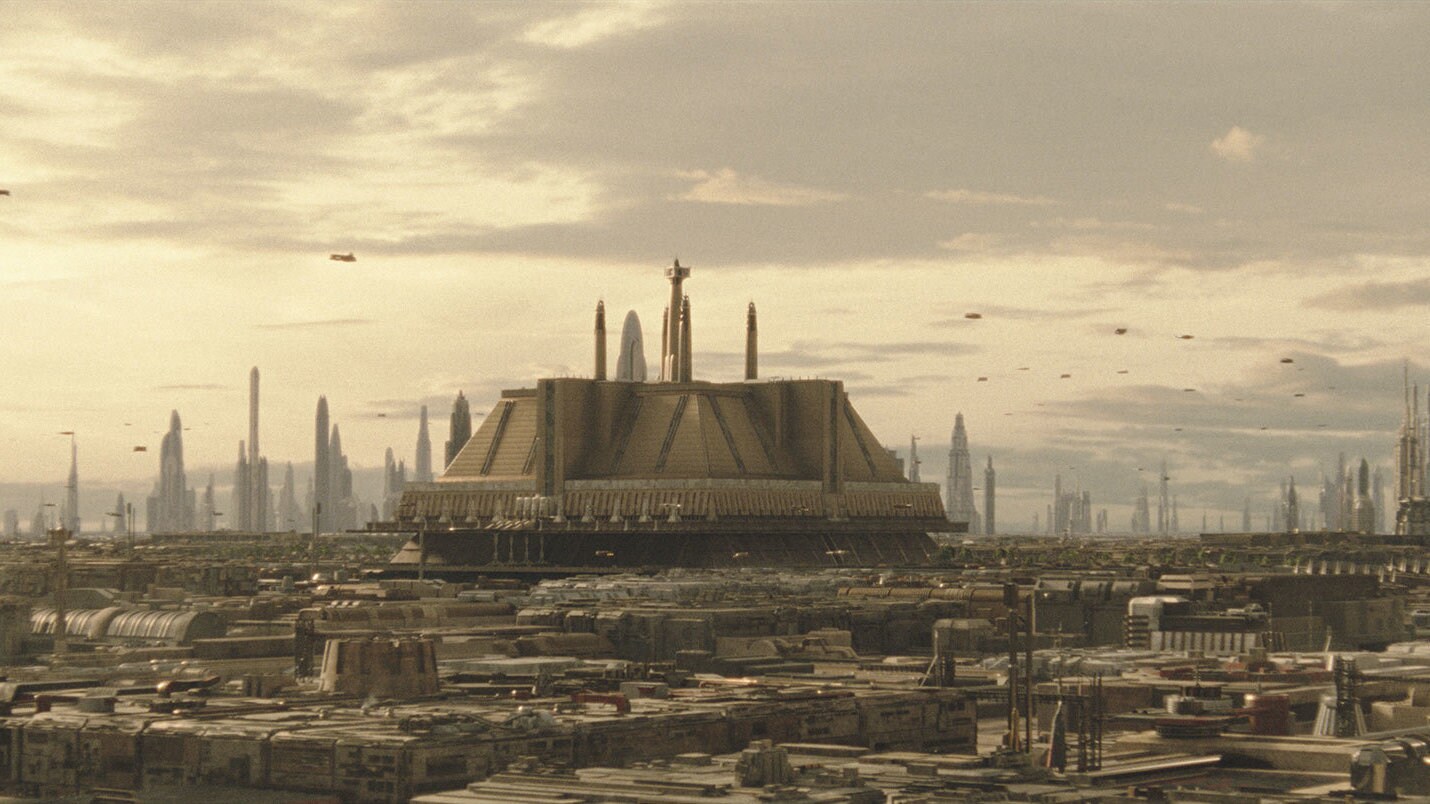
Legends depicts ancient Coruscant as increasingly populous and technologically sophisticated even before the Republic. By this period, Human communities had already endured Rakatan domination and had gained access to technologies derived from or inspired by their conquerors.
No single source gives one universal motive for every sleeper-ship expedition. That is probably appropriate. Large migration waves rarely have only one cause. Population pressure, political ambition, elite sponsorship, economic opportunity, exploration, strategic settlement, religious aspiration, and escape from local conflict can all operate at once.
Different ships could therefore leave the same world for very different reasons.
Founder populations
Each sleeper ship carried only a small fraction of Coruscant's enormous population. That creates what population studies call a founder effect: the first settlers of a new world represent a limited sample of the languages, beliefs, skills, family networks, political habits, and genetic diversity of the population they left behind.
Over generations, small differences can become large ones. A colony founded disproportionately by merchants may develop institutions unlike one settled by military families. A ship carrying a particular religious community can make that tradition locally dominant. A limited pool of technical specialists can shape which industries become possible.
The later diversity of Core Human cultures makes more sense when these worlds are treated as separate historical populations rather than copies of Coruscant.
Kuat: colony to shipbuilding power
Kuat is one of the clearest examples. Legends places Coruscanti Human settlement there through sleeper-ship migration around this period. Later, wealthy families consolidated authority, engineered the environment, and built the industrial tradition that ultimately made Kuat synonymous with starship construction.
By 26,000 BBY, Kuat had become a source of colonists itself, launching settlement efforts toward worlds including Axum, Tepasi, and Humbarine. A colony had become a colonizer.
This demonstrates how migration networks become hierarchical. A destination can rapidly become a new center, generating its own periphery rather than remaining dependent on the original homeland.
Alsakan and the problem of rival centers
Legends also connects the Kuat Explorer with the colonization of Alsakan. Alsakan would eventually become one of Coruscant's most important political rivals, repeatedly contesting questions of galactic leadership in later eras.
That later rivalry is significant because it shows how colonial relationships can invert. A settlement founded from the orbit of an older center can later reject the older world's political primacy and construct its own claims to prestige, wealth, ancestry, and leadership.
Colonies do not remain culturally subordinate simply because their founders came from elsewhere.
Alderaan and the making of local identity
Alderaan is another world associated with early Human settlement from Coruscant. Tens of thousands of years later, Alderaanian culture would be recognizable as its own political and social tradition rather than a provincial branch of Coruscant.
That distance in time matters. Shared ancestry does not prevent the formation of distinct identities. Environment, political institutions, marriage networks, conflict, migration, memory, and local historical narratives all transform what it means to belong to a place.
By the time Alderaan becomes familiar in later galactic history, its Coruscanti origin is remote ancestry rather than an everyday political relationship.
Rendili, Metellos, and multiple Core trajectories
Rendili and Metellos illustrate another feature of the expansion: nearby colonies did not converge on the same economic role. Rendili later became associated with shipbuilding and military industry, while Metellos developed under very different demographic and urban pressures.
The shared starting point of Human colonization did not dictate a shared future. Local resources, geography, institutions, trade connections, and later political choices created divergent paths.
This is why “Human colony” is historically too broad a category on its own. It describes ancestry, not the full culture that developed afterward.
Csilla and uncertain early Human dispersal
Some Legends chronologies also place Csilla within this broad Human dispersal tradition. The early history of Csilla and the later Chiss is complex and not reconstructed with the same confidence as Kuat or Alderaan.
IDS therefore lists Csilla where the licensed chronology does, but avoids using the 27,500-BBY migration as proof of every later theory about Chiss origins. Early settlement claims and later ethnogenesis are not the same historical question.
The Tion Cluster comes later in the wave
The Tion Cluster is often included in summaries of the fifteen-hundred-year Coruscanti sleeper-ship expansion, but more detailed chronology places a major Human arrival there around 27,000 BBY. Those colonists contributed to the societies that would later become Tionese civilization.
This is a useful reminder that broad historical periods and individual dates serve different purposes. “The colonization wave begins in 27,500 BBY” can be true while “this particular destination was reached around 27,000 BBY” is also true.
IDS uses the broader date for the migration process and reserves the more precise Tion milestone for the next dossier.
Diaspora without fast return
Modern diaspora communities can maintain close relationships with a homeland through rapid travel and communication. Sublight colonization changes that equation. Once a sleeper ship commits to an interstellar journey, return may be impractical for generations.
That distance can accelerate cultural differentiation. Traditions become memories rather than regularly refreshed practices. Language changes without constant contact. Political loyalty becomes symbolic. New environmental challenges produce new institutions.
The founding generation may think of itself as Coruscanti abroad. Their descendants may think of themselves primarily as Kuati, Alderaanian, Alsakani, or inhabitants of another world whose local history has become more relevant than the origin voyage.
Colonization and the problem of empty-world narratives
Legends reference works sometimes summarize planetary settlement with a sentence such as “Humans colonized the world.” That shorthand can conceal major questions. Was the destination uninhabited? Were there native species? Did Rakatan occupation precede Human settlement? Did multiple migrant groups arrive at different times? Who controlled land and resources after arrival?
Not every world has enough source material to answer those questions. IDS therefore avoids assuming that “colony” automatically means settlement of empty territory. Colonization is a political process, and the presence or absence of prior inhabitants matters.
The political map before the Republic
These migrations helped create the population geography from which later Core polities emerged. Kuat, Alsakan, Alderaan, Rendili, and other Human worlds eventually participated in trade systems, rival alliances, wars, and the institutions that preceded or joined the Galactic Republic.
In that sense, the Republic did not create the Core. The Republic formed within a landscape already populated by societies with their own histories, elites, rivalries, migration stories, and claims to importance.
The sleeper-ship era is therefore part of the prehistory of galactic federalism.
From sleeper ships to hyperspace
The limitations of sublight travel created strong incentives to develop faster methods. By roughly 27,000 BBY, Legends chronology begins recording experimental hyperdrive systems among species such as the Devaronians and Gossam, while knowledge derived from older Rakatan technologies continued circulating among former subject peoples.
Once reliable hyperspace navigation became possible, the meaning of distance changed radically. Colonies that had been nearly isolated could participate in denser networks of trade, diplomacy, war, and migration.
The sleeper-ship world and the hyperdrive world are therefore not just different technological eras. They produce different kinds of society.
Migration, founder effects, and ethnogenesis
The Coruscanti expansion is one of the best places in Legends to see how migration creates cultural diversity rather than erasing it. A single ancestral population disperses, but each settlement becomes embedded in different environments and political histories.
Over thousands of years, local identities become stronger than the memory of common origin. Distinct accents, class systems, marriage patterns, economic specialties, political institutions, architectural traditions, and historical narratives emerge. Human settlement produces multiple cultures, not a single “Human culture.”
This is precisely why species should never be used as a substitute for anthropology. Biological similarity tells us almost nothing about the social differences separating Coruscanti, Kuati, Alderaanians, Alsakani, Tionese, and the many other Human populations that developed from ancient migration.
Canon versus Legends
Where the sleeper-ship expansion fits
Sources and further reading
- Daniel Wallace and Jason Fry, Star Wars: The Essential Atlas, Del Rey, 2009.
- Stephen J. Sansweet et al., The Complete Star Wars Encyclopedia, Del Rey, 2008.
- Coruscant, StarWars.com Databank
- 27,500 BBY, Wookieepedia
- Coruscant/Legends, Wookieepedia
- Kuat/Legends, Wookieepedia