
In 24,500 BBY, the Jedi Order fractured. Xendor, a Jedi who rejected the Order's growing restrictions on acceptable Force study, asked to establish an academy for techniques and traditions the Jedi hierarchy had forbidden. The request was denied. Xendor left, founded an academy on Lettow, and attracted followers who believed the Order had no right to determine which aspects of the Force could be investigated. The disagreement became the First Great Schism.
The source tradition
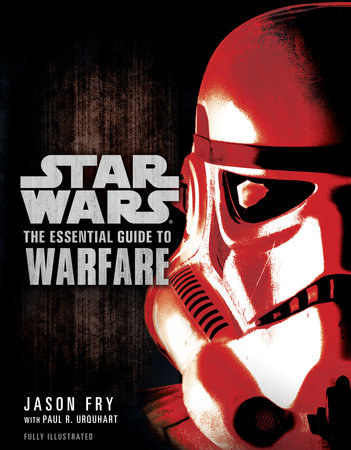
The conflict appears across several layers of Legends material. Early references to Xendor were expanded in Star Wars Gamer, Jedi vs. Sith: The Essential Guide to the Force, Book of Sith, and especially Jason Fry and Paul Urquhart's The Essential Guide to Warfare.
The latter presents part of the war through Arden Lyn's later testimony, giving the Legions' side of the conflict more nuance than a simple “first Dark Jedi rebellion” summary.
A young Jedi Order
The Jedi Order itself was still relatively young. It had emerged only centuries earlier from the collapse of the Je'daii tradition and had recently entered formal service to the Galactic Republic.
Its leaders were still defining what “Jedi” meant institutionally. Which teachings were legitimate? Which Force practices were too dangerous? How much authority did the hierarchy have over individual exploration?
The First Great Schism grew out of those unresolved questions.
The creation of orthodoxy
Religious and philosophical institutions often define themselves by drawing boundaries around acceptable knowledge. A doctrine becomes orthodoxy when an institution can distinguish correct teaching from dangerous or forbidden teaching.
The early Jedi were doing exactly that. Their rejection of uncontrolled dark-side practice was not merely a private belief. It became an institutional rule.
Xendor challenged the Order's authority to make that rule binding on everyone.
Xendor's challenge
Xendor believed there were many truths within the Force and resisted the idea that the Jedi hierarchy possessed exclusive authority over which traditions could be explored.
He asked permission to establish a separate academy where outlawed Force techniques and other traditions could be studied.
The Council refused.
The academy on Lettow
Xendor left the Jedi and founded his academy on Lettow anyway. Arden Lyn accompanied him, and other Force-users followed in growing numbers.
The movement initially developed as an alternative institution rather than an army. Students came to Lettow because they wanted access to teachings the Jedi had restricted.
Only later did the group become known as the Legions of Lettow.
Why “Legions”?
According to Arden Lyn's later account, followers adopted the name because they believed they were defending the academy and their right to seek knowledge without Jedi interference.
The name therefore emerged through conflict. A school became a fortified community, and a community became a military organization.
Institutional pressure helped turn dissent into armed identity.
What the Legions believed
The Legions studied Bogan and other Force traditions the Jedi considered dangerous. They were willing to use the dark side rather than treating it as categorically forbidden.
That did not mean every Legionnaire held an identical philosophy. The movement drew together people united more by opposition to Jedi restrictions than by one fully standardized doctrine.
Schismatic movements often become coalitions of dissent before they become coherent alternatives.
Individuality versus collective discipline
One revealing disagreement concerned collective Force practices. Later accounts say the Legions rejected the Jedi use of battle meld because they saw it as surrendering individual identity to a collective mind.
That opposition reflects a deeper ideological division. Jedi discipline increasingly emphasized cooperation, restraint, and coordinated service. Xendor's followers elevated individual exploration and autonomy.
Political conflict grew from different ideas about the self.
Arden Lyn
Arden Lyn was not simply Xendor's subordinate. She came from the Followers of Palawa, mastered Teräs Käsi, and brought a separate Force and martial tradition into the movement.
Her presence demonstrates that the Legions were not merely disgruntled Jedi. They attracted or allied with practitioners from traditions existing outside Jedi institutional control.
The schism therefore became a conflict over who had the authority to define legitimate Force culture across the Republic.
From disagreement to war
The relationship between the Jedi and the Legions deteriorated until the Jedi High Council declared war. Xendor took the title of general and organized his followers into military formations.
Once both sides accepted war as the mechanism for resolving the dispute, the original question about academic freedom became inseparable from armed power.
Whoever survived would also control the historical interpretation of the disagreement.
The attack on Ossus
Xendor chose to strike the Jedi headquarters on Ossus. Later accounts describe the attack as an attempt to prevent the conflict from spreading into a broader Republic war by defeating the Jedi at their center.
The attack failed. The Jedi repelled the Legions and then carried the war outward.
A movement founded to escape Jedi control was now fighting for survival against the institution it had left.
The war spreads across the Core
The conflict expanded through multiple worlds. Legends lists fighting on Coruscant, Corulag, Brentaal IV, Chandrila, Metellos, Columus, and Lettow.
The geography is significant because this was no isolated monastery dispute. The schism unfolded inside the young Republic's developing transportation network.
The Jedi-Republic partnership had made Jedi conflict a galactic security problem.
The Battle of Columus
The decisive confrontation came on Columus. Xendor and a force of Legionnaires attempted to trap Jedi in one of the planet's rare ravines.
The battle became catastrophic for both sides. Later accounts describe nearly thirty Dark Jedi and their Jedi opponents annihilating one another in the fighting.
Jedi Master Awdrysta Pina survived long enough to kill Xendor.
Awdrysta Pina
Pina became the central Jedi commander remembered from the end of the schism. Legends associates him with a powerful battle meld used to coordinate Jedi fighters at Columus.
The technique provides an ideological contrast with the Legionnaires, who rejected such surrender of individual autonomy.
The Jedi won partly through the collective discipline their opponents distrusted.
The death of Xendor
Xendor's death changed the war immediately. The Legions lost their founder, principal theorist, and military commander in the same moment.
Arden Lyn assumed leadership, but the movement had been built heavily around Xendor's authority and vision.
Charismatic movements can survive a founder's death, but only if institutions already exist that can reproduce leadership independently.
The Battle of Lettow
After Columus, Jedi forces attacked the Legionnaire stronghold on Lettow. Arden Lyn's surviving forces defended the world long enough for some followers to escape beyond Republic borders.
The Jedi ultimately took the academy and broke the Legions as an organized military movement.
The alternative school that had begun the controversy disappeared into legend.
Arden Lyn and Irkalla
Pina later pursued Arden Lyn to Irkalla. Their confrontation became one of the strangest legacies of the schism.
Pina used the Force technique Morichro to slow Lyn's bodily functions and place her in a profound state resembling death. Lyn, however, mortally wounded Pina with a Kashi Mer talisman before entering stasis.
She would remain dormant for nearly twenty-five thousand years.
What did the Jedi victory settle?
The Jedi victory destroyed the Legions of Lettow, but it did not permanently resolve the underlying problem. Later generations of Jedi would again challenge the Order's restrictions on the dark side.
The First Great Schism established a pattern: forbidden inquiry, institutional rupture, competing academies, militarization, defeat, exile, and later re-emergence of similar ideas.
The same institutional boundary had to be defended repeatedly because the philosophical question never disappeared.
Can knowledge itself be forbidden?
The strongest version of Xendor's argument is that understanding dangerous knowledge does not necessarily require obeying it. The strongest Jedi answer is that some Force practices change the practitioner in ways that make detached study impossible.
The schism therefore turns on an epistemological disagreement: is the dark side an object of knowledge, or is engaging it already a form of participation?
That distinction would remain central to Jedi teaching for millennia.
Who controls religious knowledge?
Institutions gain power when they can authorize teachers, regulate texts, define dangerous practices, and exclude dissidents.
Xendor challenged all four forms of authority. His academy created a competing institution capable of certifying knowledge outside Jedi control.
That is why the dispute became existential for the Order rather than merely academic.
The politics of naming
Contemporaries called the conflict the Great Schism. Only later, after another major Jedi rupture, did historians begin calling it the First Great Schism.
The change demonstrates how later events reorganize the meaning of earlier history.
People living through the war did not know they were experiencing “the first” example of a repeating pattern.
A source conflict over weapons
The visual record is inconsistent. The Essential Guide to Warfare states that neither side used lightsabers during this conflict, placing widespread lightsaber adoption later. Book of Sith artwork, however, depicts Xendor and followers with red-bladed lightsabers.
IDS preserves the contradiction rather than choosing the later illustration over the written chronology.
This is why the page uses source-book imagery rather than presenting a modern lightsaber battle as certain historical reconstruction.
Why this is not yet a Sith war
Calling the Legions “Sith” collapses thousands of years of distinct history. Xendor's movement predates the later Dark Jedi exiles who would encounter the Sith species and create the historical Sith Order.
The First Great Schism belongs to Jedi institutional history, not to the later Jedi-Sith geopolitical struggle.
The distinction matters because it shows that dark-side conflict existed inside Jedi history before the Sith became their defining enemy.
Schism, orthodoxy, and institutional violence
The First Great Schism is an anthropological case study in how organizations turn intellectual boundaries into political boundaries. The Jedi hierarchy classified certain practices as dangerous. Xendor's followers reclassified those restrictions as illegitimate control.
Each side then treated the other's institutional existence as a threat.
Once a disagreement becomes a struggle over who has the right to teach, organize, and reproduce a tradition, compromise becomes much harder. The conflict was not simply light against dark. It was also a war over who could define the Force for future generations.
Canon versus Legends
Where the First Great Schism fits
Sources and further reading
- Jason Fry with Paul R. Urquhart, The Essential Guide to Warfare, Del Rey, 2012.
- Ryder Windham, Jedi vs. Sith: The Essential Guide to the Force, Del Rey, 2007.
- Daniel Wallace, Book of Sith: Secrets from the Dark Side, Chronicle Books, 2012.
- The Essential Guide to Warfare, Penguin Random House
- StarWars.com author's-cut index identifying “The War of the Jedi and the Legions of Lettow”
- First Great Schism, Wookieepedia
- Battle of Columus, Wookieepedia