
Around 25,000 BBY, the young Galactic Republic began opening the two hyperspace corridors that would define much of its early expansion: the Perlemian Trade Route and the Corellian Run. These were not merely faster roads through space. They changed which worlds could communicate regularly, which economies could specialize, which states could project military power, and which regions could be imagined as part of one political community.
A Republic that still needed roads
The Galactic Republic had been founded only about fifty years earlier, in 25,053 BBY. A constitution and Senate could define political relationships, but those institutions were useless if member worlds could not communicate or travel between one another reliably.
Earlier generations had depended on sleeper ships, hyperspace cannons, unstable tumbledrives, and beacon networks. Those systems connected limited regions but imposed severe constraints on speed, direction, and predictability.
The Republic needed transportation that could sustain government at interstellar scale.
From experiment to infrastructure
By this period, engineers in the Core had spent centuries studying technologies ultimately descended from Rakatan systems while removing their dependence on Force sensitivity. Hyperdrive was becoming a reproducible technology rather than a rare or semi-mystical inheritance.
That distinction changed everything. A ship no longer needed Rakatan Force systems to reach distant worlds. Instead, navigators could calculate routes through known hyperspace corridors.
Mobility became something institutions could plan around.
A hyperlane is not simply a line on a map
A major hyperspace route is a network of knowledge. It requires survey data, hazard records, navigational calculations, stable entry and exit points, updated charts, maintenance systems, and ports capable of supporting traffic.
The route therefore exists because generations of scouts, pilots, engineers, merchants, governments, and local communities continually reproduce it.
Maps make a lane look natural. Social labor makes it usable.
The Perlemian Trade Route
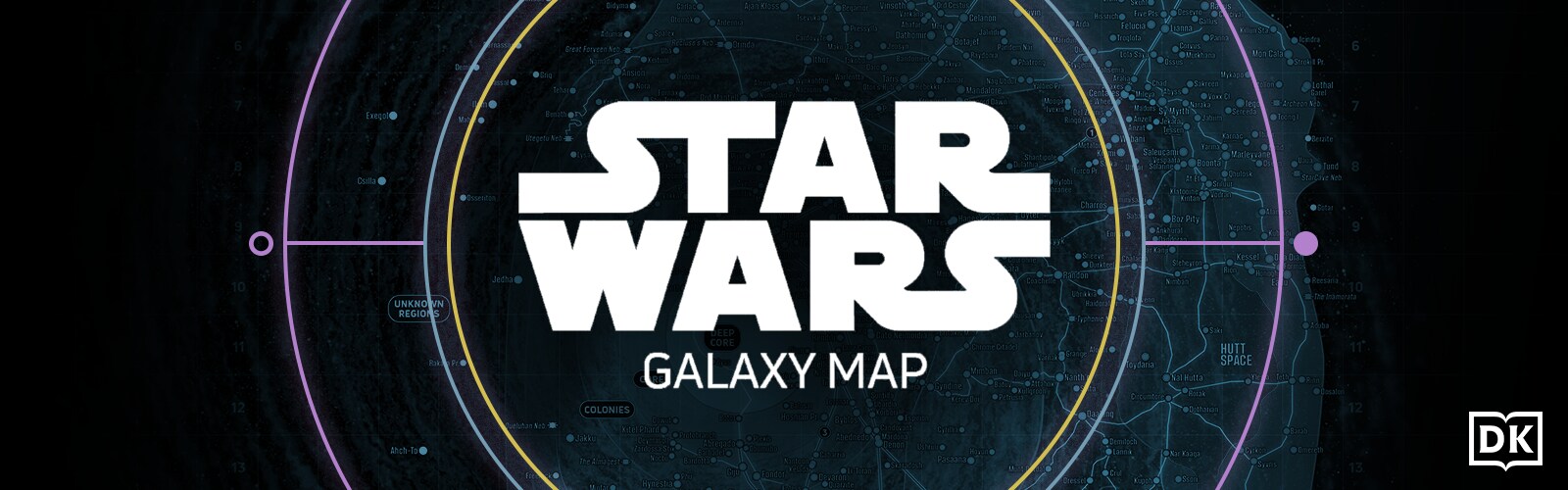
The Perlemian became the great eastward route from the Core. Early Legends chronology dates its founding to approximately 25,000 BBY and describes it linking the young Republic with Ossus and, eventually, the Tion Cluster.
The route took its name from the Perlemia system, whose scouts were remembered for helping chart its early course.
Over later millennia, the Perlemian would become one of the most important commercial and military arteries in galactic history.
Toward the Tion worlds
The route's direction mattered politically. Beyond Ossus lay regions connected to the old Tionese world, where the memory of Xer and Xim remained strong and Republic political culture was not dominant.
Opening a stable route toward Tion therefore linked societies with very different historical memories of empire, colonization, and political authority.
Trade routes connect markets, but they also connect rival historical worlds.
Ossus is on the horizon, but the Jedi contact comes later
Older reference works often compress the Perlemian's opening and the Republic's first contact with the Jedi Order into the same approximate “25,000 BBY” period.
Later SWTOR chronology refines the Jedi event to approximately 24,953 BBY. Republic scouts reach Ossus, Jedi Master Haune Tiar tours the Republic, and after internal debate the Jedi pledge themselves to Republic service.
IDS keeps that contact as the next event rather than moving it backward into this page.
The Corellian Run
At roughly the same time, charting accelerated along the route that became the Corellian Run. It stretched away from Coruscant through Corellian space and eventually far toward the Rim.
The Run became one of the longest and most economically important routes in the galaxy. Its early development helped transform Corellia from an old Core world into an economic and shipbuilding power whose influence extended along the corridor.
Transportation infrastructure redistributed power toward worlds positioned along it.
Why Corellia benefited so much
Route geography creates winners. Corellia's position gave its merchants, navigators, shipbuilders, and governments access to traffic moving between the Core and newly connected regions.
Ports that sit on reliable corridors attract repair yards, warehouses, financial institutions, labor, migrants, military facilities, and information.
Corellian economic power therefore cannot be separated from hyperspace geography.
The Corellian Treaty
Legends sourcebooks describe an ancient Corellian Treaty in 25,000 BBY that formalized the Perlemian Trade Route and Corellian Run as the boundaries of the region later called the Slice.
The treaty shows that routes were political as well as navigational. Governments used the new corridors to define zones of exploration and colonization.
Mapping space became a way of claiming it.
The creation of the Slice
The two routes formed the sides of a huge wedge-shaped region extending outward from the Core. Later civilizations called this region the Slice.
Because its boundaries were defined by the most dependable early routes, the Slice became easier to explore and colonize than many neighboring regions.
The apparent geography of civilization was partly a consequence of where safe hyperspace knowledge existed.
Colonists follow the scouts
Once scouts established safer routes, migration followed. Republic citizens and associated populations moved outward to settle worlds, establish ports, extract resources, and found new communities.
This expansion was not identical to Rakatan conquest or Xim's military colonization. But neither was it politically neutral.
Declaring a route open could transform worlds already inhabited by communities that had never participated in Republic decisions about expansion.
The frontier is produced, not discovered
Political societies often describe territories beyond their maps as frontiers, wilderness, or empty space. Those labels center the perspective of the expanding state.
A world can be a “new discovery” to Republic navigators while being an ancient homeland to its inhabitants.
The expansion routes therefore produced frontier ideology alongside transportation infrastructure.
Trade and specialization
Reliable travel allowed worlds to specialize economically. A planet no longer needed to produce every strategic material locally if food, metals, manufactured goods, or technology could move regularly between systems.
That increased prosperity but also created dependence. Worlds integrated into the same trade network became vulnerable to blockades, route closures, piracy, and political disputes far beyond their own systems.
Connectivity creates resilience and fragility at the same time.
Hyperspace changes social time
Long-distance travel does more than reduce distance. It changes expectations about time. Governments begin expecting messages, taxes, representatives, soldiers, and goods to arrive on predictable schedules.
Political centers can demand faster responses because transportation has made faster response technically possible.
Infrastructure turns delay from an unavoidable condition into a political problem.
The Senate becomes more practical
The Republic Senate depended on representatives maintaining relationships with homeworlds. Better hyperspace routes made repeated movement of people and information increasingly realistic.
A federation spanning multiple systems becomes more stable when political participation does not require permanent isolation from home.
Transportation therefore supported representation as much as commerce.
Routes become strategic corridors
The same route that carries merchants can carry armies. The Perlemian and Corellian Run quickly acquired military significance because forces could move along known lanes faster and more safely than through uncharted space.
Later wars would repeatedly demonstrate that controlling junctions, ports, and chokepoints could matter as much as controlling planets.
Infrastructure built for expansion became infrastructure for war.
Parallel expansion: Duros colonization
Around this period, Duros exploration also accelerated. Legends traditions place the colonization of Neimoidia by Duros settlers in the broad 25,000-BBY horizon.
This was part of a larger transformation in which ancient Core populations became founders of new diasporic communities across the Republic's expanding transportation network.
The same routes that created political integration also created new ethnic and planetary identities.
Route-centered inequality
Worlds near major hyperlanes gained access to trade, migration, political attention, and defense. Worlds outside those networks could remain isolated for centuries or millennia longer.
This created a durable center-periphery structure. “Core” and “Rim” were not merely astronomical labels. They became political and economic positions reinforced by infrastructure.
Distance from a route could become distance from power.
Infrastructure makes the Republic real
The Republic's Constitution created a legal institution in 25,053 BBY. The great routes helped turn that institution into lived reality.
Anthropologically, infrastructure is powerful because it disappears into ordinary life once it works. Later travelers treated the Perlemian and Corellian Run as obvious features of the galaxy, even though they were historical constructions made by particular societies for particular purposes.
The opening of these routes was therefore one of the moments when the Republic stopped being only an agreement among worlds and began becoming a spatial system.
Canon versus Legends
Where the great routes fit
Sources and further reading
- Daniel Wallace and Jason Fry, Star Wars: The Essential Atlas, Del Rey, 2009.
- Daniel Wallace, The New Essential Chronology, Del Rey, 2005.
- Coruscant and the Core Worlds, Wizards of the Coast, 2003.
- The Essential Guide to Planets and Moons, Del Rey, 1998.
- Corellia, StarWars.com Databank
- Coruscant, StarWars.com Databank
- Perlemian Trade Route/Legends, Wookieepedia
- Corellian Run/Legends, Wookieepedia