
Around 15,000 BBY, the Hutt Cataclysms came to an end. Later histories describe the Cataclysms as a devastating period of Hutt civil war that tore through Hutt Space, helped collapse the old Hutt Empire, and left Varl and other ancient Hutt worlds uninhabitable. Yet Hutt cultural memory preserved a very different story of Varl's destruction: the loss of one of the system's twin suns and the violent death throes of the other. The contradiction is not a nuisance to remove. It is one of the most revealing parts of the event. The Cataclysms survive simultaneously as political history, environmental disaster, dynastic trauma, and sacred myth.
The Hutt Cataclysms
The Hutt Cataclysms were a period of internecine warfare among Hutt factions.
The original cause is not preserved clearly.
By the end, Hutt Space had been devastated badly enough that later histories treated the Cataclysms as the collapse of the old Hutt imperial order.
The end of the old Hutt Empire
For roughly ten thousand years before the Cataclysms, the Hutt Empire had been a major regional power.
Hutt armies had fought Xim the Despot, dominated client peoples, expanded across Hutt Space, and intervened in the politics of the Tion Cluster.
The Cataclysms broke that older territorial-imperial model.
A war among Hutts
Unlike wars against Xim or Tionese states, the Cataclysms pitted Hutt interests against other Hutt interests.
Later archaeological material on Hosko preserved buried weapons and battle droids from fighting between Hutt factions.
The civilization that had survived foreign enemies turned its destructive capacity inward.
The battlefield on Hosko
Thousands of years later, farming activity on Hosko uncovered weapons and droids beneath the soil.
Archaeological analysis identified the battlefield with the Hutt Cataclysms.
The find is important because it gives the internal war a material footprint beyond the stories of Varl.
Varl, the ancestral homeworld
Varl was the ancestral Hutt homeworld and the old capital of the Hutt Empire.
Later evidence suggested it had once been a much more hospitable world than the wasteland known in later eras.
By 15,000 BBY, however, its atmosphere and biosphere had been devastated.
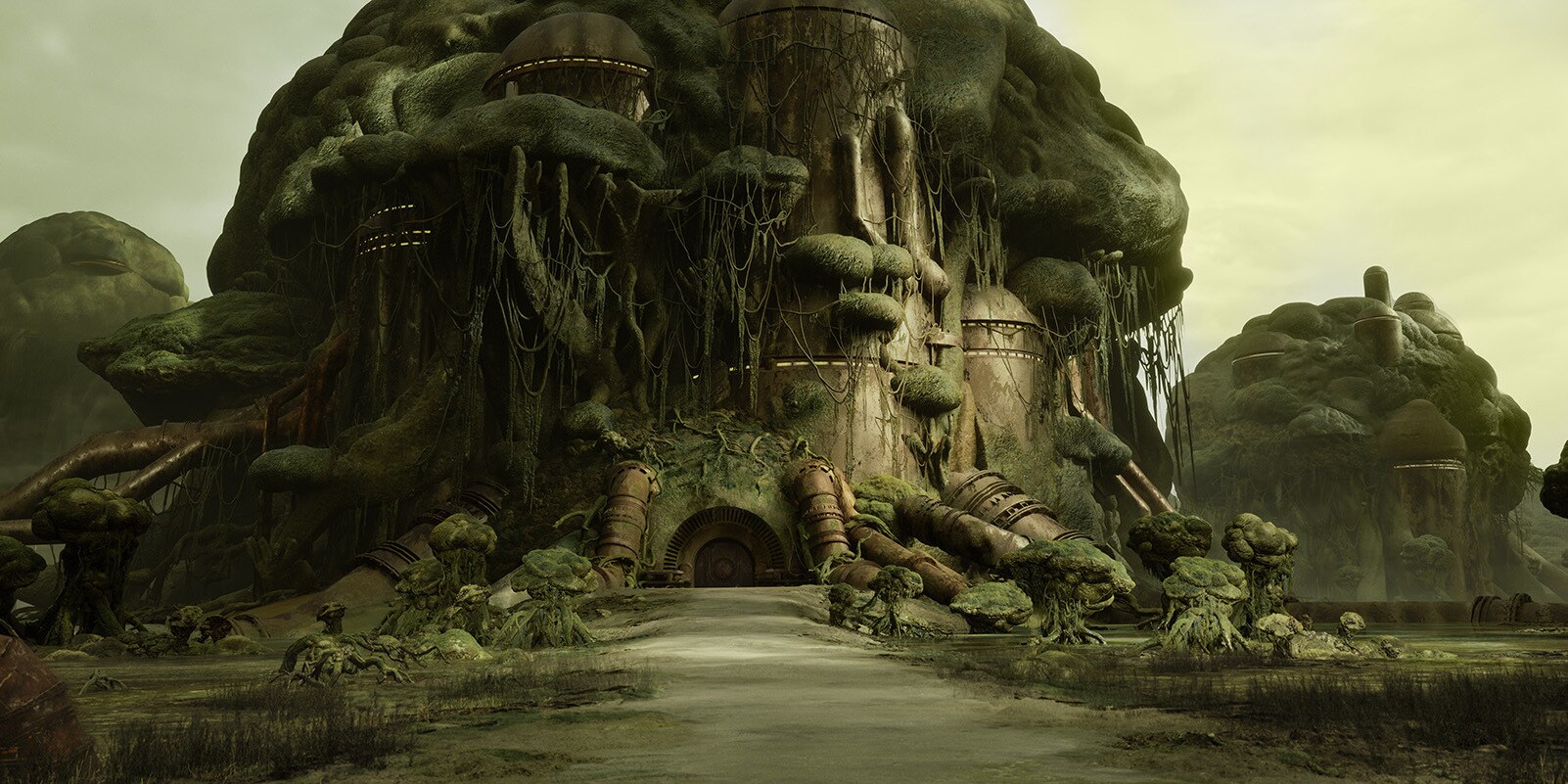
The Hutt story of Evona and Ardos
Hutt tradition remembered Varl as orbiting two suns, Evona and Ardos, imagined as divine lovers.
In the story, Evona was consumed by darkness or swallowed by a black hole.
Ardos responded catastrophically, destroying other bodies in the system and stripping Varl of its atmosphere before collapsing into a white dwarf.
Surviving the death of gods
For Hutts, the cosmic story carried more than astronomical meaning.
A people who survived the destruction associated with their own gods could interpret themselves as extraordinarily durable—or even superior to the gods who failed.
The myth therefore helped convert collective catastrophe into cultural pride.
The scholarly alternative
Later non-Hutt scholars often doubted the literal Hutt account.
The most common alternative was that the devastation of Varl resulted from Hutt civil war itself.
The physical ruin was real; the disagreement concerned how that ruin should be explained.
The contradiction is not resolved
The surviving evidence does not justify presenting the civil-war explanation as absolute fact or the stellar legend as straightforward astronomy.
Historical societies often preserve catastrophes through mythic narratives that mix memory, theology, political identity, and natural events.
Varl is one of Star Wars' clearest examples.
Other Hutt worlds were devastated too
Varl was not the only casualty.
Later histories describe other ancient Hutt colony worlds as lifeless wastes by the end of the Cataclysms.
The scale of destruction explains why reform affected Hutt civilization as a whole rather than a single dynasty.
The surviving clans
A number of powerful Hutt clans survived with portions of their fleets, servants, and client populations.
They needed a new political center and a way to prevent another cycle of clan warfare.
The solution involved both migration and institutional redesign.
Evocar becomes the destination
The survivors relocated to Evocar, a lush world already known to the Hutts and inhabited by the native Evocii.
Hutt settlers had held some land there before the mass migration.
The Cataclysms transformed that foothold into a full-scale transfer of political power.
The Evocii were already there
Evocar was not an empty replacement world waiting for Hutt settlement.
It was the home of the Evocii, a native humanoid people with their own communities and agriculture.
Calling the Hutt move a simple “relocation” risks erasing the population displaced by it.
Acquiring Evocar through unequal exchange
Legends accounts describe Hutts trading pieces of advanced technology to the Evocii in exchange for increasingly large tracts of land.
From the Hutt perspective, this became a celebrated lesson in entrepreneurship.
From the Evocii perspective, the cumulative deals resulted in the loss of their homeworld.
The appeal to Republic law
Later traditions say the Evocii appealed to the Galactic Republic after recognizing how much of Evocar had passed into Hutt control.
Republic law upheld the transactions in favor of the Hutts.
The episode shows how formally valid exchange can still produce profound dispossession.
Evocar becomes Nal Hutta
Once Hutt control became dominant, Evocar was renamed Nal Hutta.
The Huttese name is commonly translated as “Glorious Jewel.”
Renaming converted territorial control into cultural ownership: the new political order literally replaced the old world-name.
The Evocii are displaced
Many Evocii were evicted from their own planet and relocated to its fifth moon, later known as Nar Shaddaa.
Others who remained were enslaved or forced into labor associated with building the new Hutt cities.
The creation of the new Hutt capital was therefore inseparable from indigenous dispossession.
Nar Shaddaa's origins in displacement
Nar Shaddaa would eventually become one of the galaxy's most famous urban moons.
Its rise began partly through coerced Evocii labor after their removal from Evocar.
Later prosperity obscured the violence embedded in the moon's early urbanization.
Environmental transformation of Nal Hutta
Later Hutt development radically altered the former Evocar.
Strip-mining, heavy industry, construction, and pollution turned the world into the swampy, toxic environment associated with Nal Hutta in later eras.
The familiar Hutt homeworld was therefore itself a historical product rather than an unchanged natural setting.
Budhila Hestilic Amura
One Hutt figure became especially important in rebuilding political order after the Cataclysms: Budhila Hestilic Amura.
Budhila served as a principal negotiator during the settlement of Nal Hutta.
He helped transform the lesson of civil war into a new theory of Hutt politics.
The philosophy of kajidic
Budhila developed the philosophy known as kajidic.
The system did not ask Hutt clans to stop competing.
It attempted to redirect competition away from open inter-clan war and territorial conquest toward commerce, influence, infiltration, wealth, and indirect control.
Competition without self-destruction
Kajidic preserved one of the most important elements of Hutt political identity: ruthless competition.
What changed was the preferred method.
A clan could destroy a rival economically, outmaneuver it politically, steal markets, or manipulate outsiders without turning Hutt Space into another battlefield.
Kajidic was not pacifism
The new philosophy should not be mistaken for a humanitarian rejection of violence.
Hutt society continued to use slavery, coercion, hired killers, armed retainers, and criminal violence.
The reform primarily sought to stop Hutts from annihilating one another through large-scale clan war.
From conquest to indirect control
Kajidic taught that domination did not require formal annexation.
A world, corporation, official, or institution could be controlled through debt, bribery, ownership, dependence, blackmail, trade, or criminal influence.
This made Hutt power less territorial and more networked.
The Council of Elders
Budhila also established the Council of Elders, later known through several names including the Hutt Ruling Council and Grand Hutt Council.
It represented the oldest clans and mediated disputes among Hutts.
Its purpose was not to eliminate rivalry but to stop rivalry from becoming civilization-ending war.
A small ruling body
Later accounts describe the ruling council as a body of five elder representatives.
Individual clans could maneuver for seats and influence, preserving political competition inside a controlled institutional framework.
The council turned clan rivalry into a governable process.
Rules bind those claiming clan rights
Council decisions carried authority over Hutts who claimed the privileges of recognized clan membership.
That created a shared political order above individual family interests.
The Cataclysms had demonstrated what happened when no effective institution restrained those interests.
The “Old Ways” become dangerous memory
Over time, earlier Hutt imperial traditions were remembered as the “Old Ways.”
The Cataclysms became a warning about what happened when clans pursued unrestricted territorial warfare.
Political reform relied on institutionalized memory of catastrophe.
Myth and reform reinforce each other
The stellar myth of Varl and the political memory of civil war did not need to agree in every detail to serve the same cultural purpose.
Both said that the old world had ended catastrophically.
Both could support the claim that surviving Hutts needed a different way to organize power.
Earlier history fades
Later sources describe the Cataclysms as so important that Hutt history before them became partially obscured by myth.
Stories of Varl, Xim, ancient clans, and old conquests blended with cultural memory.
The catastrophe became a dividing line between an almost legendary past and a more recognizable Hutt political order.
Nal Hutta becomes the capital of Hutt Space
The relocation made Nal Hutta the center of post-Cataclysm Hutt politics.
From there, the ruling clans coordinated commercial, criminal, diplomatic, and territorial interests across Hutt Space.
The old empire had collapsed, but Hutt power did not disappear.
From empire to network
The post-Cataclysm order relied less on one territorial empire and more on clans, trade, client species, financial relationships, and influence.
That structure proved extraordinarily durable.
Hutt power survived later Republic, Sith, Imperial, and New Republic eras precisely because it did not depend on one conventional state.
The reform was built on colonialism
The Hutts responded to internal catastrophe by reducing warfare among themselves.
At the same time, they transferred the costs of rebuilding onto another people.
Evocii dispossession and coerced labor became part of the foundation of the new political order.
Internal peace can externalize violence
A society can reduce violence inside its dominant group while intensifying exploitation outside that group.
Kajidic restrained inter-Hutt warfare but did not extend equal protection to subject peoples.
The Evocii experience exposes the limits of describing the reform simply as a peace settlement.
Commerce as a weapon
The acquisition of Evocar became part of the ideological model for kajidic.
Land could be gained through deals rather than armies.
The fact that one side possessed much greater technological and economic leverage did not prevent Hutts from celebrating the exchange as proof of superior business skill.
Ownership replaces occupation
Traditional conquest requires armies to seize and hold territory.
Commercial domination can achieve similar control through property, debt, contracts, and dependency.
Post-Cataclysm Hutt politics elevated ownership itself into a form of rule.
Why later Hutt power looks criminal
Thousands of years later, Hutts were famous as gangsters, cartel leaders, smugglers, slavers, and crime lords.
The roots of that political economy lie partly in the post-Cataclysm preference for indirect power rather than formal galactic conquest.
Modern Hutt criminal organization was not a random cultural trait; it had deep institutional ancestry.
Nal Hutta and Hutt councils in current canon
Current canon preserves Nal Hutta as a Hutt-controlled swamp world and recognizes the Hutt Grand Council as a body that mediates family disputes.
Current StarWars.com material also identifies Varl as the ancestral Hutt homeworld.
The detailed 15,000 BBY Cataclysm chronology, Budhila's specific reform role, Evocar takeover sequence, and kajidic origin story remain Legends material unless separately recanonized.
The familiar Nal Hutta is later
Official modern images show a swampy, polluted Hutt world covered with palaces and industrial infrastructure.
That is not how Evocar necessarily looked when the Hutts arrived.
Legends describes the pre-Hutt world as lush and comparatively fertile, making the later environment itself evidence of historical transformation.
One approximate year, many transformations
The Hutt Cataclysms ended around the same conventional date as several other major changes.
The Kymoodon Era began, the Republic Navy was restored, the Anomids joined the Republic, and conflict on Ando entered a new phase.
These events are approximately concurrent rather than precisely ordered within one calendar year.
Anthropological assessment
The end of the Hutt Cataclysms shows how societies turn catastrophe into political theory. The Hutts did not respond by abandoning competition. They institutionalized it. Kajidic transformed rivalry from open warfare into commerce, influence, and controlled predation.
The event also demonstrates the political use of myth. Whether Varl was destroyed by stellar catastrophe, civil war, or some combination of remembered disasters mattered less culturally than the shared conclusion: the old order had destroyed its world. That story justified a new order.
But Hutt reform cannot be understood only from the perspective of the surviving clans. The creation of Nal Hutta depended on the displacement and exploitation of the Evocii. Internal stability for one group was built through colonial domination of another. The Cataclysms therefore mark both the end of Hutt self-destruction and the beginning of a new system for exporting coercion outward.
What the sources establish
Canon versus Legends
Where the Cataclysms fit
Sources and further reading
- Daniel Wallace and Jason Fry, Star Wars: The Essential Atlas, Del Rey, 2009.
- Jason Fry with Paul R. Urquhart, The Essential Guide to Warfare: Star Wars, Random House, 2012.
- Lords of Nal Hutta, Fantasy Flight Games, 2015.
- StarWars.com Databank, Nal Hutta
- StarWars.com, Hutt Family History
- Hutt Cataclysms, Wookieepedia
- Budhila Hestilic Amura, Wookieepedia
- Nal Hutta/Legends, Wookieepedia