


01 · Orientation
World overview
Coruscant is the political and administrative center of the galaxy for much of recorded history, a world where government, finance, religion, policing, and elite culture occupy the same immense urban landscape. IDS treats Coruscant as a lived world rather than background scenery. Its location in Core Worlds, its classification as Ecumenopolis, and its association with Galactic citizens from thousands of species create a social setting shaped by geography, institutions, mobility, and historical change. The purpose of the file is to connect those conditions instead of reducing the planet to a single battle, character, or visual landmark.
02 · Environment
Landscape, climate, and adaptation
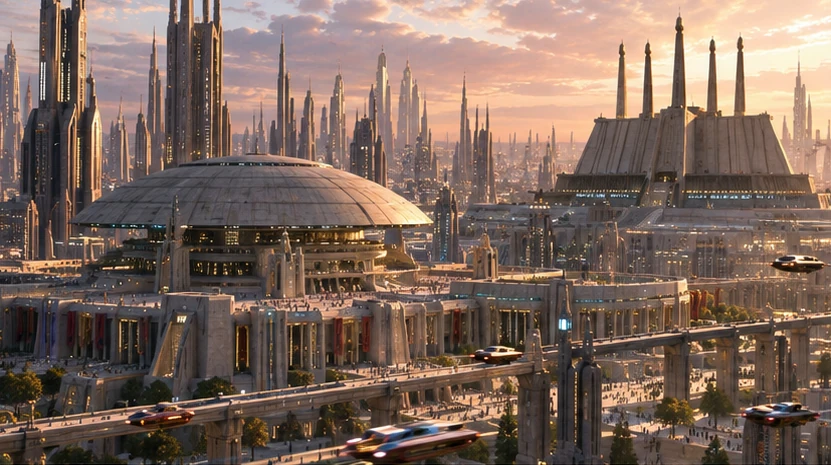
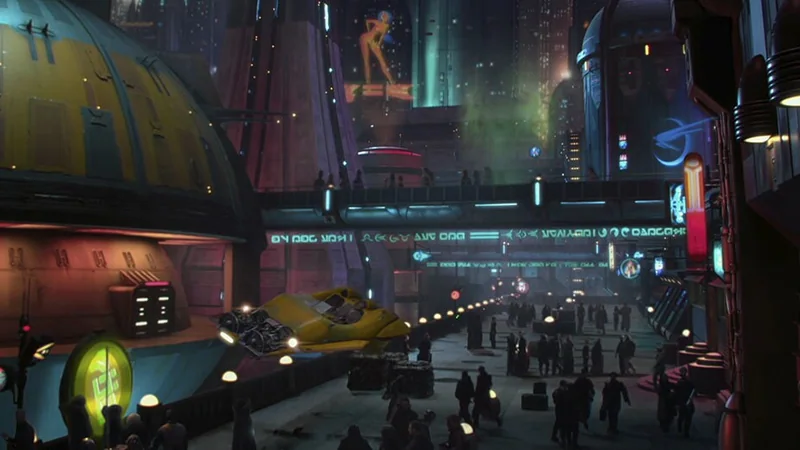
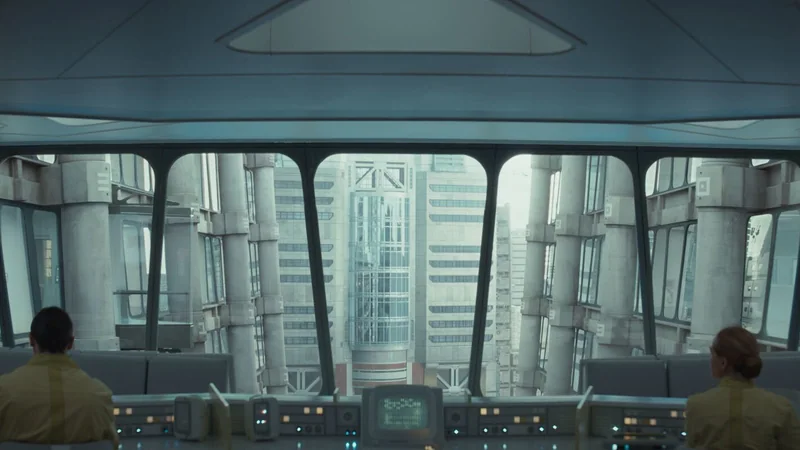
Nearly the entire surface is covered by city. Life is organized vertically across hundreds of levels, from monumental government districts and wealthy towers to industrial zones and the underworld far below. The built environment makes inequality physically visible: altitude, access, security, and transportation all shape who can move through the city and who remains confined to particular levels.
03 · Built environment
Settlement, architecture, and infrastructure
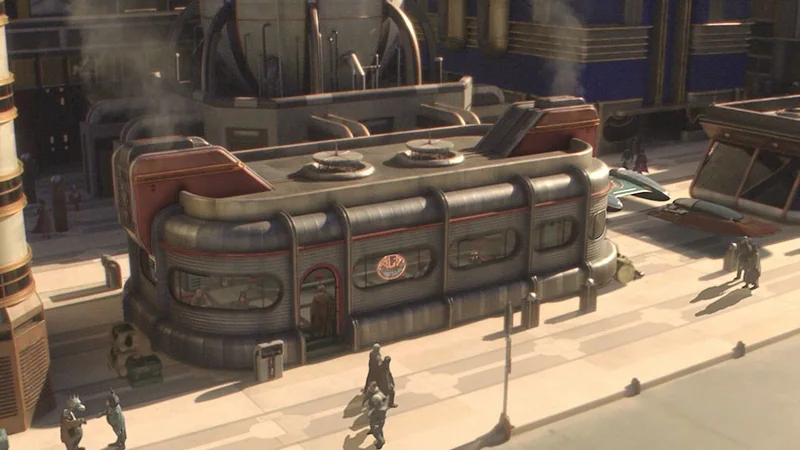
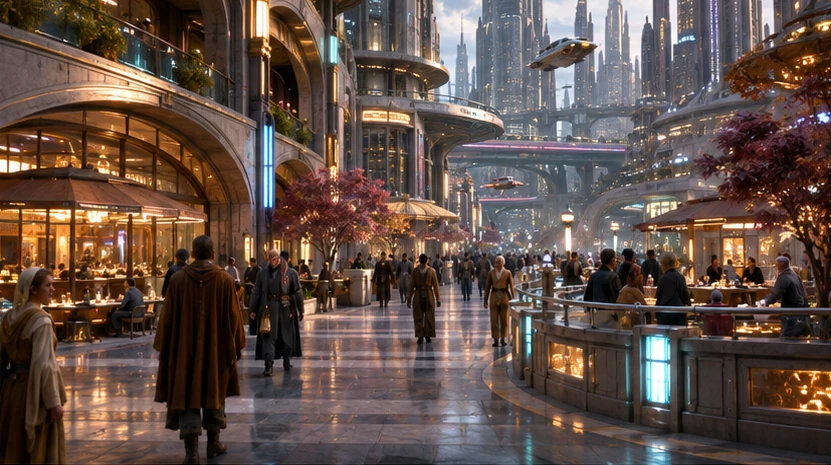
Coruscant’s built environment is the planet’s most important social fact. Government districts, residential towers, transit corridors, industrial levels, entertainment zones, and the deep undercity stack very different forms of life on top of one another. Elevation often tracks wealth and access. Public plazas and monumental architecture make state power visible above, while lower levels depend on aging infrastructure, local networks, and informal economies that receive far less political attention.
04 · Society
People, community, and everyday life
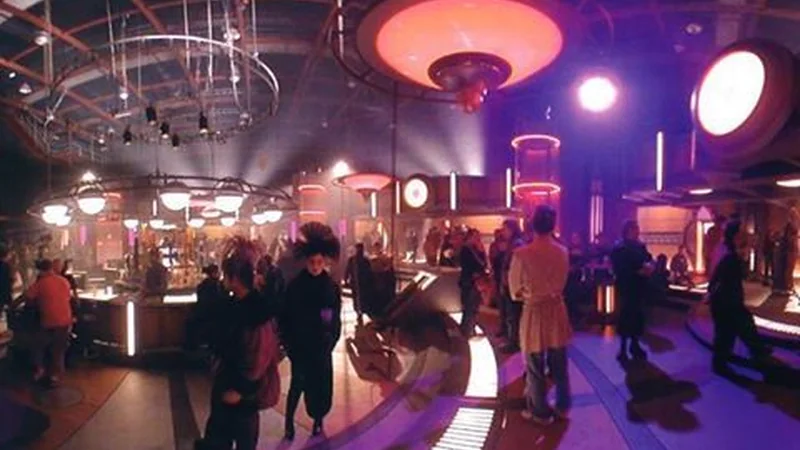
Coruscant is one of the galaxy's most cosmopolitan worlds. Senators, diplomats, military officers, workers, migrants, criminals, religious communities, and countless species live in close proximity. The city therefore functions as a meeting point for galactic identities while also producing sharp divisions of class and status. The communities most closely associated with this file are Galactic citizens from thousands of species. The IDS focus is government, class, bureaucracy, which means the planet is read through differences in institution, class, occupation, migration, and political experience rather than as a single unified culture. A world can contain neighboring populations with distinct languages, religions, histories, and relationships to state power.
05 · Economy & labor
Resources, work, and political economy
The capital’s economy depends on bureaucracy as much as commerce. Senators, aides, clerks, judges, diplomats, military staff, financiers, service workers, technicians, transport crews, entertainers, and industrial laborers all support institutions concentrated on the world. Coruscant also attracts migrants seeking opportunity, creating a labor market in which proximity to political power can generate wealth for some while leaving others in precarious work far below the elite districts. Entire service economies also exist around government sessions, diplomatic traffic, elite consumption, construction, maintenance, and the constant movement of people through the capital, making political centrality itself an economic resource.
06 · Religion & worldview
Sacred landscape, belief, and moral order
Coruscant has hosted major religious institutions, most prominently the Jedi Temple, but the planet itself is too socially diverse to assign a single worldview. The Temple made the Force visible within Republic political life, while Imperial rule later converted the same sacred complex into a symbol of conquest and suppression.
07 · Institutions
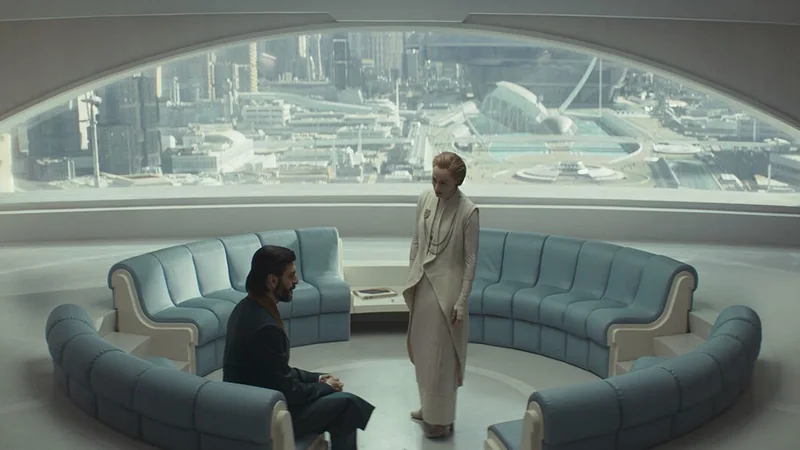
Government, authority, and power
The Galactic Senate, Jedi Temple, executive government, courts, security services, and later Imperial institutions all concentrate power on Coruscant. When the Republic becomes the Empire, the planet changes less through geography than through the institutions occupying the same spaces under a new political order. The major eras associated with Coruscant are Republic, Clone Wars, Empire. Political authority can therefore change as governments, militaries, occupations, local elites, resistance movements, or outside institutions gain and lose control. The archive uses government, class, bureaucracy to ask who can make decisions, who bears the costs of those decisions, and how planetary institutions connect local communities to larger galactic systems.
08 · Mobility
Movement, travel, and connection
Movement across Coruscant is controlled by infrastructure. Air lanes, public transit, landing platforms, elevators, security checkpoints, and restricted government zones determine who can cross the city efficiently. The planet is connected to nearly every major hyperspace network, but local mobility is unequal. A senator, courier, laborer, underworld resident, and fugitive do not experience the same city because access to transport, permits, private vehicles, and secure districts differs sharply.
09 · Conflict & security
War, policing, occupation, and defense
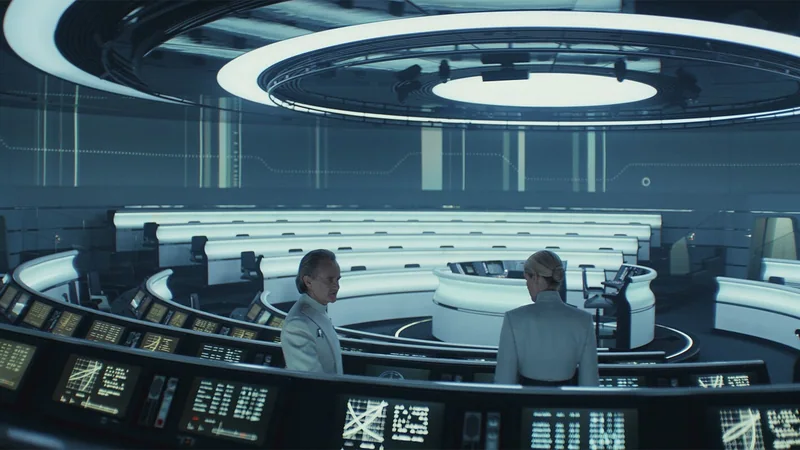
Coruscant is rarely a conventional battlefield, yet it is saturated with security. Policing, intelligence work, political surveillance, military command, prison systems, and emergency legislation make conflict administrative as well as violent. During the Clone Wars, attacks on the capital intensified fears that justified expanded executive authority. Under the Empire, that security infrastructure became more openly coercive, showing how institutions built for crisis can survive and change purpose after the crisis ends.
10 · Points of interest
Places that make Coruscant legible
Places inside Coruscant make large planetary histories concrete. Cities, temples, factories, homes, bases, ruins, and landscapes show where institutions actually operate and where people work, worship, govern, travel, fight, remember, and build community. IDS treats these locations as evidence of social life rather than as a sightseeing checklist. Each point is included because it helps explain how geography, political authority, material culture, religion, or historical change becomes visible on the ground.
Jedi Temple
The Jedi Order’s central temple combined monastery, school, archive, residence, and political institution. Its later conversion into the Imperial Palace turned sacred architecture into a visible symbol of regime conquest.
Open connected IDS file →Galactic Senate Building
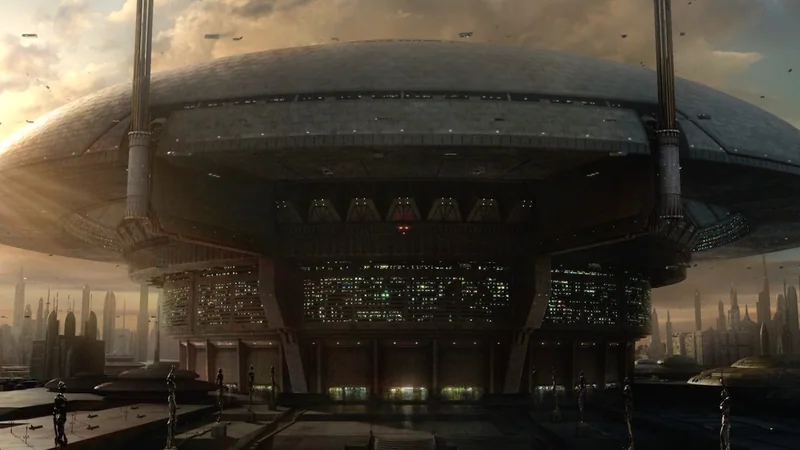
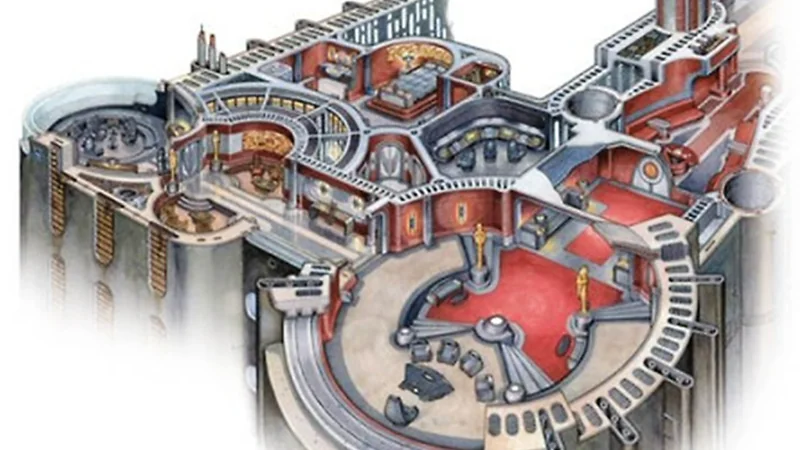
The Senate complex was the formal center of Republic representation and a stage for the concentration of emergency powers that helped transform republican institutions into Imperial rule.
Open connected IDS file →Level 1313 and the underworld
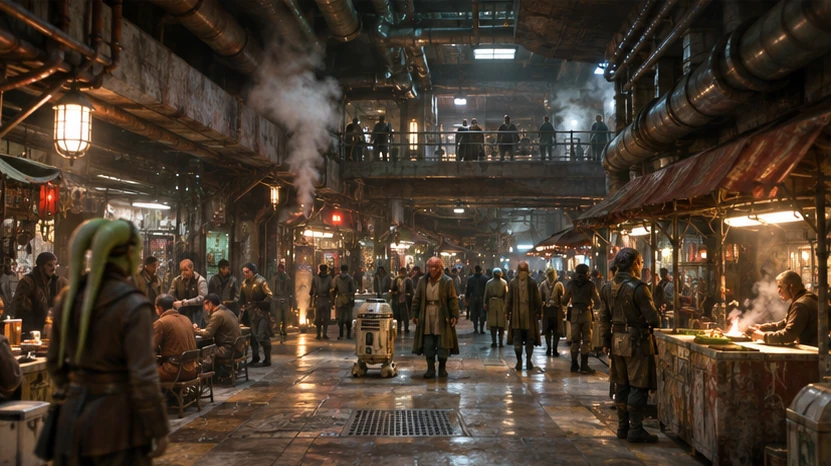
Coruscant’s lower levels make the city’s vertical inequality concrete. Industrial labor, informal economies, policing, and criminal networks exist physically beneath elite government and financial districts.
11 · Change over time
Historical significance
Coruscant served as the capital of the Galactic Republic for generations. It was a central battlefield of political struggle during the Clone Wars, witnessed Order 66 and the destruction of the Jedi Order, and became the capital of the Galactic Empire. Its continued importance shows how regimes can transform while retaining the same bureaucratic center.
12 · IDS lens
What this world reveals
Coruscant is useful for studying how architecture and infrastructure reproduce political hierarchy. The planet makes state power visible in buildings, security zones, transport routes, and the literal distance between elites and people living below them. The archive emphasis for Coruscant is government, class, bureaucracy. That focus is useful because it connects geography to social organization instead of treating the world as scenery. IDS asks how people experience institutions differently depending on class, community, mobility, political status, access to resources, and historical circumstance, and how those differences become visible in the built and natural environment.
13 · Sources & continuity
Official primary source
The factual baseline for this Coruscant file comes from official Star Wars reference material and the canon appearances listed in Quick Facts. IDS uses those sources for names, geography, political events, communities, and chronology, while the surrounding discussion of institutions, religion, settlement, labor, and social change is independently written analysis. Some aspects of everyday life on this world remain undocumented in current Canon.