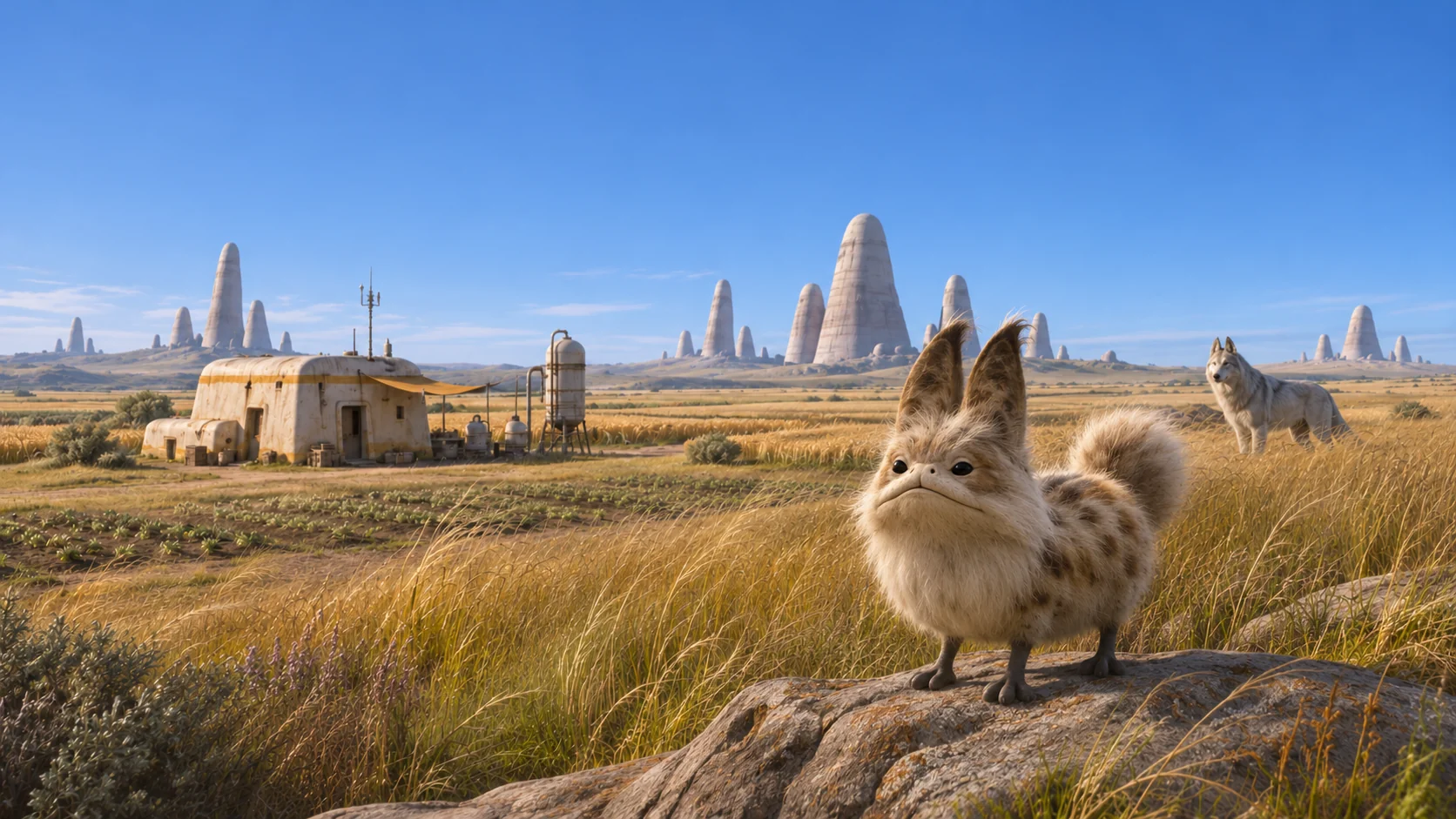
Original AI cinematic interpretation. Not a screen still or a surveyed architectural plan.
Explore the location
Investigate Plains and farming communities
Choose a subject to examine a distinct part of this location's history and setting.
Field note
Land and work
Agricultural households were central to Lothal before Imperial extraction and manufacturing expanded. Some farmers sold their property, while others experienced coercion and dispossession. The open landscape should be read as inhabited and worked land, not empty scenery.
Golden plains, exposed stone formations and farms define much of Lothal’s visual identity. Agriculture supported households before the Empire redirected land and labor into military production. Some landowners sold their farms. Others faced coercion or confiscation. Rural Lothal was a lived environment, not empty terrain awaiting industrial development.
Displacement and survival
Dispossessed residents sought shelter in settlements such as Tarkintown. The Empire’s violence against that community made the human costs of occupation visible. Farms and rural outposts also supported networks of information and assistance. This scene represents a farming landscape rather than claiming to show a particular named farm or Tarkintown’s exact location.
Animals and the Force
Loth-cats are native predators, sometimes affectionate but capable hunters. Loth-wolves occupy a different narrative role. Their encounters with Ezra link the planet’s living landscape to the Force. The animals in this original scene are interpretive depictions. Their positions are an illustration, not a claim that wolves routinely gather beside farmhouses.
Look closer
What is verified here?
The linked official sources establish the setting and events. The original cinematic image supplies interpretation, not additional historical evidence.
What does the image leave uncertain?
Exact dimensions, routes and unnamed structures are not established by this illustration. Use the original visual references to compare.