











01 · Orientation
World overview
Mandalore is the symbolic center of Mandalorian identity, but its history is defined by disagreement over what being Mandalorian means: warrior tradition, pacifist reform, clan loyalty, resistance, exile, and restoration. IDS treats Mandalore as a lived world rather than background scenery. Its location in Outer Rim · Mandalore sector, its classification as Homeworld and political center, and its association with Mandalorians, clans and houses create a social setting shaped by geography, institutions, mobility, and historical change. The purpose of the file is to connect those conditions instead of reducing the planet to a single battle, character, or visual landmark.
02 · Environment
Landscape, climate, and adaptation
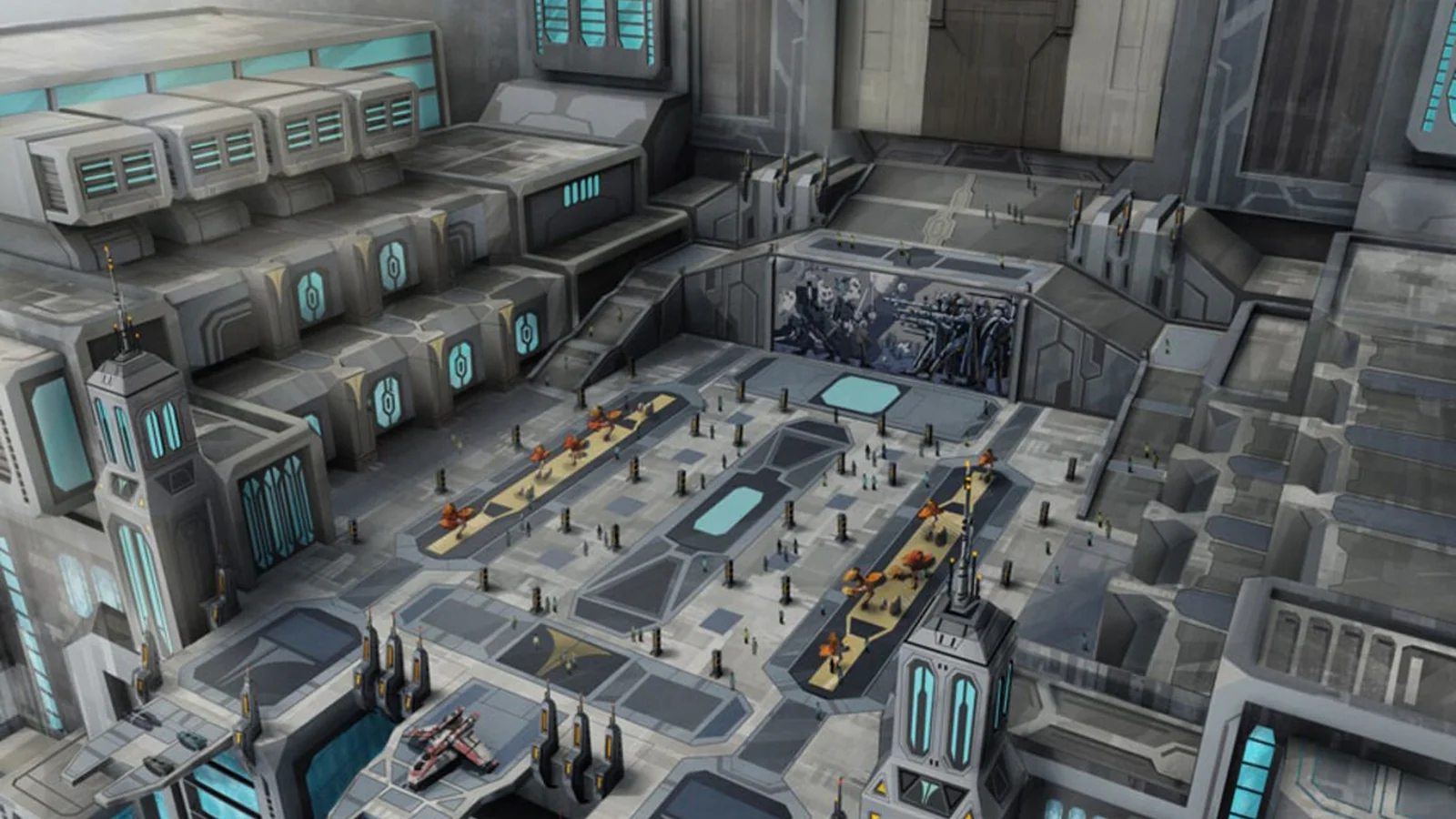
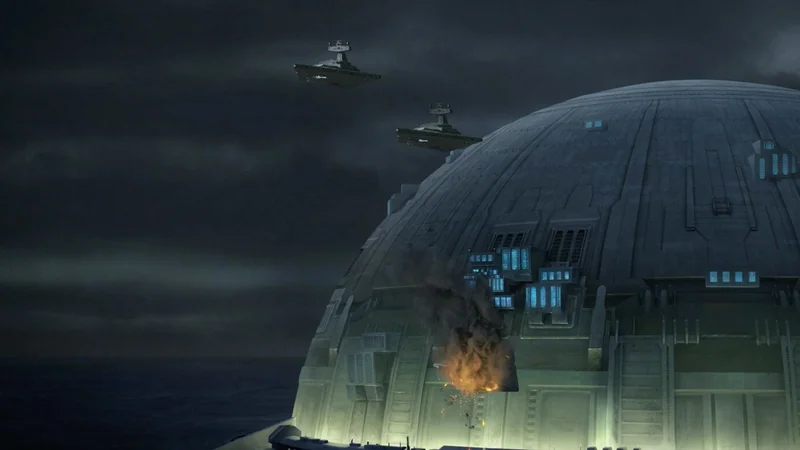
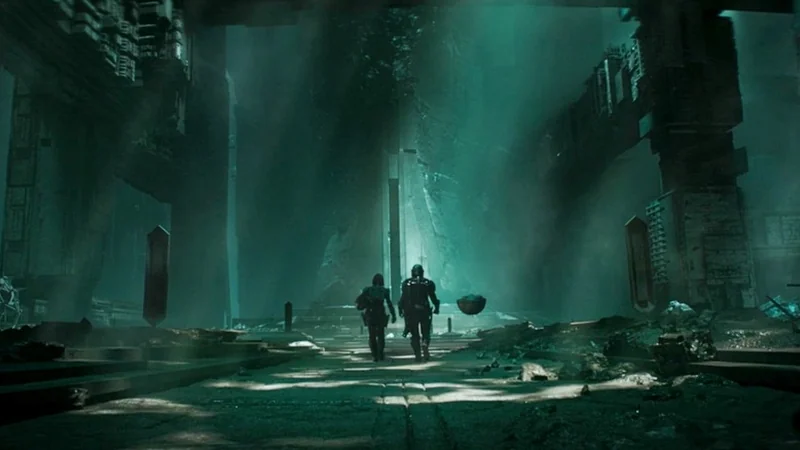
Long periods of conflict damaged Mandalore's environment and left much of the surface barren. Urban centers such as Sundari were built beneath protective domes, creating a sharp contrast between engineered civic life and the scarred landscape beyond. Later Imperial violence left additional ruins and contamination. Quick Facts identifies the climate as Arid after centuries of war and the terrain as Deserts, domed cities, ruined settlements. Those environmental conditions affect where settlements can develop, how people travel, what resources become politically important, and which forms of infrastructure are practical. Environment does not mechanically determine culture, but it places real constraints on labor, architecture, transportation, defense, and everyday life.
03 · Built environment
Settlement, architecture, and infrastructure
Mandalore’s settlement history reflects repeated environmental damage and political conflict. Sundari’s protective dome allowed dense civic life to continue on a damaged surface, while other settlements preserved clan-based and martial traditions outside the capital. After the Great Purge, ruined cities, underground mines, abandoned forges, and scattered shelters became part of the political landscape. Rebuilding therefore means more than repairing structures; it requires deciding which version of Mandalorian society those structures should support.
04 · Society
People, community, and everyday life
Mandalorian society is organized through clans, houses, inherited loyalties, found family, warrior traditions, and competing creeds. Some Mandalorians define belonging through ancestry, others through adoption and oath. Those disagreements are not side issues; they shape leadership, family, legitimacy, and social status. The communities most closely associated with this file are Mandalorians, clans and houses. The IDS focus is identity, clan politics, sovereignty, which means the planet is read through differences in institution, class, occupation, migration, and political experience rather than as a single unified culture. A world can contain neighboring populations with distinct languages, religions, histories, and relationships to state power.
05 · Economy & labor
Resources, work, and political economy
Beskar is the most politically important material associated with Mandalore because it joins craft, warfare, inheritance, status, and sovereignty. Armorers transform raw metal into objects that can carry family history and collective identity. Trade, military employment, mercenary work, weapons production, and clan patronage have also shaped Mandalorian livelihoods. After dispersal, economic life becomes diasporic, with Mandalorians working across the galaxy while still treating the homeworld and its resources as symbols of legitimacy.
06 · Religion & worldview
Sacred landscape, belief, and moral order
Mandalore is sacred in different ways to different Mandalorians. The Mines, Living Waters, ancestral armor, beskar, the Mythosaur, and stories of earlier rulers can carry ritual or sacred meaning, especially for creed-focused groups such as the Children of the Watch. These beliefs are contested rather than universally shared. Religion and worldview are treated as parts of social life rather than decorative lore. Sacred places, collective memory, ritual, moral authority, and relationships to land can influence how communities understand belonging and legitimate power. Where canon documents no shared planetary religion, IDS keeps that absence visible instead of inventing a uniform belief system for everyone living on the world.
07 · Institutions
Government, authority, and power
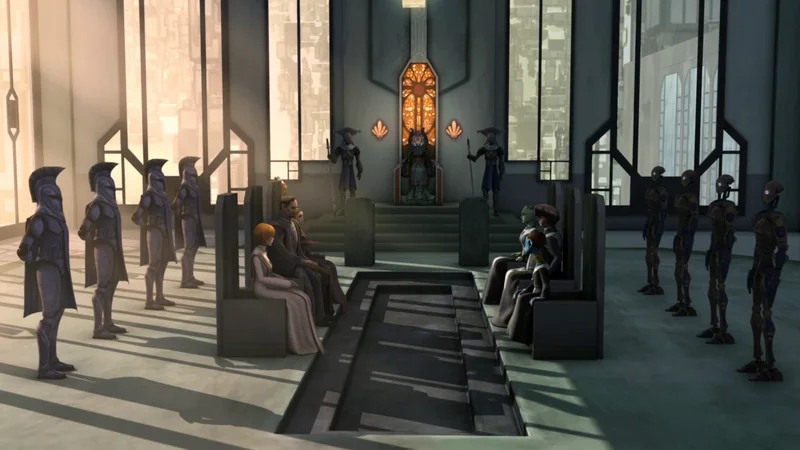
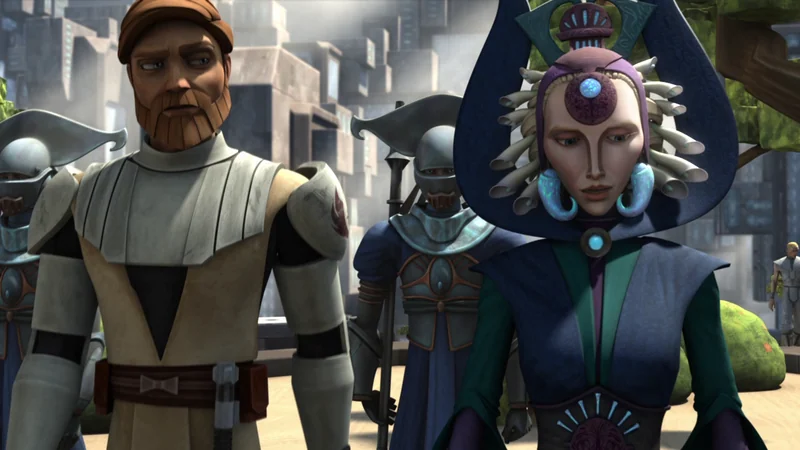
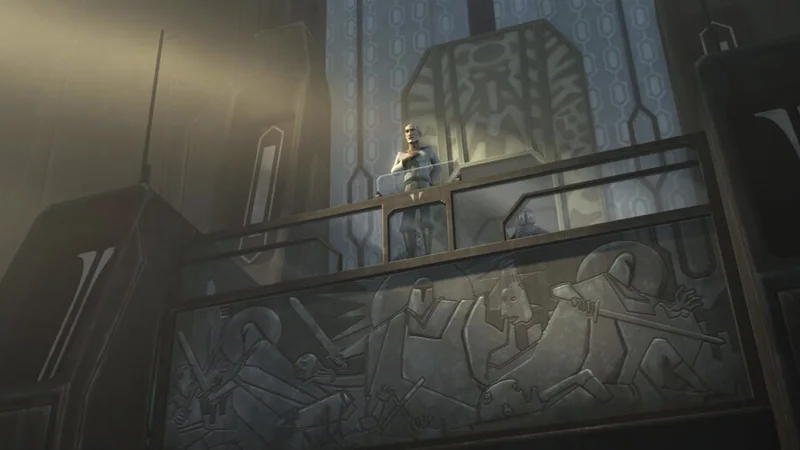
Mandalore repeatedly shifts between centralized government and factional rule. Duchess Satine Kryze's New Mandalorians pursued neutrality and pacifism, Death Watch sought a return to martial tradition, Maul seized control through political violence, and the Empire later ruled through occupation and collaborators. The Darksaber became an especially powerful symbol of authority.
08 · Mobility
Movement, travel, and connection
Mandalorian history is defined by both territorial attachment and dispersal. Clans move between Mandalore, Concordia, Kalevala, covert settlements, mercenary service, and exile. Starships, armor, and portable clan symbols allow identity to travel even when the homeland is inaccessible. The Purge intensified that mobility by turning survival into diaspora. Later returns to Mandalore transform travel into a political act: coming back becomes evidence that the world can again support collective life.
09 · Conflict & security
War, policing, occupation, and defense
Conflict on Mandalore repeatedly takes the form of civil war, coup, occupation, and competing claims to legitimacy. New Mandalorians, Death Watch, Maul’s Shadow Collective, Imperial collaborators, resistance fighters, and later returning clans each imagine security differently. Martial skill alone does not settle those disputes because the deeper question is who can define Mandalorian authority. The Great Purge shows the extreme consequence of losing sovereignty to an outside regime willing to make the planet uninhabitable.
10 · Points of interest
Places that make Mandalore legible
Places inside Mandalore make large planetary histories concrete. Cities, temples, factories, homes, bases, ruins, and landscapes show where institutions actually operate and where people work, worship, govern, travel, fight, remember, and build community. IDS treats these locations as evidence of social life rather than as a sightseeing checklist. Each point is included because it helps explain how geography, political authority, material culture, religion, or historical change becomes visible on the ground.
Sundari
The domed capital concentrated New Mandalorian government and later became a battleground for Death Watch, Maul, Imperial occupation, and competing claims to legitimate Mandalorian rule.
Mines of Mandalore
The mines and Living Waters became central to creed-focused Mandalorian ideas about purification, ancestry, restoration, and whether a devastated homeland could become socially inhabited again.
Open connected IDS file →Great Forge
The Great Forge links beskar production to political authority, craft knowledge, armor traditions, and collective memory, showing how material culture can carry claims about belonging and sovereignty.
11 · Change over time
Historical significance
The Clone Wars exposed deep divisions within Mandalorian society. Imperial rule fractured the planet further, and the Great Purge devastated Mandalore and scattered its people. In the New Republic era, surviving Mandalorians began returning and rebuilding, turning restoration into both a political and cultural project. The principal appearances listed for Mandalore are The Clone Wars, Rebels, The Mandalorian. Those stories capture particular moments rather than the complete history of the world. IDS reads wars, occupations, migrations, regime changes, reconstruction, and institutional continuity as processes that reshape social life over time. Historical significance therefore comes from what changes for communities, not only from whether a famous event happened there.
12 · IDS lens
What this world reveals
Mandalore shows that culture is never a single fixed tradition. Competing groups can claim the same symbols, ancestors, language, and homeland while disagreeing about the practices that make someone a legitimate member of the community. The archive emphasis for Mandalore is identity, clan politics, sovereignty. That focus is useful because it connects geography to social organization instead of treating the world as scenery. IDS asks how people experience institutions differently depending on class, community, mobility, political status, access to resources, and historical circumstance, and how those differences become visible in the built and natural environment.
13 · Sources & continuity
Official primary source
The factual baseline for this Mandalore file comes from official Star Wars reference material and the canon appearances listed in Quick Facts. IDS uses those sources for names, geography, political events, communities, and chronology, while the surrounding discussion of institutions, religion, settlement, labor, and social change is independently written analysis. Some aspects of everyday life on this world remain undocumented in current Canon.