Hutt power was built through family, territory, and commerce. The major Hutt clans, often organized into kajidics, controlled shipping routes, labor, gambling, protection, and other businesses that crossed the line between legal trade and organized crime. Their influence was strongest in Hutt Space and the Outer Rim, where distant governments struggled to enforce their laws.
The Hutt underworld was not a single command structure. Clans competed with one another, negotiated temporary alliances, and used intermediaries to protect their interests. A Hutt could be a crime lord, landlord, investor, political patron, or all of those at once. The system survived because its participants understood that open conflict could damage the routes and markets that made everyone wealthy.
Nal Hutta and Nar Shaddaa
Nal Hutta served as a political center for the Hutts, while Nar Shaddaa became the visible commercial face of their power. The Smuggler’s Moon connected freighters, bounty hunters, casinos, information brokers, and syndicate agents. Its crowded infrastructure made it valuable and difficult to control. A person could disappear there, but they could also be found by anyone with enough credits and the right contacts.
These worlds show why the underworld matters to galactic history. Criminal networks carried goods when official routes were blocked, financed local rulers, and moved weapons during wars. They were not outside politics. They were one of the ways politics operated in places where formal institutions had little credibility.
Jabba and the politics of reputation
Jabba Desilijic Tiure is often remembered as a single crime lord, but his importance comes from the network around him. Jabba controlled territory, demanded tribute, employed bounty hunters, and maintained relationships with smugglers and local leaders. His palace was a court where deals, punishments, entertainment, and negotiations happened together.
Jabba’s authority depended on reputation as much as on force. A debt that went unpaid could damage the credibility of the entire organization. A public punishment warned others that contracts were real. A successful deal made the Hutt appear useful to people who did not like him. The same logic allowed Hutt clans to work with governments while remaining officially separate from them.
Bounty hunters and subcontracted violence
Hutt organizations rarely needed to perform every act of violence themselves. Bounty hunters allowed a clan to hire specialists without giving them permanent authority inside the organization. The arrangement created competition, deniability, and a market for skill.
Boba Fett, Cad Bane, Fennec Shand, and many other hunters show how the profession could connect different eras. A bounty could be personal, political, commercial, or all three. Collectors often see these characters as separate personalities, but the lore also places them inside a labor system that made criminal power portable.
Hutts during the Clone Wars
The Clone Wars disrupted trade across the galaxy, but they did not remove Hutt influence. The Republic and Separatists both needed access to routes through the Outer Rim. Hutt leaders could provide information, passage, weapons, or prisoners, then demand payment from whichever side needed them more urgently.
That position was dangerous. A clan that supported the wrong faction could lose territory or become a target. Hutt politics therefore favored short-term calculation over ideological loyalty. The clans did not need to believe in the Republic or the Separatists. They needed to remain valuable to both.
After the Empire
The fall of the Empire changed the balance of the underworld without ending it. Imperial garrisons withdrew from some regions, local governments returned, and new syndicates competed for the routes and weapons left behind. The Hutts remained important, but they faced rivals such as the Pyke Syndicate, Crimson Dawn, and other networks that used different structures.
This transition matters because it shows that political collapse creates opportunities for private power. A government can fall while the systems of debt, labor, smuggling, and protection remain in place. The next regime inherits those systems whether it recognizes them or not.
Why Hutt lore matters to collectors
Hutt-related cards connect character collecting to setting history. A Jabba card can represent a crime lord, a clan leader, or the politics of Tatooine. A bounty hunter card can show the person and the system that hired them. A location card can capture the commercial geography that made the Outer Rim important.
Parallels, autographs, and sketches are especially useful for underworld subjects because the visual language often carries as much information as the name. A palace, cantina, sail barge, or crowded moon can place a character inside a network of power that extends far beyond one film or series.
The Hutts across film, animation, and television
Hutt power appears in different registers across Star Wars. Jabba the Hutt makes it visible in Return of the Jedi; The Clone Wars expands the Hutt Council and shows how crime syndicates intersect with planetary politics; Solo follows the labor and smuggling worlds that feed Hutt influence; and The Book of Boba Fett asks what happens when a syndicate's former territory becomes a contested civic space. Novels, comics, and reference works add older histories, rival families, and the long memory of Hutt control.
These stories are strongest when the Hutts are treated as a political formation rather than a collection of gangsters. Their power rests on kinship, debt, hospitality, violence, logistics, and the ability to make illegal economies feel more dependable than official government. A Hutt palace is a court, warehouse, prison, archive, and theatre at the same time. Its apparent excess is part of the institution's work.

Clans, kinship, and the politics of belonging
Hutt society is organized through family and clan relationships, but kinship does not make it egalitarian. It creates a hierarchy of obligation. A relative may receive protection, a contract, a territory, or an introduction, while an outsider must pay in money, labor, information, or loyalty. The clan is a social safety net for some people and an instrument of exclusion for others.
That structure helps explain the importance of the Hutt Council. It is not a modern legislature. It is a meeting of powerful houses whose members negotiate precedence, territory, retaliation, and access to profitable routes. Their diplomacy depends on ritualized insult and display because the ability to tolerate or answer an insult is evidence of capacity. A Hutt who appears unable to protect a client invites competitors to test the boundary.
Names and titles matter in this system. A Hutt's lineage, reputation, and known alliances can open doors before a ship arrives. The same identity can also make a Hutt vulnerable if enemies know which relatives or businesses carry emotional or economic value. In anthropological terms, reputation functions like infrastructure. It moves information and makes promises credible across distance.

Debt, labor, and the underworld economy
Hutt power is sustained by circulation. Spice, weapons, information, gambling, shipping, protection, and forced labor connect distant worlds. A debt is valuable because it can be transferred, inherited, and enforced by people who never meet the original borrower. The resulting economy is not outside politics. It often fills the space where governments are absent, corrupt, or too distant to provide security.
That apparent service comes at a human cost. Slavery and coercive labor make Hutt wealth possible, while public generosity can disguise private extraction. A palace may feed a neighborhood during a festival while its guards control the same neighborhood's movement. A patron may protect a musician, pilot, or merchant while treating the person's future as property. This mixture of care and domination is what makes patronage durable. People can be grateful for protection and still be trapped by it.
Transportation is central to the system. Pilots, mechanics, translators, bookkeepers, bodyguards, and dock workers make the underworld work. Their labor is easy to overlook because stories often focus on the Hutt at the top of the hierarchy. An anthropological reading brings the logistics back into view. The syndicate is not a slug in a throne room. It is a chain of relationships that turns a favor into a cargo shipment and a cargo shipment into political leverage.
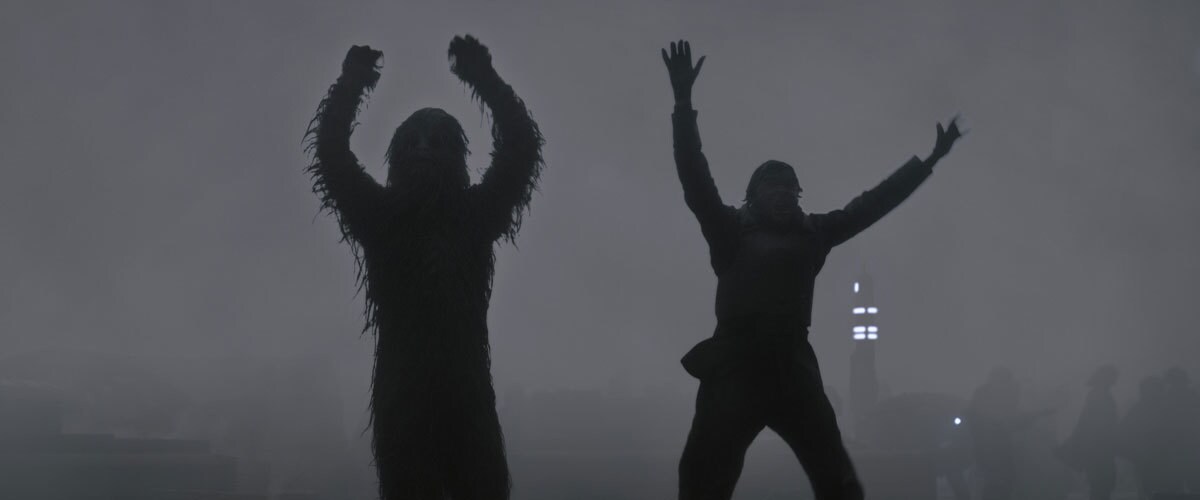
Tatooine as a contested social landscape
Tatooine is often described as lawless, but lawlessness is not the same as the absence of order. Moisture farmers, Tusken communities, Jawas, cantina owners, mechanics, miners, traders, and syndicate agents all maintain different forms of order. Hutt authority overlays those systems without fully replacing them. It collects tribute, controls strategic sites, and punishes defiance, but it depends on local knowledge that it does not possess by itself.
The Book of Boba Fett makes succession visible. When Jabba dies, the question is not simply who owns the palace. It is who can make the city's networks continue to function. Boba's claim is challenged by other syndicates, local elites, mercenaries, and communities with their own histories of abuse. The conflict becomes a debate over whether rule means taking tribute, providing protection, or being recognized by the people who live in the territory.
The result is a useful contrast between extraction and belonging. A syndicate can hold a town through force, but a durable government needs social memory on its side. The people of Mos Espa have witnessed many authorities arrive and disappear. Their skepticism is not apathy. It is an archive of repeated transitions.
Gender, species hierarchy, and historical blind spots
Hutt stories also expose how galactic narratives decide whose labor is visible. Female characters such as Leia Organa, Fennec Shand, Garsa Fwip, and the servants and performers of Hutt courts navigate systems designed around male criminal authority, but they are not merely victims inside them. They negotiate, deceive, organize, and create alternative routes through the economy. Their strategies are different because their access to force, wealth, and public speech is different.
Species hierarchy is equally important. The underworld is multi-species, yet Hutt control frequently treats non-Hutt people as replaceable labor or entertainment. The ability to cross species boundaries can be a resource for a broker, interpreter, or smuggler, but the same difference can be used to mark someone as expendable. Star Wars repeatedly shows that a criminal economy can reproduce the prejudices of formal states even while presenting itself as a freer alternative.
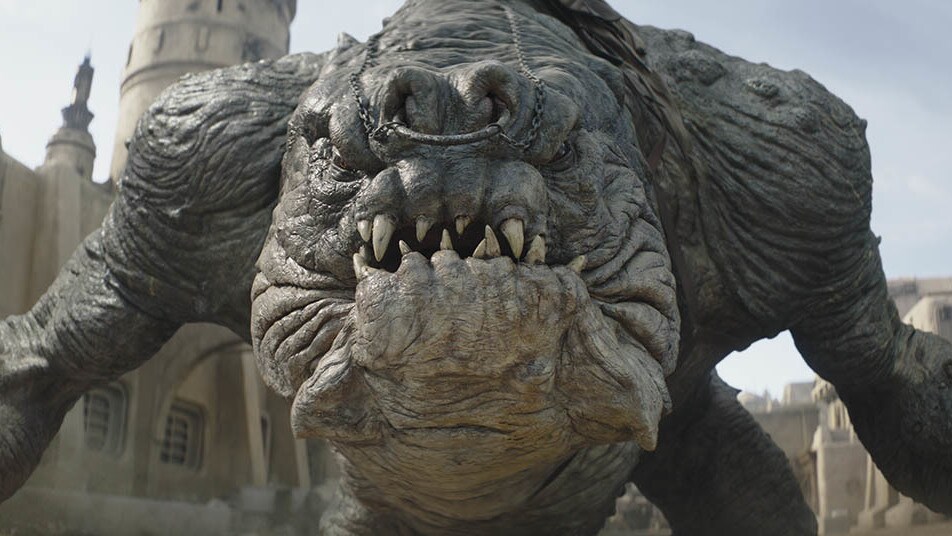
For collectors, this means Hutt imagery should be read beyond the largest figure in the frame. A palace, a protocol droid, a dancer, a rancor, a skiff, or a debt ledger can reveal how authority is distributed. The visual excess of the underworld is a record of labor and unequal access, not just a style of villainy.
Sources and further reading
- Jabba the Hutt, StarWars.com Databank
- Nal Hutta, StarWars.com Databank
- Nar Shaddaa, StarWars.com Databank
- Boba Fett, StarWars.com Databank
- The Book of Boba Fett, StarWars.com
- Solo: A Star Wars Story, StarWars.com
- Jabba the Hutt, StarWars.com Databank
- Hutt Clan, StarWars.com Databank
Connected archive