The Unknown Regions are not empty space. They are a difficult-to-navigate part of the galaxy where gravity anomalies, unstable routes, and limited records make travel dangerous. The term describes the limits of the Republic and later the Empire’s maps, not the absence of civilizations.
Control over the Unknown Regions depends on information. A government that knows a safe route can move ships, resources, and armies where outsiders cannot follow. A government that loses that knowledge can be cut off from its own allies. This makes navigation a military capability and a political secret.
Why the map breaks down
Hyperspace travel normally depends on reliable calculations, but the Unknown Regions contain conditions that make ordinary routes difficult to predict. Navigators need specialized knowledge, instruments, or Force-assisted perception to pass safely through the region. A route can be possible without being repeatable for someone who lacks the right data.
The result is a different kind of frontier. The edge of the map is not simply far away. It is protected by the cost of reaching it. Distance, secrecy, and navigation create a barrier that can be more effective than a fleet.
The Chiss Ascendancy
The Chiss Ascendancy is one of the most important political powers associated with the Unknown Regions. It developed its own institutions, military priorities, and methods of managing threats. Chiss society is not a hidden version of the Republic or the Empire. Its history and internal rules give it a distinct political identity.
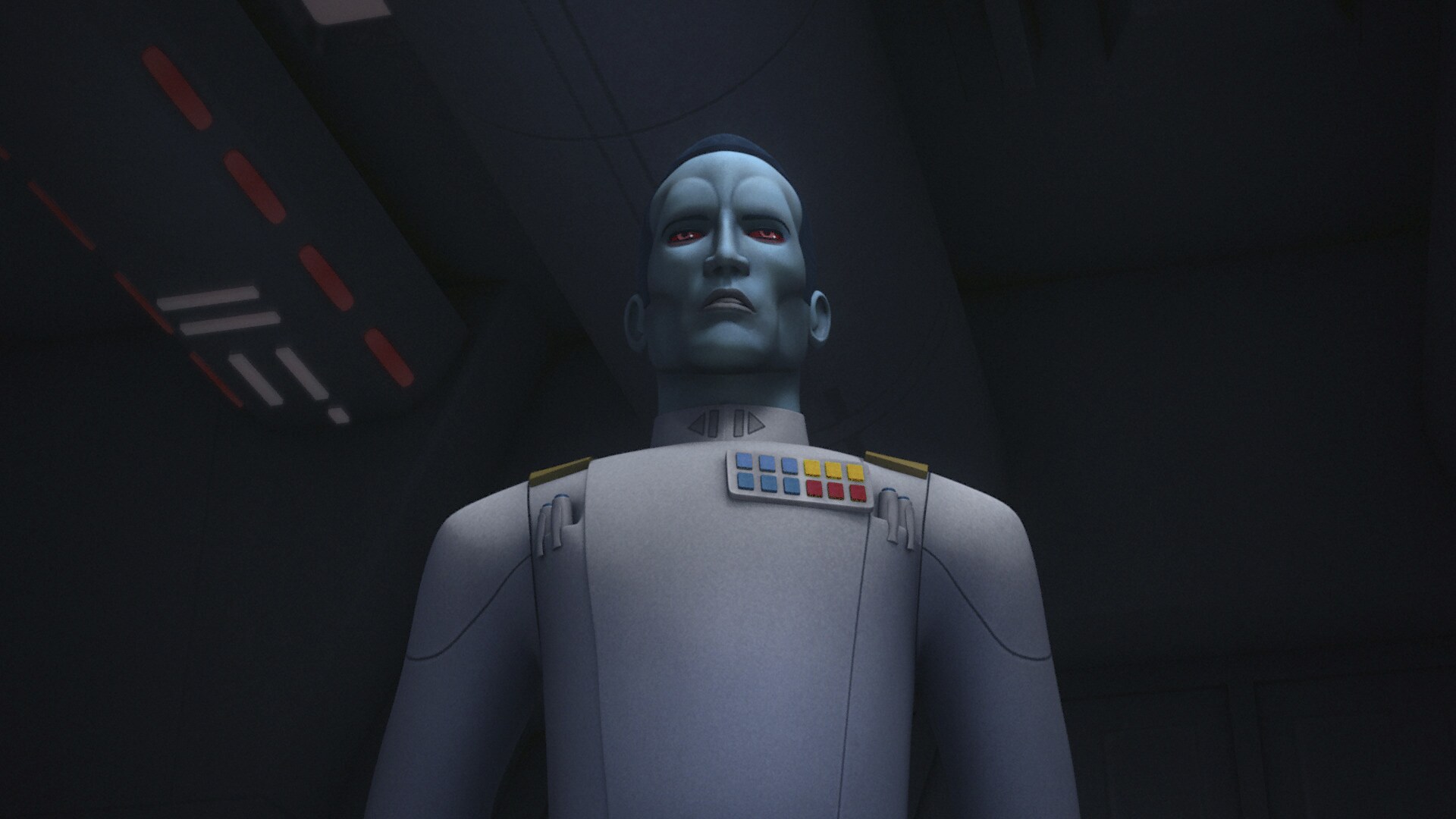
Grand Admiral Thrawn’s career shows what happens when a person from the Ascendancy enters the wider galaxy. Thrawn studies art, language, and behavior as strategic information. His approach is shaped by the need to understand an opponent before that opponent reaches Chiss space. To Imperial officers, his methods can look unusual. Within the logic of the Unknown Regions, they are practical.
Thrawn and the problem of translation
Thrawn’s importance is not limited to his rank. He brings one political system’s assumptions into another. The Empire values hierarchy, speed, and visible obedience. Thrawn values analysis, preparation, and the ability to predict how a culture will respond to pressure. His success comes from using Imperial resources without fully adopting Imperial thinking.
That difference creates conflict. Imperial leaders often judge loyalty through ceremony and submission, while Thrawn judges competence through results. His record shows why he can rise inside the Empire, but his isolation also shows why he remains vulnerable. A commander can understand an enemy and still be defeated by allies who do not understand the commander.
Imperial projects beyond the map
After the Empire’s defeat, loyalists moved important resources into the Unknown Regions. The distance allowed them to rebuild fleets, train soldiers, and protect industrial projects from the New Republic. The First Order used that hidden space to become more than a surviving garrison. It became a successor regime with the capacity to strike back.
Exegol also belongs to this history, although the Sith Eternal pursued a separate religious and dynastic project. The region sheltered more than one kind of threat. Imperial officers wanted to restore state power. Sith loyalists wanted to restore Palpatine’s rule. Their shared secrecy made cooperation possible while leaving their final goals different.
Unknown does not mean untouched
The phrase Unknown Regions can create the impression that the area is outside galactic history. It is not. Trade, migration, war, and diplomacy connect it to the rest of the galaxy. The uncertainty exists mainly from the perspective of governments that failed to record or understand what was there.
This distinction matters for canon and Legends. Both continuities use the region to introduce hidden civilizations, threats, and routes, but they do not always use the same map. A careful archive should identify which story is being discussed rather than treating every version as one fixed geography.
Why collectors track the frontier
Unknown Regions subjects often carry strong chase appeal because they connect familiar characters to less familiar history. A Thrawn card can represent Imperial strategy, Chiss politics, or the unresolved threat beyond the map. A First Order card can point to hidden preparation rather than open conquest. Exegol cards can connect the sequel era to the older Sith project.
For collectors, the setting creates a useful way to organize cards across products. Character, ship, location, and sketch cards can be grouped by the frontier they reveal. The cards do not need to share a set to share a historical theme.
The Unknown Regions across books, games, and screen stories
The Unknown Regions are not a blank edge of the map. They are a zone whose distance, hazards, and political opacity make ordinary galactic assumptions unreliable. The canon novels about Thrawn and the Chiss Ascendancy, Aftermath, Bloodline, Resistance, Ahsoka, The Mandalorian, and the sequel films each reveal different parts of the region. Together they show a space shaped by unstable hyperspace routes, hidden powers, exiles, refugees, and communities that have developed without the Republic's institutions.
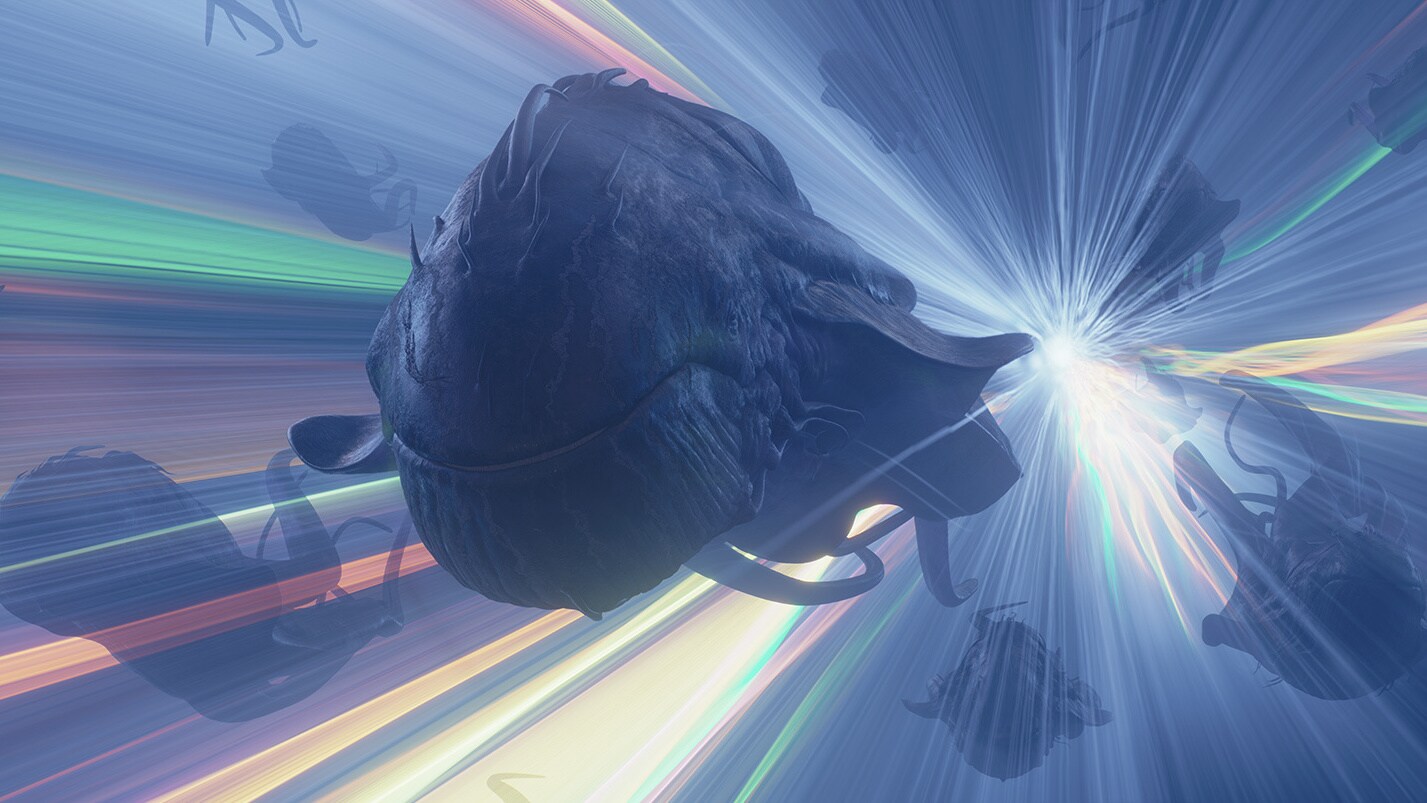
The phrase “Unknown Regions” is therefore relational. A route is unknown to one navigator because it is dangerous, secret, or outside their political archive. Chiss navigators may know what Republic cartographers cannot map. Purrgil may move through corridors that ships cannot reproduce. A First Order officer may treat the region as a laboratory, while a local population experiences it as home.
Maps, routes, and the politics of knowledge
Hyperspace travel is never only a technical act. It depends on charts, calculations, living memory, local guides, and trusted infrastructure. In the Unknown Regions, small errors become catastrophic because gravity wells, anomalies, and route changes can isolate a ship before it can call for help. Navigation becomes a social institution. A community that knows a safe corridor possesses a form of political power.
The Chiss Ascendancy makes this visible through its navigators, including Force-sensitive children whose abilities are treated as strategic resources. Their social position differs from the Jedi model. They are not simply spiritual students. Their gifts are embedded in a state system that uses family, rank, and service to protect the Ascendancy. The comparison shows that the Force can be organized into very different political forms.
The Republic's maps also carry values. They highlight trade lanes, member worlds, and military access, while other routes remain peripheral. When explorers name a place unknown, they may be describing a lack of knowledge or asserting that the place has not yet been incorporated into their system. Cartography can be curiosity, preparation, or the first stage of colonization.
The Chiss, Thrawn, and multiple political orders
Thrawn is often used as the face of the Unknown Regions, but his presence should not make the region seem like a private mystery belonging to one admiral. The Chiss Ascendancy has its own internal factions, families, security concerns, and diplomatic practices. Thrawn's choices are shaped by that society even when he works outside its formal boundaries.
His approach to art and culture is often described as tactical analysis, but the stories also show the limits of that method. Learning how a people represents itself can reveal history, conflict, and values, yet interpretation is not the same as relationship. A culture is not a code waiting for an outsider to break. Thrawn's intelligence becomes most compelling when it meets the moral consequences of treating people as strategic information.
Relations between the Chiss and the wider galaxy are shaped by asymmetry. The Republic assumes it is the default political center; the Chiss know it is one power among many. The First Order uses the region to disappear from public accountability, while Thrawn's presence makes the region visible as a site of future conflict. Unknownness becomes a resource that different actors fight to control.
Exile, refuge, and the First Order
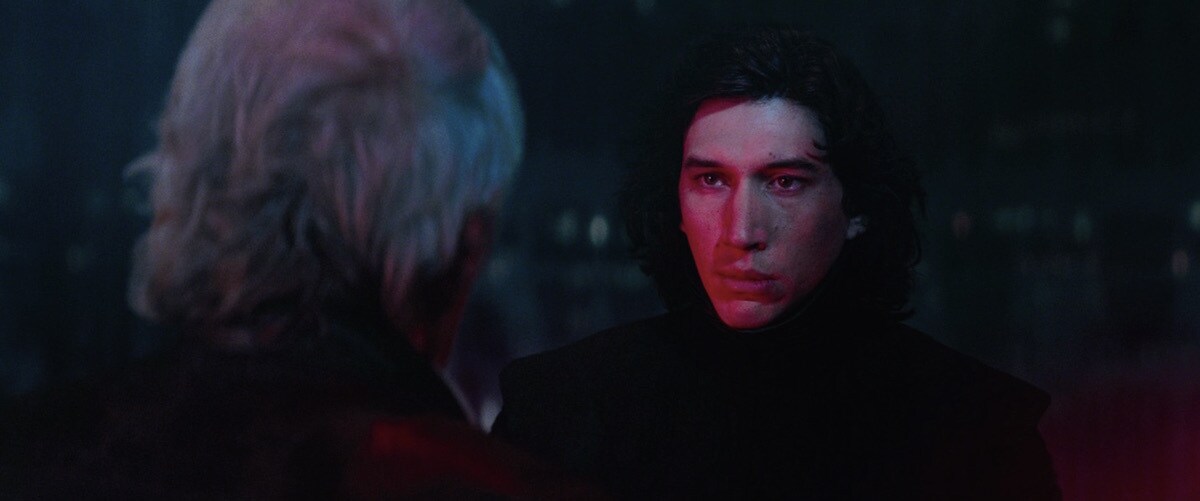
For Imperial remnants, the Unknown Regions offer distance from the institutions that defeated them. They can rebuild fleets, conduct experiments, recruit loyalists, and develop a new political mythology without ordinary scrutiny. That opportunity does not mean the region is empty. It means the remnants are willing to treat existing communities as obstacles, resources, or potential subjects.
For refugees and fugitives, the same distance can be a form of protection. A person outside the Republic's routes may avoid surveillance, but they may also lose access to medicine, legal recognition, and reliable communication. The Unknown Regions create both freedom and vulnerability. A hidden settlement can preserve a culture that a central state would erase, or it can become trapped under a local power with no external accountability.
Resistance and the sequel trilogy make the political cost of not looking visible. The New Republic believes the First Order is a distant remnant until distant infrastructure becomes a weapon aimed at the center. The region functions as a warning against equating quiet with stability. A state can be absent from the map and still be preparing to reorganize the map.
Beyond the map: ecology, migration, and the future
The Unknown Regions also expand Star Wars beyond a human-centered geography. Purrgil travel through hyperspace using forms of knowledge that are not reducible to star charts. Their migrations suggest that the galaxy has its own ecological histories, and that ships may be entering systems of movement they did not invent. This reframes exploration as encounter rather than discovery. The route already exists; the question is whether a newcomer can recognize it.
Ahsoka's journey to Peridea extends that idea. The distant world is connected to the history of the purrgil, the exile of the Nightsisters, and the movement of Thrawn. It is not simply “far away.” It is a place where multiple histories meet, each with its own claims to belonging. The story uses distance to test whether characters can live without the familiar institutions that tell them who they are.
For collectors, Unknown Regions imagery is a record of uncertainty made material. Star charts, strange creatures, unfamiliar ships, Chiss uniforms, hyperspace corridors, and ruined worlds all preserve a question about whose knowledge counts. The archive becomes richer when the unknown is treated not as empty space, but as a field of societies, ecologies, and memories that have not yet been translated into a central narrative.
Sources and further reading
- Unknown Regions, StarWars.com Databank
- Chiss Ascendancy, StarWars.com Databank
- Grand Admiral Thrawn, StarWars.com Databank
- Exegol, StarWars.com Databank
- Unknown Regions, StarWars.com Databank
- Grand Admiral Thrawn, StarWars.com Databank
- Ahsoka, StarWars.com
- Star Wars Resistance, StarWars.com
Connected archive