
Everyday ethics
The shorts repeatedly show major characters making small choices about care, honesty, courage, and responsibility outside history-changing battles.
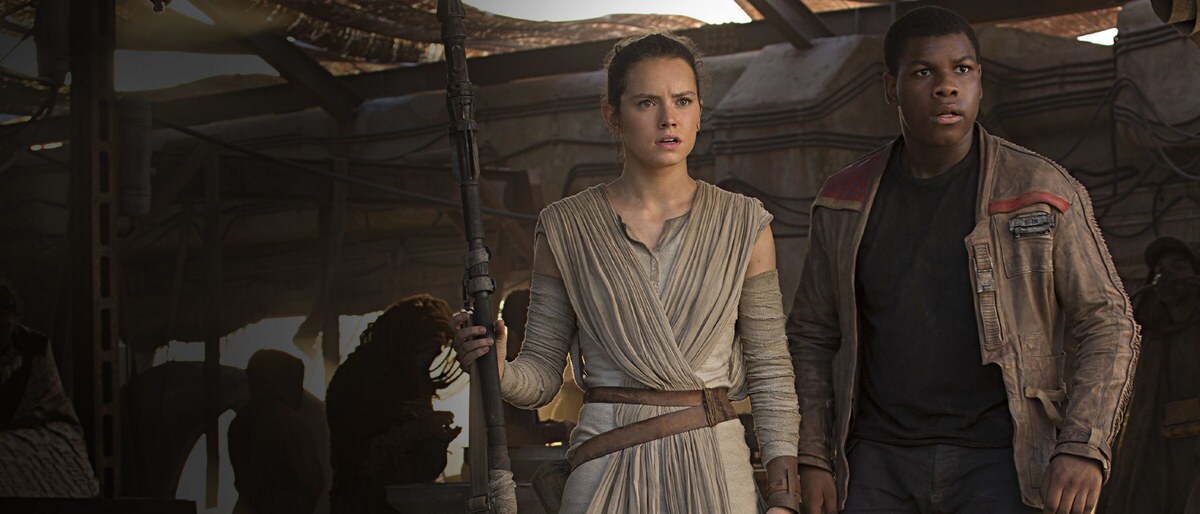
IDS Series Hub · Canon micro-series · 32 shorts
Every short connected to its larger social context, characters, institutions, and surrounding Star Wars stories.
Series record
2017–2018
Forces of Destiny is a canon anthology of 32 short animated stories spread across the Star Wars timeline. Its episodes focus on Rey, Leia, Ahsoka, Padmé, Jyn, Sabine, Hera, Rose, Qi'ra, and other familiar characters in small moments that sit beside larger films and series.
The micro-series is useful for anthropology because its scale shifts attention away from major battles toward everyday ethical choices, informal labor, friendship, care, training, ecological encounters, and the practical relationships that make larger institutions work.
IDS anthropology
The shorts repeatedly show major characters making small choices about care, honesty, courage, and responsibility outside history-changing battles.
The anthology links different periods through recurring institutions such as the Jedi, Empire, Rebellion, and Resistance without collapsing their historical differences.
The series foregrounds women whose political, military, technical, and religious roles already span many sectors of the Star Wars social world.
Droids, porgs, Ewoks, wampas, and other beings are treated as participants in social situations rather than background scenery.
Characters
Connected archive
Short archive
16 shorts
Rey protects BB-8 from a nightwatcher worm while traveling across Jakku.
Care for a vulnerable stranger creates a social obligation before Rey has any larger political connection to the Resistance.
Rey and BB-8 evade Teedo and other scavengers who want the droid.
Scarcity encourages predatory competition, while Rey chooses cooperation over treating BB-8 as valuable property.
Leia and Wicket help Ewoks escape stormtroopers on Endor.
Cross-cultural alliance develops through immediate mutual aid before formal political cooperation is established.
Ahsoka delays a Jedi ceremony to help civilians endangered by a malfunctioning droid.
Institutional recognition is shown as meaningful when ethical action matters more than punctual performance of ritual.
Leia and R2-D2 rescue Chewbacca from a wampa inside the Rebel base on Hoth.
Military bases remain embedded in local ecologies, making environmental knowledge part of everyday security.
Ahsoka and Padmé expose a disguised assassin before diplomatic negotiations.
Elite political spaces depend on routines and material details that insiders use to identify breaches of trust.
Jyn Erso helps a child on Lothal recover a pet from stormtroopers.
Resistance can begin as small acts of protection rather than formal membership in a political movement.
Sabine stages Leia's kidnapping so the senator can covertly transfer Imperial data to the Rebellion.
Political actors maintain multiple identities when public office becomes cover for clandestine resistance.
Ketsu helps Sabine steal Imperial supplies and decides to join the Rebellion.
Recruitment occurs through shared action, where moral decisions during a mission become evidence of political belonging.
Rey and the Falcon crew discover and remove a hidden explosive tracker.
Surveillance technologies turn ordinary travel into monitored space and make technical literacy necessary for autonomy.
Yoda helps Anakin teach Ahsoka how to use two lightsabers.
Mentorship works best when institutions allow learners to develop individual styles rather than reproduce one standard form.
Ahsoka teaches Padmé to pilot a fighter before they are attacked.
Knowledge transfer crosses occupational roles when political leaders acquire technical skills outside their normal institution.
Sabine and Jyn help one another escape stormtroopers after meeting by chance.
Temporary solidarity can emerge between strangers when shared risk reveals compatible political commitments.
Leia sends Han to bargain with Hera for food needed by Ewoks after Endor.
Coalition warfare creates logistical obligations that continue after battle, including feeding allies who enabled victory.
Rey struggles to move a stubborn happabore blocking a salvage job.
Everyday labor on Jakku depends on negotiation with animals, machines, and informal economic expectations.
Sabine reluctantly lends Ketsu her favorite speeder for a covert mission.
Trust becomes material when friendship requires sharing valued property and accepting another person's control over it.
Short archive
16 shorts
Hera and Sabine board the wrong Imperial shuttle and must escape with Chopper's help.
Operational mistakes are managed through group flexibility, showing that effective teams depend on repair rather than perfection.
Ahsoka joins Anakin and Padmé on a mission and the group encounters a Separatist blockade.
Personal irritation must be subordinated to collective action when institutional missions require cooperation.
Finn and Rose repair BB-8 and their shuttle after creatures damage the craft near Canto Bight.
Technical repair becomes cooperative labor linking human and droid survival during travel.
Jyn recovers her stolen kyber necklace but gives food to the hungry child who took it.
Property rights are tempered by recognition of need, turning punishment into redistribution once social context becomes visible.
Rey saves Teedo after his scavenging destabilizes a wrecked Star Destroyer.
Competitive economic relationships do not eliminate moral responsibility when one rival becomes physically vulnerable.
Leia works with Maz Kanata to obtain Boushh's armor for the plan to rescue Han.
Underworld networks provide resources unavailable through formal institutions, making criminal and rebel social worlds overlap.
Yoda teaches Luke to trust the Force while carrying him through Dagobah.
Religious learning is embodied through unusual exercises that disrupt a student's ordinary assumptions about perception.
A porg steals Rey's lightsaber during her training on Ahch-To.
Sacred and martial objects acquire new meanings when nonhuman actors interrupt the practices built around them.
Chopper recruits Ewoks to help Hera fight stray Imperial craft over Endor.
Coalitions extend across species and organizations when practical competence matters more than formal membership.
Padmé discovers that a Naboo sea creature attacks because poachers stole its baby.
Human-animal conflict can reflect prior exploitation, making apparent aggression intelligible once social and ecological context is known.
Sabine and Tristan destroy an Imperial outpost after discovering a defaced statue of Tarre Vizsla.
Monuments act as political heritage, so attacking or protecting them becomes a struggle over collective memory.
Chewbacca learns that porgs are taking Falcon wiring to build a nest.
Resource conflict is resolved through understanding another species' needs rather than assuming malicious intent.
Rey and Finn escape snowtroopers during a chase across Starkiller Base.
Cooperation develops through complementary skills when people must coordinate quickly under coercive pursuit.
Luke and Leia help Wicket and Kneesaa stop a Gorax on Endor.
Local trapping knowledge combines with outside assistance, showing how effective intervention depends on indigenous expertise.
Ahsoka trains Ezra by forcing him to adapt after she disarms him.
Religious pedagogy develops resilience through controlled challenge rather than rote repetition.
Qi'ra manipulates Hondo and IG-88 into turning on each other, then collects their bounties.
Underworld politics reward strategic knowledge of reputation, incentives, and mistrust more than formal authority.
Mentioned in this file