
Criminal sovereignty
Maul tries to build durable authority through syndicate networks, fear, finance, and local alliances rather than recognized state institutions.
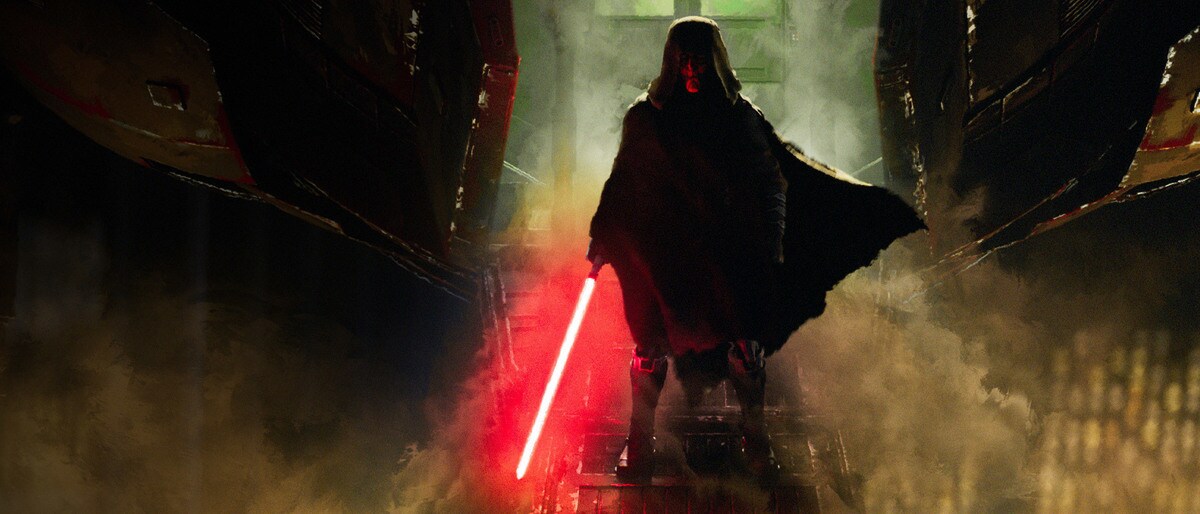
IDS Series Hub · 2026
Complete season hub with episode summaries, anthropological analysis, characters, and connected IDS research.
Series record
2026
Set in the early Imperial era, Maul attempts to rebuild criminal power on Janix while Imperial expansion, local law, surviving Jedi, and underworld factions compete over the same political space.
The series is centered on political authority outside formal government. Maul seeks power through syndicates and manipulation, Janix maintains its own civic institutions, and Devon Izara must decide how to survive after the Jedi Order's destruction.
IDS anthropology
Maul tries to build durable authority through syndicate networks, fear, finance, and local alliances rather than recognized state institutions.
Devon must interpret Jedi identity without a functioning Order, making mentorship a contest between memory, survival, and Maul's deliberate manipulation.
Janix institutions attempt to preserve autonomy while Imperial forces expand into a political environment that already has its own rules and enforcement.
Maul converts personal grievance into organizational strategy, showing how individual trauma can be scaled into institutional violence.
Characters
Connected archive
Episode archive
10 episodes
Maul reemerges in the early Imperial period and begins constructing a new underworld strategy on Janix.
Political projects often begin by converting personal grievance into a network of people, resources, and institutional goals.
Maul manipulates rival criminal interests while Devon's path becomes increasingly entangled with his plans.
Underworld authority is produced through brokerage and manufactured conflict, not only direct force.
Hidden alliances and surviving Jedi knowledge complicate Maul's effort to control events.
Information becomes political capital when multiple groups possess only fragments of a larger institutional history.
Personal rivalries and Maul's need for revenge place his larger syndicate project under pressure.
Status and pride can distort strategic decision-making when political identity is built around remembered humiliation.
Imperial Jedi hunters tighten their search as Maul and Devon confront the reach of the new regime.
Religious persecution becomes bureaucratic when specialized agents standardize the identification and pursuit of targeted populations.
Surviving Jedi and Maul's allies are forced into open danger as pursuit intensifies.
Hunted populations rely on mobility, secrecy, and temporary alliances when stable institutions can no longer protect them.
The Eleventh Brother arrives on Janix and the conflict with the Inquisitorius escalates.
Imperial expansion works by inserting specialized agents into local conflicts and redefining those conflicts through state categories.
Maul's coalition faces increasing pressure as Imperial power closes in.
Fear functions politically when it changes behavior before violence occurs, narrowing trust and pushing groups toward defensive choices.
Maul and surviving Jedi are forced into unstable cooperation against a more dangerous Imperial threat.
Coalitions can emerge between ideological enemies when a third power threatens the survival of both.
Darth Vader confronts Maul, destroying much of what Maul has built while Devon chooses her next path.
Competing authoritarian projects collide, and Devon's final choice shows how mentorship can reproduce political violence even after institutions collapse.
Mentioned in this file