
LEGENDS · 137 ABY · Agamar · neutral summit
The Agamar Summit: Roan Fel and the Jedi negotiate an alliance
Enemies since the Massacre at Ossus finally meet face to face, with the fate of the resistance at stake.
← Back to the full chronology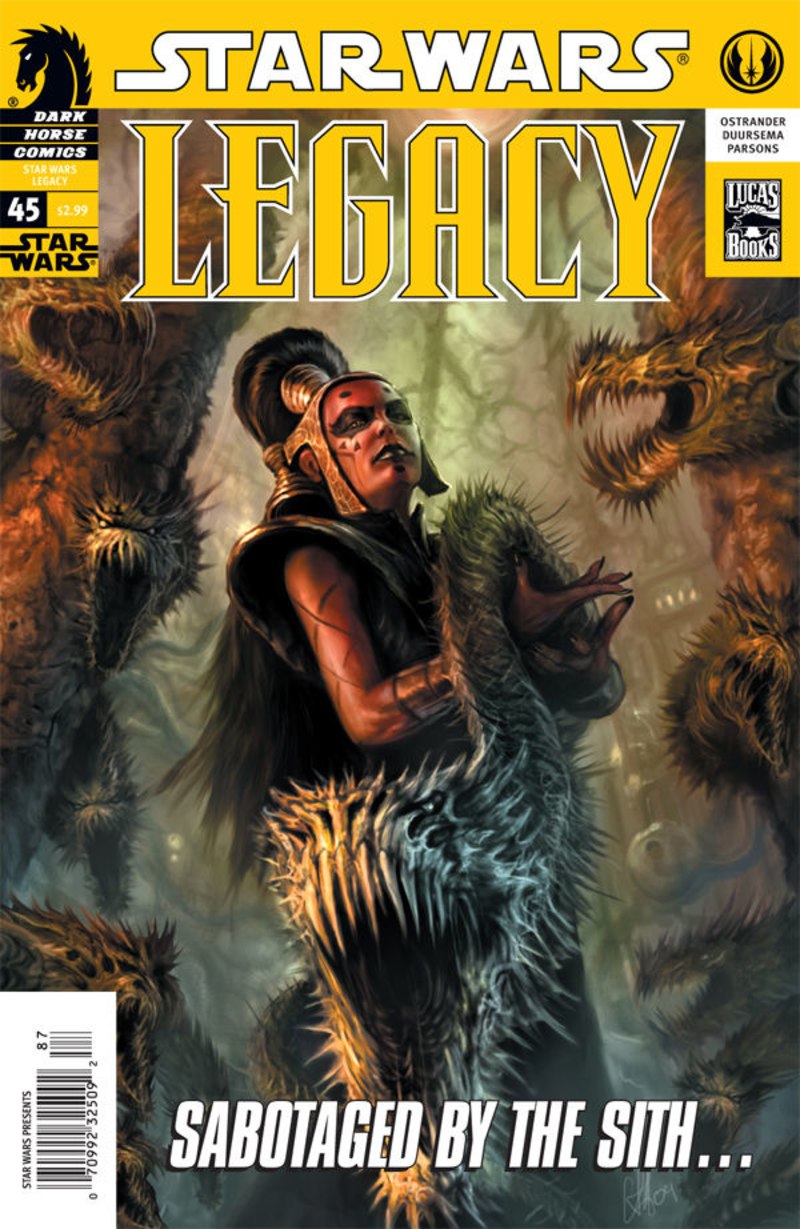
Historical evidence: This is Star Wars Legends, not current Canon. The issue's publication date is not its in-universe date. Original anthropological analysis is separated from events documented in the published story. The cover is real comic art, not a reconstruction of an unseen scene.
Why a meeting on Agamar mattered
Since the Massacre at Ossus in 130 ABY, surviving Jedi had reason to distrust the Fel Empire. The massacres were perpetrated by Sith forces after the Sith–Imperial War, but Jedi survivors initially believed that Emperor Roan Fel had allowed or ordered the killing. His own government subsequently lost the throne to Darth Krayt. By 137 ABY the Jedi Order, Fel's Empire-in-exile, and the Galactic Alliance Remnant faced the same adversary while retaining incompatible political histories. Cooperation required more than a shared enemy: the parties needed a credible explanation of the past and some agreement over mutual protection.
A diplomatic initiative from Marasiah Fel
Princess Marasiah Fel and other Imperial Knights had approached the Jedi Hidden Temple to repair relations. They explained that the attack on Ossus had occurred against Fel's stated orders and that the Sith now controlled the throne. Their efforts eventually resulted in a meeting between Fel and senior Jedi at a neutral location. The Jedi contingent was led by Master K'Kruhk and included Rasi Tuum, Hira, and Shado Vao. Fel was accompanied by Marasiah and Imperial Knights, including Antares Draco, Ganner Krieg, Sigel Dare, Azlyn Rae, and Treis Sinde. The gathering involved highly recognizable leaders who risked their own security by appearing together.
The disguise of ordinary farm life
The delegations adopted the clothes and behavior of Agamarian farmers to avoid drawing attention. Some guards posed as laborers in neighboring fields, while the principal representatives met outside the normal architecture of a palace or military headquarters. The setting mattered because a diplomatic mission's security depended on local knowledge and credible appearances. A robe, field tool, or agricultural animal was not only a prop; it changed what an observer might assume about the people present. The plan nevertheless failed to conceal the summit from the One Sith.
A difficult debate inside the Jedi Order
Rasi Tuum questioned whether an alliance with Fel could be trusted. K'Kruhk argued that the Jedi needed to set aside resentment long enough to confront Krayt. That disagreement was not a simple contrast between wisdom and foolishness. The Jedi had lost members and institutions during the attack on Ossus; distrust was grounded in lived historical experience. At the same time, refusing any alliance would leave survivors with fewer resources and expose more communities to Sith rule. The summit thus examined how institutions negotiate cooperation without requiring their members to forget past harm.
An agreement for coordinated resistance
Fel and K'Kruhk reached an agreement to work together against Darth Krayt's Empire. Fel's government agreed to provide haven to Jedi fugitives, while the Jedi pledged support for joint action. The Galactic Alliance Remnant already had relationships with both parties, making a broader anti-Sith coalition possible. Agreement at the table did not create a unified constitutional state or erase divergent command structures. It established practical cooperation in wartime. The later Galactic Federation Triumvirate was a postwar institution, and treating this 137 ABY summit as its formal founding would be chronologically inaccurate.
Nyna Calixte arrives with a warning
Soon after the meeting, Nyna Calixte, director of Sith-Imperial Intelligence and former associate of Fel, approached on an Agamarian animal. Guards initially treated her as a threat, and Fel ordered them to stop firing when he recognized her. Calixte warned that the Sith had learned of the negotiations and were sending forces to capture or kill the emperor. Her motives and shifting loyalties were complicated, but the immediate information was correct. The attempted secrecy of the meeting had failed; the delegations now faced an attack they had not planned to confront at the meeting site.
Anthropological assessment: reconciliation without amnesia
The Agamar summit reveals that political alliances depend on stories about responsibility as well as material advantages. The Jedi needed to determine whether Fel was responsible for their losses, not merely whether he was powerful enough to help them. Their coalition was held together by provisional trust, communicated commitments, shared dangers, and careful distinctions between an emperor's orders and a military faction's actions. A historian should distinguish what the attendees agreed to from the much larger social question of whether ordinary citizens trusted them. The comic does not document a popular election or galaxy-wide approval of this pact.
Publication, continuity, and next event
The negotiations and approach of Sith forces appear across Star Wars: Legacy (2006) #45–46, written by John Ostrander with art by Jan Duursema. They are set in 137 ABY in Legends, not current Canon. The cover above identifies a publication in the Monster storyline but shows another part of its plot. The attack that interrupted the agreement is recorded in the separate Operation: Thunderstroke article so that readers can distinguish the treaty from the consequences of the ambush.
Interactive evidence lab
Answer the three questions to distinguish what happened from unsupported assumptions. Results and explanations appear at the bottom.
Published sources and reference material
Publisher records establish the publication and source comic. Secondary chronologies help identify places, names, and ABY dates, but they are not permission to invent new scenes.