
Around 15,000 BBY, the newly unified Aqualish fought the Galactic Republic in a brief but bloody conflict later known as the Aqualish–Republic War. The war followed Ando's civil conflict, the killing of offworld explorers, the Aqualish acquisition of starship technology, and a campaign of conquest that devastated neighboring Andando. Republic expansion eventually brought an official contact vessel to Ando. The Aqualish rejected the overture with weapons fire. The Republic ship escaped, reported the attack, and the confrontation escalated into war.
After the civil war
The Aqualish had just emerged from a near-catastrophic conflict among the Aquala, Quara, and Ualaq.
Offworld arrival had created a common external enemy and temporarily unified the three populations.
That unity was followed by the acquisition of interstellar travel rather than demobilization.
The attack on Andando
The newly spacefaring Aqualish launched a campaign against neighboring Andando.
Later histories describe the world as blasted into an uninhabitable ruin.
This campaign established the Aqualish as an aggressive regional power before official Republic contact.
The expanding Republic reaches Ando
The early Kymoodon Era was a renewed period of Republic exploration and expansion.
As Republic routes and diplomatic activity extended through the Mid Rim, Ando became part of that wider frontier.
An official Republic vessel was sent to persuade the Aqualish to join.
An invitation to join
The Republic's initial approach was diplomatic rather than a documented invasion.
The vessel's mission was to make contact and seek Ando's incorporation into the Republic.
The surviving account does not preserve the names of the envoys, captain, diplomats, or vessel.
The Aqualish fire first
The Aqualish rejected the contact attempt and opened fire on the Republic ship.
Unlike the earlier offworld craft whose crew had been killed, the Republic vessel was technologically superior enough to survive the attack.
It escaped Ando and carried news of the hostility back to Republic authorities.
A short, bloody war
The attack on the Republic vessel led quickly to open conflict.
Later summaries characterize the Aqualish–Republic War as short but bloody.
The source does not preserve named battles, commanders, casualty figures, or fleet strengths.
A technological gap
The Aqualish had learned starship construction by studying captured offworld technology.
The Republic, by contrast, possessed thousands of years of accumulated experience in hyperspace travel, naval logistics, shipbuilding, and intersystem warfare.
The difference mattered once the confrontation expanded beyond one contact vessel.
Aqualish weapons were outmatched
The first Republic vessel escaped specifically because its weaponry and systems were superior.
The broader war followed the same imbalance.
Aqualish access to starflight did not immediately place them on equal military footing with the Republic.
One captured ship versus an industrial system
Reverse-engineering can reveal how a technology works.
It does not instantly reproduce the manufacturing depth, supply chains, training systems, maintenance institutions, or tactical experience behind a mature military.
The war exposed the difference between acquiring a technology and possessing an entire technological system.
Republic victory
The Republic eventually defeated the Aqualish.
The war ended with Aqualish surrender rather than the destruction of Ando.
The settlement imposed constraints intended to prevent a renewed campaign of conquest.
The surrender
The Aqualish agreed to cease their offensive military posture.
The surviving summaries describe specific limits on their hyperspace-capable vessels.
The surrender therefore targeted the technology that had allowed local violence to become interplanetary expansion.
Offensive weapons removed
The Aqualish agreed to remove offensive weaponry from their hyperspace vessels.
This was not a prohibition on spaceflight itself.
The settlement separated mobility from military projection: the Aqualish could remain interstellar without retaining an unrestricted conquest fleet.
Demilitarization as political technology
Demilitarization changes what a defeated society is physically able to do.
It is a form of political control exercised through weapons, ship design, inspection, and rules about legitimate force.
For Ando, military defeat was followed by institutional restraint.
Republic supervision
The government of Ando agreed to abide by Republic discretion until it could earn full citizenship.
This suggests a provisional political status rather than immediate equal membership at the moment of surrender.
Integration followed defeat in stages.
Citizenship had to be earned
The language of “earning” citizenship reveals an unequal postwar relationship.
The victorious Republic decided when Ando was considered ready for full political standing.
Membership was therefore both incorporation and supervision.
Ando joins the Republic
Later chronologies place Ando's entry into the Galactic Republic in 15,000 BBY.
The broad dating compresses surrender, supervision, and membership into the same approximate historical cluster.
The sources do not preserve the exact interval between provisional status and full citizenship.
Not the same as Anomid accession
Ando's integration differed sharply from the Anomids' near-contemporary entry into the Republic.
The Anomids moved toward membership through drought-driven cooperation and exchange with a Duros colony.
Ando entered after war, defeat, and demilitarization.
Many paths into one Republic
The two cases show that Republic expansion was not one uniform process.
Some societies joined because political and economic ties became attractive.
Others entered after military confrontation.
The fishing economy is revived
Later under Republic rule, the Aqualish fishing industry recovered.
This detail is especially important because declining fish harvests had helped trigger the civil war in the first place.
Political settlement eventually addressed at least part of the ecological-economic crisis beneath the violence.
Peace required more than disarmament
Removing weapons could stop Aqualish conquest.
It could not by itself restore fish stocks or resolve food insecurity.
The recovery of the fishing industry shows why durable peace often depends on repairing material conditions as well as imposing military restrictions.
Returning to the original cause
The sequence began with accusations over fish harvests.
That dispute escalated into civil war, then external hostility, then conquest, then war with the Republic.
The eventual revival of fishing closes the historical loop in a way the battlefield alone could not.
The Spiverelda
The government of Ando and later Aqualish colonies became known in some traditions as the Spiverelda.
Later reference works date its establishment to around 15,000 BBY.
The institution survived for thousands of years in changing forms and developed a reputation for turbulence and authoritarian politics.
Defeat did not erase local government
The Republic did not replace every Aqualish institution with direct rule from Coruscant.
Ando retained a planetary government within the wider Republic framework.
As elsewhere, integration combined local authority with supraplanetary oversight.
A lasting reputation for violence
The civil war, conquest campaign, and conflict with the Republic contributed to a galactic stereotype of Aqualish aggression.
That reputation followed the species long after the ancient war.
Yet a historical pattern should not be converted into a biological claim about every Aqualish person.
Demilitarization became a recurring grievance
Later Aqualish history repeatedly returned to questions of militarization and Republic intervention.
Thousands of years after the ancient war, Republic efforts to restrain Aqualish armed power still generated resentment.
The original settlement therefore became part of a much longer political memory.
A distant echo: the Andoan Wars
In the final century before the Clone Wars, Ando's government fought the Andoan Free Colonies.
Republic intervention again produced demilitarization after bloody fighting.
Later Aqualish could interpret this as repetition of an old pattern of outside control.
Do not claim an unbroken grievance
The later Andoan Wars occurred almost fifteen thousand years after the ancient Aqualish–Republic War.
No individual or simple political memory could bridge that distance unchanged.
The events can be compared structurally without claiming direct continuity where the sources do not establish it.
The Republic's integration model
The settlement combined military restraint, political supervision, and eventual membership.
That pattern reflects a Republic capable of coercion and incorporation at the same time.
Victory did not produce extermination or permanent foreign occupation, but neither was accession fully voluntary.
Power precedes law
After the war, Republic law defined the acceptable limits of Aqualish military power.
Those legal arrangements were backed by the fact that the Republic had won.
The episode demonstrates how political rules after war are shaped by unequal power even when expressed through legal institutions.
Who gets to define readiness?
The requirement that Ando earn full citizenship raises a basic political question.
The dominant political order decided what counted as acceptable behavior before the defeated society could participate fully.
Citizenship became a mechanism of both inclusion and discipline.
The security dilemma
From the Republic's perspective, a newly spacefaring society that had destroyed Andando and fired on envoys posed an obvious security problem.
From an Aqualish perspective, Republic intervention could appear as an external power imposing limits after contact.
Both interpretations can coexist without making their military capabilities equal.
Another failed first contact
The Republic had already experienced disastrous first contact with the Duinuogwuin five centuries earlier.
At Ando, violence again preceded durable communication.
This time diplomacy did not prevent war before escalation.
Communication comes after coercion
In the Duinuogwuin Contention, negotiation stopped the crisis.
On Ando, political accommodation followed military defeat.
The contrast shows that “first contact” is not one type of event but a process shaped by local history and power.
Starflight changes political scale
The Aqualish story unfolds because spaceflight changed what local conflict could become.
Before the captured vessel, Ando's violence remained planetary.
Afterward, military ambition could reach neighboring worlds and eventually bring the species into confrontation with the Republic.
Technology is not automatically progress
Interstellar travel gave the Aqualish mobility, but their first uses of that mobility included conquest.
Only after defeat did starflight become integrated into a broader political and commercial order.
The same technology supported radically different institutions over time.
Current canon versus Legends
Current canon preserves Ando, the Aqualish species, and Aqualish participation in galactic politics through figures such as Po Nudo.
The ancient Aqualish Civil War, conquest of Andando, Aqualish–Republic War, demilitarization terms, and 15,000 BBY accession remain Legends chronology.
Those layers should not be merged.
Anthropological assessment
The Aqualish–Republic War shows how political integration can follow coercion. Ando entered the Republic not through the same path as Yablari but through defeat, supervision, and conditional citizenship.
The demilitarization terms are also revealing because they separated technology from one particular use. The Aqualish did not lose spaceflight; they lost the right to equip hyperspace vessels for unrestricted offensive war.
Most importantly, the revival of fishing returns the story to its ecological beginning. War had transformed a resource crisis into a species conflict and then an interstellar one. Durable stabilization required addressing the resource system that had helped start the cycle.
What the sources establish
Where the war fits
Sources and further reading
- Galaxy Guide 4: Alien Races, West End Games.
- Ann Margaret Lewis, The Essential Guide to Alien Species, Del Rey, 2001.
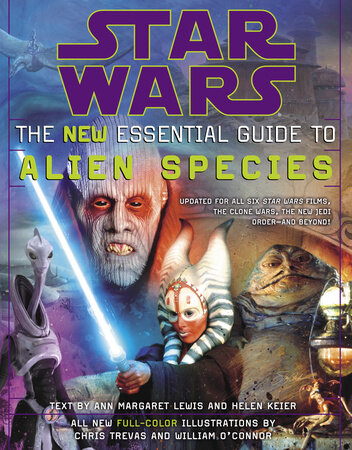
- Ann Margaret Lewis and Helen Keier, The New Essential Guide to Alien Species, Random House, 2006.
- Random House Worlds, The New Essential Guide to Alien Species
- Aqualish–Republic War, Wookieepedia
- Ando/Legends, Wookieepedia
- Aqualish/Legends, Wookieepedia