
In 16,782 BBY, the Celebratus Archive was founded on Obroa-skai. The ancient library would eventually contain complete records concerning more than three hundred thousand different species. Its creation helped establish Obroa-skai's reputation as one of the galaxy's great centers of research, scholarship, and information storage. Nearly seven thousand years later, the historian Vicendi counted the archive among the Twenty Wonders of the Galaxy.
Obroa-skai
Obroa-skai was an Inner Rim world whose identity became increasingly tied to libraries, repositories, scholarship, and information management.
Later generations developed a reputation that virtually the entire knowledge of the galaxy could be found somewhere in the world's computer archives if a researcher knew where to look.
The Celebratus Archive was one of the institutions that made that reputation possible.
16,782 BBY
The archive was established during the Indecta Era, while the First Alsakan Conflict was still underway.
The timing is striking. The Republic's earlier expansion boom had slowed dramatically, but new species were still being encountered and incorporated into the known galaxy's intellectual record.
Obroa-skai responded to an age of political fragmentation by creating an institution devoted to collecting information across differences.
Who founded it?
The surviving source does not identify a single founder.
No scholar, planetary ruler, Republic official, religious order, or corporation is credited with creating the Celebratus Archive in the available chronology.
The responsible historical position is therefore to say that the archive was founded on Obroa-skai in 16,782 BBY without inventing a person behind it.
More than 300,000 species
The archive eventually held complete records concerning more than 300,000 different species.
That figure transformed the institution from a local library into something approaching a galactic ethnographic, biological, historical, and administrative repository.
A collection on that scale would necessarily bring together material produced across thousands of worlds and cultures.
What does “complete records” mean?
The source uses sweeping language, but it does not define what counted as a complete record for each species.
Such records could potentially include biological descriptions, homeworld data, languages, political histories, trade information, population data, cultural studies, or other materials, but the precise archival schema is not preserved.
IDS therefore does not pretend to know the archive's exact catalog fields in 16,782 BBY.
Collecting knowledge across cultures
An archive of species records depends on continuous acts of collection.
Information must be acquired, copied, translated, standardized, cataloged, preserved, and updated. Every one of those steps involves choices.
The Celebratus Archive therefore represented not merely storage but an enormous institutional process for deciding how galactic diversity would be described.
Classification is power
To place hundreds of thousands of species into a shared archive, librarians and researchers must create categories.
They must decide which populations count as distinct species, which names to use, what information matters, how contradictory accounts are handled, and whose terminology becomes standard.
Classification makes knowledge usable, but it can also impose the assumptions of the institution doing the classification.
Who gets to name a people?
A species may use one name for itself while outsiders use another. Republic officials, merchants, scientists, and local communities may all describe the same population differently.
A galaxy-spanning archive must decide which names appear in indexes and which become cross-references.
Those apparently technical decisions can shape how later generations encounter an entire people.
Records are not the people themselves
No archive, however extensive, is identical to the societies it describes.
A record freezes information into documents and databases while real cultures continue changing.
The Celebratus Archive could preserve extraordinary knowledge while still presenting mediated versions of the peoples represented within it.
Knowledge during the Indecta Era
The founding took place during an era marked by slowed Republic expansion and recurring conflict.
Yet contact with previously unknown populations did not stop entirely. New peoples continued entering the awareness of Core and Inner Rim institutions.
The archive provided a place where the expanding diversity of the known galaxy could be accumulated even when political expansion had slowed.
A library founded during war
The First Alsakan Conflict had been underway for more than two centuries by 16,782 BBY.
Coruscant and Alsakan were fighting over political authority, trade networks, and the shape of the Republic.
Against that backdrop, the creation of the Celebratus Archive represented another kind of institution-building: not territorial control, but control over memory and information.
Institutions that outlast governments
The archive survived political changes that transformed the galaxy repeatedly.
Republic governments changed, Alsakan conflicts came and went, the Sith rose and fell, the Galactic Empire replaced the Republic, and the New Republic emerged afterward.
Obroa-skai's information repositories remained valuable because later powers still needed knowledge accumulated by earlier ones.
Becoming a library world
The Celebratus Archive helped cement Obroa-skai's identity as a library world.
This was more than a tourism slogan. Over millennia, scholarly institutions, repositories, antiquities collections, and later educational facilities reinforced the same planetary specialization.
Knowledge became part of the world's political economy and cultural reputation.
A knowledge economy
A world famous for information attracts researchers, diplomats, governments, universities, corporations, intelligence agencies, and military planners.
That attention can generate prestige and economic value, but it can also make the world strategically vulnerable.
Obroa-skai eventually learned that a repository of knowledge can be treated as a military target.
One of the Twenty Wonders
In 10,000 BBY, the historian Vicendi published Arturum Galactinum, a work honoring the Republic's founding and identifying twenty extraordinary creations across galactic civilization.
The Celebratus Archive was included among those Twenty Wonders of the Galaxy.
By then, the library had already existed for nearly seven thousand years.
Why Vicendi's list matters
A “wonder” list converts selected monuments and institutions into a shared cultural canon.
Including the Celebratus Archive alongside monumental architecture elevated knowledge preservation itself to the level of a civilizational achievement.
The archive was celebrated not for physical size alone but for what it contained.
A galactic Library of Alexandria
Behind the scenes, The Essential Atlas creators described the Celebratus Archive as an analogue to the Library of Alexandria.
The comparison helps explain the concept: a famous repository imagined as a concentration point for the knowledge of many peoples.
The Star Wars version scales that ambition from the ancient Mediterranean world to hundreds of thousands of species.
Jedi scholarship on Obroa-skai
Thousands of years after the Celebratus Archive's founding, a Jedi training academy existed on Obroa-skai by at least 990 BBY.
The academy specialized in data collection and analysis, fitting the planet's much older intellectual traditions.
Its existence shows how Obroa-skai's scholarly identity attracted institutions beyond the archive itself.
Jedi antiquities
Obroa-skai also accumulated an important collection of Jedi-related antiquities.
During the Imperial era, the Imperial Security Bureau destroyed that collection.
The episode demonstrates the vulnerability of cultural memory when political power determines which histories are permitted to survive.
Archives can be attacked without being conquered
Destroying antiquities or removing records can change what later generations are able to know.
This is a different form of violence from destroying a fleet or occupying a city, but its effects can last just as long.
Information institutions become targets precisely because historical memory has political value.
Obroa-skai under the Empire
By the final years of the Galactic Civil War, Obroa-skai had become an Imperial fortress world in Legends.
The transformation placed one of the galaxy's great knowledge centers inside an authoritarian military system.
The archive's information remained useful regardless of whether the ruling regime valued open scholarship.
Thrawn raids the libraries
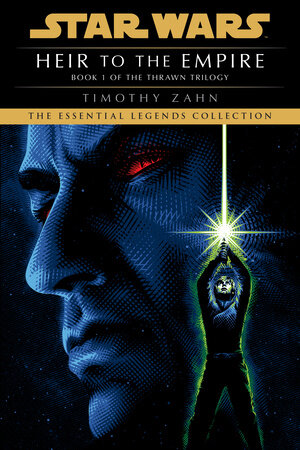
In 9 ABY, forces under Grand Admiral Thrawn conducted an information raid on Obroa-skai.
Imperial scouts pulled a large data dump from the planet's library systems while the New Republic was trying to draw Obroa-skai into its political sphere.
The operation demonstrated the strategic value of information accumulated over millennia.
Finding Wayland
The Obroa-skai data helped Thrawn uncover information leading to Wayland, the location of one of Emperor Palpatine's hidden storehouses.
That discovery became central to Thrawn's later campaign.
An archive founded more than sixteen thousand years earlier thus affected a major military conflict in the post-Endor galaxy.
Library or intelligence target?
The Thrawn raid reveals that the difference between a scholarly archive and an intelligence repository depends partly on who is using the information.
Astrogation data, historical surveys, planetary records, and old reports can be academically valuable in one context and militarily decisive in another.
Knowledge does not remain politically neutral merely because it was collected for research.
Knowledge beyond one building
Later Legends material indicates that branches associated with the Obroa-skai Celebratus Archive existed beyond the homeworld, including a library on Fusai.
That branch hosted Mistress Mnemos, a powerful BRT supercomputer used for archival analysis.
The archive's legacy therefore became a network rather than only one physical location.
From library to information system
By later eras, Obroa-skai's knowledge was stored in extensive computer systems rather than existing solely as physical books or artifacts.
This changed preservation and vulnerability at the same time. Digital information could be duplicated and distributed, but it could also be stolen rapidly through a data raid.
Thrawn did not need to carry shelves of records away from the planet. He needed access.
Who gets access?
A great archive always faces the question of access.
Scholars may need openness, governments may demand secrecy, cultures may object to sensitive information being shared, and military authorities may classify strategically useful records.
The sources do not preserve the Celebratus Archive's ancient access rules, so IDS does not invent them, but the later history of Obroa-skai shows how contested access became.
Who owns knowledge about a species?
The archive's scale raises a deeper anthropological question. If Obroa-skai stores a “complete record” about a people, does the archive own that information?
What happens when the population described disagrees with the record, wants information removed, or considers some knowledge sacred?
The source does not answer these questions, but the institution makes them unavoidable.
Knowledge and expansion
Galactic archives grow partly because explorers, traders, governments, scientists, and missionaries travel outward and bring information back to centers of power.
This can preserve valuable knowledge, but it can also reproduce colonial relationships in which distant peoples are studied, categorized, and stored as information for outsiders.
The Celebratus Archive sits at that intersection of preservation and appropriation.
What is missing from the archive's origin story?
We do not know who designed the initial catalog, where the first collections came from, what languages were privileged, how local Obroans participated, or whether represented species consented to inclusion.
Those absences matter.
The archive's grandeur is documented more clearly than the labor and politics that created it.
The invisible librarians
An archive containing records on hundreds of thousands of species could not exist without generations of librarians, archivists, technicians, translators, researchers, and maintenance workers.
None of those founding personnel are named in the surviving ancient chronology.
Large institutions often preserve the institution's name more successfully than the names of the people who made it function.
Preservation requires continual work
An archive founded in 16,782 BBY could survive only through continual migration of data, repair of storage systems, updating of catalogs, replacement of hardware, and institutional succession.
The Celebratus Archive's longevity therefore implies repeated acts of preservation across thousands of years.
Durability was not passive.
A memory institution for the galaxy
The Celebratus Archive can be understood as a form of external collective memory.
No individual or society can remember hundreds of thousands of species directly. The archive allowed galactic institutions to store knowledge beyond the limits of living memory.
That made Obroa-skai important not only as a library world but as part of the infrastructure through which the galaxy remembered itself.
Anthropological assessment
The founding of the Celebratus Archive marks a major moment in the institutional history of galactic knowledge. The archive attempted to transform enormous cultural and biological diversity into organized, retrievable records.
That achievement deserves the fame it later received, but archives are not neutral containers. They classify, translate, prioritize, exclude, preserve, and sometimes expose information. Their catalogs shape what later researchers are able to see.
Obroa-skai therefore represents both preservation and power. The same institution that protected knowledge for millennia eventually attracted Thrawn because control of old information could change the outcome of a new war.
What the sources establish
Canon versus Legends
Where the archive fits
Sources and further reading
- Daniel Wallace and Jason Fry, Star Wars: The Essential Atlas, Del Rey, 2009.
- Timothy Zahn, Heir to the Empire, Bantam Spectra, 1991.
- Bill Slavicsek, Heir to the Empire Sourcebook, West End Games, 1992.
- Random House Worlds, Heir to the Empire: Star Wars Legends
- Celebratus Archive, Wookieepedia
- Obroa-skai/Legends, Wookieepedia
- Obroa-skai information raid, Wookieepedia