
Around 16,200 BBY, the Second Alsakan Conflict began. The peace that had ended the first war approximately five centuries earlier had managed violence without resolving the rivalry between Coruscant and Alsakan. Once again, Alsakani noble interests and Coruscant-backed megacorporations competed over resources, settlements, and influence in the Expansion Region. Corellia again protected its own interests while remaining outside the main war. The second conflict would last roughly eight centuries and end in another draw.
The first peace failed
The First Alsakan Conflict had ended around 16,700 BBY after the Bureau of Ships and Services threatened both sides with loss of hyperspace-beacon access.
The Challat Compromise restructured representation in the Galactic Senate, while Corellia gained a formal mechanism for avoiding renewed hostilities.
Those reforms stopped the war. They did not erase the economic and political competition that had produced it.
Five centuries is a long peace—and a short memory
Approximately five hundred years separated the two wars.
That span was long enough for many generations to live without direct memories of the first conflict, but short enough for institutions, territorial claims, family interests, and political traditions to preserve the rivalry.
The second war demonstrates how historical grievances can outlive the people who originally experienced them.
The same structural conflict returns
By the Second Alsakan Conflict, the struggle had settled into a recognizable pattern.
Alsakani nobles and allied interests competed with Coruscant-backed megacorporations for access to resources and settlement opportunities in the Expansion Region.
The war was therefore not simply about personal hostility between two planets. It was rooted in durable political-economic systems.
Alsakan's side
Alsakan remained one of the oldest and most influential Core Worlds and continued to challenge Coruscant's dominance over Republic political life.
Its noble houses had holdings and colonial interests throughout the Expansion Region.
For those elites, control of territory and resources was tied to both wealth and Alsakan's larger claim to political importance.
Coruscant's side
Coruscant's influence extended through the Republic government, Senate institutions, commercial networks, and large trading corporations.
The Grand Companies and successor megacorporate interests helped connect the Core to resource-rich territories farther outward.
Alsakani expansion repeatedly collided with those commercial claims.
The Expansion Region remains the main prize
The Expansion Region had been shaped by thousands of years of colonization and resource extraction.
Its worlds were valuable because they contained raw materials, settlements, trade corridors, and future markets.
The same region that had driven the first conflict remained central to the second.
Colonization as competition
Settlement was not politically neutral.
When Alsakan-sponsored colonists moved into a system, they extended Alsakani influence. When Coruscant-backed corporations established operations elsewhere, they expanded a competing network.
Colonies became territorial arguments made permanent through people, infrastructure, and investment.
Resources beneath political language
Debates over autonomy, Senate representation, and the identity of the Republic existed alongside competition for raw materials.
These motives were not mutually exclusive.
Political ideology gave meaning to economic competition, while economic interests gave political rivalry material stakes.
Noble houses as geopolitical actors
Alsakani noble families were not confined to ceremonial status on their homeworld.
Many controlled holdings, colonies, and economic interests far beyond Alsakan itself.
The war therefore involved networks of aristocratic property as well as governments and fleets.
Megacorporations as geopolitical actors
Coruscant-backed corporations also functioned as more than ordinary businesses.
Their shipping networks, resource concessions, settlements, and armed protection could shape regional politics.
The Second Alsakan Conflict continued the fusion of commercial and military power already visible in the first war.
Axis and Spin endure
The broader geography of the Alsakan conflicts remained divided between an Alsakan-centered Axis and a Coruscant-associated Spin.
These labels described networks of allegiance and economic orientation rather than perfectly fixed borders.
Systems could sit inside contested spaces where trade, political loyalty, and military control did not align neatly.
Corellia remains neutral
The Corellian Hegemony again stayed out of the main conflict while protecting its own interests.
This was consistent with the constitutional and political tradition developed after the first war.
Corellia's neutrality prevented the conflict from becoming a simple two-bloc division of the entire Republic.
The value of Contemplanys Hermi
The Corellian neutrality provision created after the first conflict had been designed precisely for renewed Coruscant–Alsakan hostilities.
Its continued relevance shows that postwar lawmakers had expected the rivalry might return.
A constitutional exception became evidence that peace had always been regarded as fragile.
Still not total war
The Second Alsakan Conflict spread across multiple regions, but neither Coruscant nor Alsakan was simply annihilated or conquered.
The wars repeatedly targeted routes, colonies, allied systems, and peripheral holdings.
This allowed both rival centers to survive and fight again in later centuries.
Both home spheres could be raided
Later summaries note that both Coruscant and Alsakan could be raided during the broader sequence of early conflicts.
Yet neither side had enough resources to divide its forces indefinitely between attacking the enemy's center and defending its own holdings.
That strategic limitation helped produce recurring stalemate.
Porus Vida becomes a battlefield again
Around 16,100 BBY, approximately a century after the second war began, Porus Vida was besieged for a second time.
The planet's location between Grand Company territory, Alsakani-controlled access, and contested routes made it repeatedly vulnerable.
The Second Siege of Porus Vida is the first major named engagement after the renewed outbreak.
The Gizer Campaign
Around 16,000 BBY, the war expanded into the Mid Rim during the Gizer Campaign.
The surviving summary does not provide the complete tactical history of that campaign, but its location shows that the conflict was no longer confined to a narrow Expansion Region corridor.
The war's geography widened over time.
The Core Campaigns
By roughly 15,600 BBY, fighting had moved into the Core Worlds and Colonies during the Core Campaigns.
This represented a different strategic phase from the earlier struggles over distant holdings.
The conflict was increasingly reaching systems closer to the old centers of galactic power.
Skako and Commenor
Both Skako and Commenor were attacked during the Second Alsakan Conflict.
The source does not preserve every detail of those attacks in its brief overview.
Their inclusion nevertheless demonstrates the breadth of the war's later campaigns.
The destruction of Belgoth's Beacon
During fighting along the Perlemian Trade Route, Belgoth's Beacon was destroyed.
The beacon was one of the ancient navigational markers commissioned by Borte Belgoth around 25,100 BBY.
Its destruction linked the Second Alsakan Conflict directly to the degradation of infrastructure that had supported galactic movement for thousands of years.
War consumes inherited infrastructure
The first war had ended because both sides depended on the hyperspace-beacon network.
During the second war, one of the most ancient beacons itself became a casualty.
This reversal is significant: infrastructure that once restrained warfare could also be destroyed by warfare.
The Strontium Raid
In 15,480 BBY, Republic-held Abhean became the site of the Strontium Raid.
This was one of the later named engagements of the Second Alsakan Conflict.
The surviving chronology again preserves the event more clearly than the detailed experience of the people who lived through it.
An eight-century war
The Second Alsakan Conflict lasted from approximately 16,200 BBY to 15,400 BBY.
That makes it dramatically longer than the first conflict under the later chronology.
No individual participant could have experienced the war from beginning to end. The conflict existed as an institution spanning many generations.
Another draw
The Second Alsakan Conflict ended in a draw in 15,400 BBY.
Neither Coruscant nor Alsakan secured a final victory that permanently settled the rivalry.
The outcome ensured that another Alsakan Conflict remained possible.
Why stalemate kept returning
Both sides possessed deep resources, old alliances, and widespread interests.
Neither could easily destroy the other's political center without exposing its own networks to attack.
As long as the underlying competition over resources and prestige continued, military stalemate postponed conflict rather than ending it.
The limits of institutional reform
The Challat Compromise had modified Senate procedure after the first war.
Corellia had secured a neutrality clause. BoSS had demonstrated the power of shared infrastructure.
Yet none of those reforms transformed the ownership patterns and political identities driving Coruscant–Alsakan competition.
The first war becomes usable memory
By the time the second conflict began, the first war was no longer only history. It was precedent.
Political actors could invoke earlier battles, earlier grievances, and earlier compromises to justify present choices.
Historical memory became part of the conflict's infrastructure.
Generations raised inside rivalry
Once warfare returns repeatedly over centuries, political identity can become organized around anticipation of future conflict.
Fortifications, alliances, settlement policy, commercial planning, and constitutional rules begin to assume that the rival remains dangerous.
The Second Alsakan Conflict deepened that pattern.
No single-cause explanation
The war cannot be reduced to “Alsakan wanted to be capital” or “corporations wanted resources,” even though both claims contain part of the story.
The conflict combined prestige, constitutional authority, colonial expansion, corporate competition, aristocratic holdings, trade routes, and historical grievance.
Its durability came from the way those factors reinforced one another.
Anthropological assessment
The beginning of the Second Alsakan Conflict is most useful as a study in failed peace rather than a dramatic first battle. Five centuries of nonwarfare did not remove the social structures that made the rivalry reproducible.
The conflict also shows how political systems can externalize competition into settlements and resource zones. Coruscant and Alsakan were the symbolic centers, but much of the physical cost fell on worlds in the Expansion Region, Inner Rim, Mid Rim, Colonies, and eventually the Core.
Finally, the war demonstrates how institutions remember. Noble houses preserve property claims, corporations preserve concessions and routes, constitutions preserve neutrality clauses, and political cultures preserve stories about rivals. Those forms of institutional memory can survive long after living witnesses disappear.
What the sources establish
Canon versus Legends
Where the second war fits
Sources and further reading
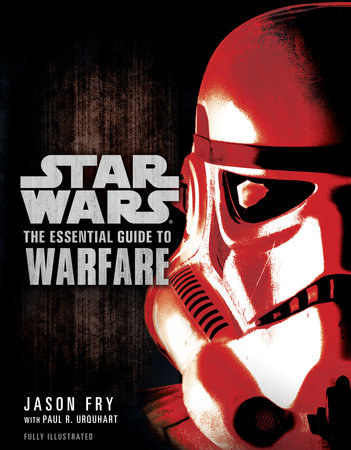
- Jason Fry with Paul R. Urquhart, The Essential Guide to Warfare: Star Wars, Random House, 2012.
- Daniel Wallace and Jason Fry, Star Wars: The Essential Atlas, Del Rey, 2009.
- Daniel Wallace and Kevin J. Anderson, The New Essential Chronology, Del Rey, 2005.
- Random House Worlds, The Essential Guide to Warfare
- Second Alsakan Conflict, Wookieepedia
- Alsakan/Legends, Wookieepedia
- Second Siege of Porus Vida, Wookieepedia