Barriss Offee enters the Clone Wars as the Mirialan Padawan of Luminara Unduli. She prefers study and ancient Jedi texts to battlefield service, but war repeatedly places her in combat. Her story becomes a study of institutional disillusionment: Barriss recognizes genuine failures in the wartime Jedi Order, then answers them through actions that harm the people she claims the Order has failed.
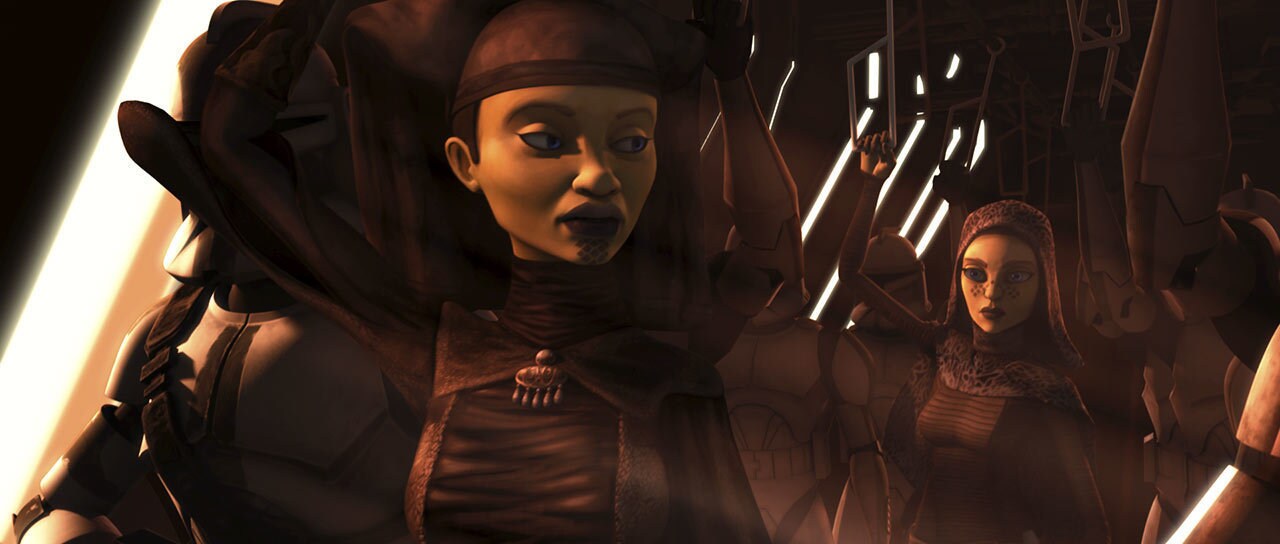
Training under Luminara Unduli
Barriss is trained inside a formal master-apprentice relationship that values discipline, restraint, scholarship, and obedience. That structure initially gives her a stable place in the Jedi Order. The Clone Wars change the meaning of that training. A Padawan who might have spent years learning diplomacy, history, and the Force instead grows up inside a military institution.
Her friendship with Ahsoka Tano provides a useful contrast. Both young Jedi experience the same war and both eventually lose faith in important parts of the Order, but they respond differently. Ahsoka leaves after the institution fails her. Barriss remains inside long enough to attack it from within.
Geonosis and the experience of war
On Geonosis, Barriss and Ahsoka infiltrate a Separatist droid factory and accept the possibility that destroying it may require their own deaths. The mission demonstrates Barriss's competence, memory, and willingness to sacrifice herself for the Republic. It also places a young student directly inside the machinery of industrialized war.
Later missions continue that exposure. The contrast between Barriss's preference for study and the violence expected of a wartime Jedi is central to her development. The Order still describes itself through older ideals of peacekeeping while its members increasingly live as officers, commanders, and combatants.

The Jedi Temple bombing
Barriss comes to believe that the Jedi have abandoned their purpose by becoming participants in the Clone Wars. She helps orchestrate the bombing of the Jedi Temple and frames Ahsoka for the attack. Her criticism of the Order is therefore joined to secrecy, manipulation, and violence against people who did not choose the policy she opposes.
When exposed, Barriss publicly argues that the Jedi have become servants of war. The accusation matters because later events show how vulnerable the Order had become to military logic and political manipulation. Her own actions, however, also demonstrate how a political critique can reproduce the coercion it condemns.
From prisoner to Imperial Inquisitor
The Republic imprisons Barriss. The Empire later releases her for recruitment into the Inquisitorius, an institution designed to hunt surviving Jedi and other Force-sensitive people. That transition is one of the sharpest institutional reversals in her life. A person who attacked the Jedi because she believed they had become too closely bound to war is invited to serve a regime that turns former Jedi into instruments of organized persecution.
Her time with the Inquisitorius forces Barriss to confront the difference between disillusionment and submission. The Imperial system does not offer a neutral space outside the Jedi. It demands a new identity organized around obedience, fear, and the destruction of people who once occupied Barriss's own social position.

Identity, guilt, and repair
Barriss cannot return to the identity of obedient Jedi Padawan, but neither can she remain comfortably inside the Inquisitorius. Her later story is therefore less about restoring a lost rank than deciding what obligations remain after a person has betrayed one institution and rejected another.
This makes Barriss especially useful for thinking about repair. Redemption in Star Wars is often framed as a dramatic change of allegiance. Barriss instead raises the slower question of what a person owes after causing harm, and whether service to others can create a different social role without erasing the past.
Anthropological assessment
Barriss Offee's life connects apprenticeship, war, protest, terrorism, imprisonment, authoritarian recruitment, and moral repair. Each stage changes the institution through which she is recognized. Padawan, prisoner, Inquisitor, dissenter, and healer are not merely personal labels. They carry different expectations about authority, violence, knowledge, and responsibility.
Her story also demonstrates why institutional criticism should be studied separately from political method. Barriss identifies real contradictions in the Jedi Order's wartime role. The Temple bombing does not become justified because that criticism contains truth. The distinction between diagnosis and action is what gives the character lasting analytical value.
Disillusionment does not excuse violence
Barriss identifies real problems in the wartime Jedi Order. The institution has become militarized, secrecy has increased, and its moral language is increasingly difficult to reconcile with daily participation in war.
Her bombing of the Temple and framing of Ahsoka turn that critique into harm directed at people with little control over the larger system. The story is powerful because the diagnosis and the response are not the same thing.
A former Jedi inside Imperial power
Barriss’s later path under the Empire forces another institutional reversal. Someone who rejected the Jedi for losing their way encounters a state that has transformed Force-sensitive people into tools of persecution.
Her story therefore keeps returning to the difference between disillusionment and ethical judgment. Leaving one failed institution does not automatically make the next source of authority legitimate.
Visual record
Barriss across institutions
Official StarWars.com images connecting her Jedi training, friendship with Ahsoka, and later Imperial-era identity.
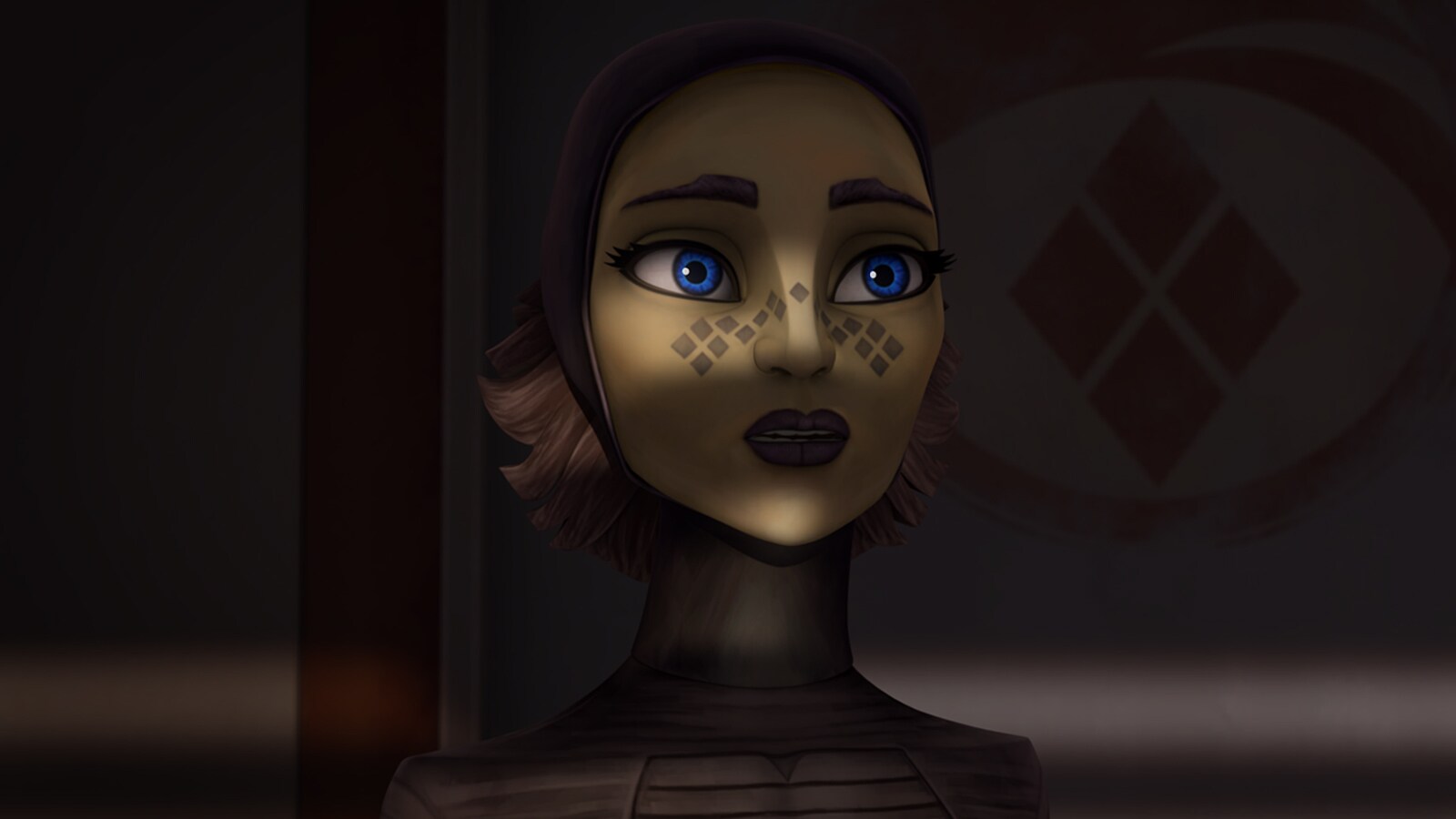

Official StarWars.com visual references.
Sources and further reading
- Barriss Offee, StarWars.com Databank
- The Saga of Barriss Offee, StarWars.com
- Ahsoka Tano character file
- The Clone Wars dossier
- The Inquisitorius dossier
Connected archive