
By Imperial Dark Sector
COMPLETE CANON DOSSIER · TWO JEDI GAMES
The explorer who protected knowledge
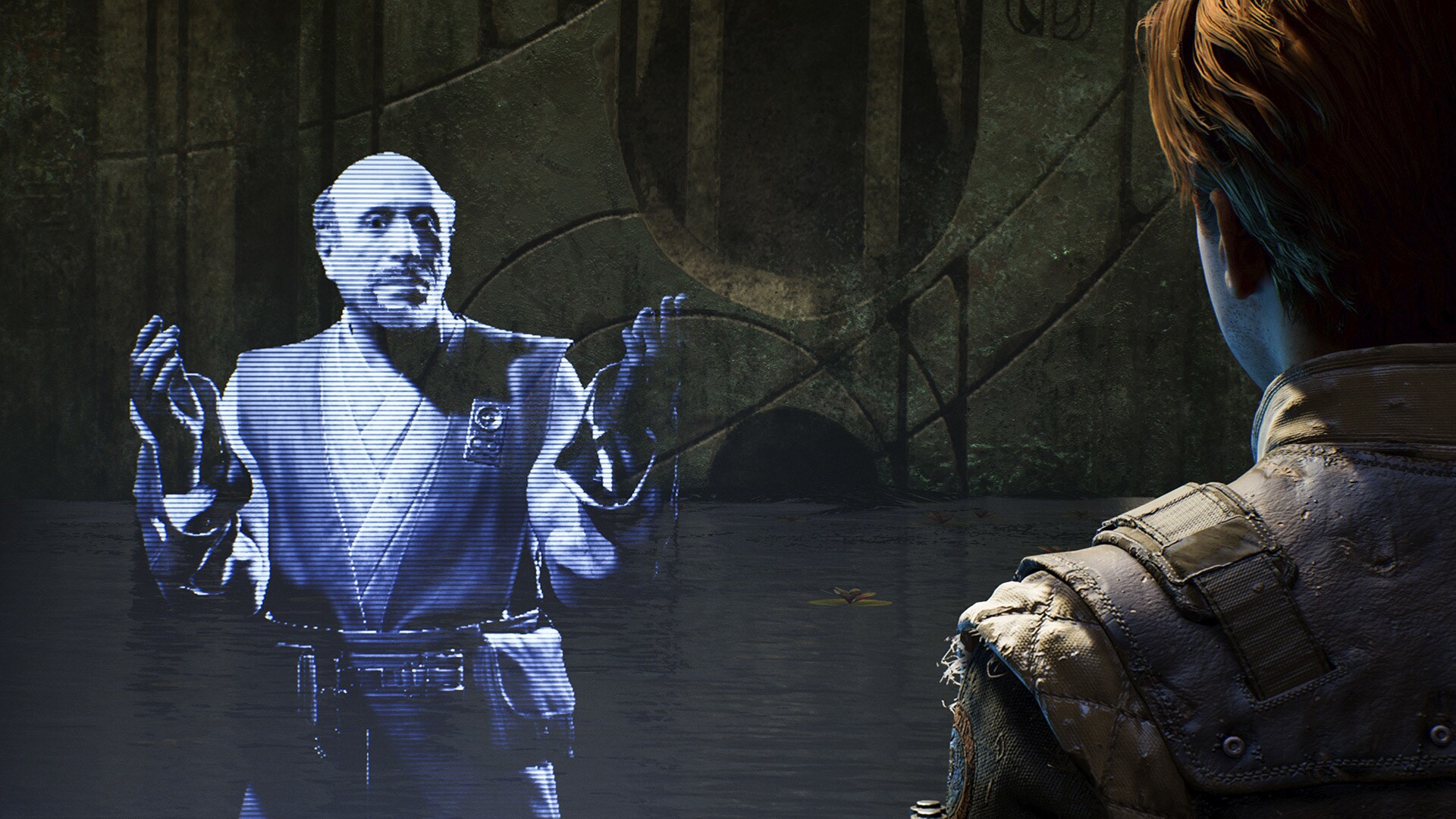
Eno Cordova spent his life studying ancient civilizations, teaching Jedi, and preserving evidence that later generations might need. His holocron sets the events of Star Wars Jedi: Fallen Order in motion. In Jedi: Survivor, the man once known mostly through recordings helps build a refuge for those hunted by the Empire.
His story connects archaeological investigation with decisions about who should control information about vulnerable people. Follow his career, the sources, and the interactive case files below. All major endings are described without spoiler restrictions.
01 / JEDI SCHOLAR
The Master whose work was archaeology
Eno Cordova was a human Jedi Master during the final years of the Galactic Republic. Lucasfilm’s official Databank describes him as especially interested in ancient cultures that understood or practiced the Force in different ways. He devoted much of his time to exploration and research instead of seeking the military prominence associated with many Jedi of the Clone Wars.
That vocation is a distinctive form of Jedi service. Cordova examines ruins, studies technology left by earlier societies, and attempts to understand how different peoples organized religious knowledge. The tools available to him include a lightsaber and the Force, but also the ordinary work of observation, documentation, comparison, and interpretation.
His individual history before becoming a Jedi Master is not documented fully in the main games. There is no reason to invent a birthplace, family background, or uninterrupted career chronology. The surviving story centers on his decisions as a teacher, investigator, and custodian of information. Those decisions ultimately affect Cal Kestis and a generation of children whose identities must remain safe from Imperial authorities.
02 / EDUCATION AND MENTORSHIP
Cere Junda’s former Master
Cere Junda was Cordova’s Padawan during the Republic era. His expeditions drew her into the study of distant settlements and unfamiliar religious sites. The official Cere Junda Databank specifically identifies her involvement in travels with her Master, showing that their relationship included practical education beyond the training rooms of the Jedi Temple.
Cordova was frequently occupied by research and his attention to it shaped how Cere experienced their apprenticeship. Years later, their relationship acquires new significance when she and Cal search for what he hid before the Jedi Purge. Cere knows the scholar’s methods and hopes his work can help restore the Order even after its institutions have collapsed.
Mentorship in this account means more than transmitting a set of combat skills. It creates trust across time. An adult scholar leaves an unfinished research project, a former apprentice tries to understand its purpose, and a younger survivor eventually makes a decision the original Master did not foresee. Cordova’s influence is real, but the people who follow his work do not remain permanently bound to his preferred solution.
03 / EARLIER COMIC APPEARANCE
Dark Temple and the crisis on Ontotho
The five-issue Marvel miniseries Star Wars Jedi: Fallen Order – Dark Temple was published in 2019 as a prequel to the first game. It follows Cordova and his Padawan Cere Junda on Ontotho, where an archaeological expedition is drawn into conflict among local communities and armed interests.
The story is important because it shows the pair acting in the field before their later separation. Cordova’s mission involves investigating an ancient temple, but the surrounding society has its own disputes and rights. Treating a site as an archaeological object does not remove the people who live near it from the moral questions the investigation raises.
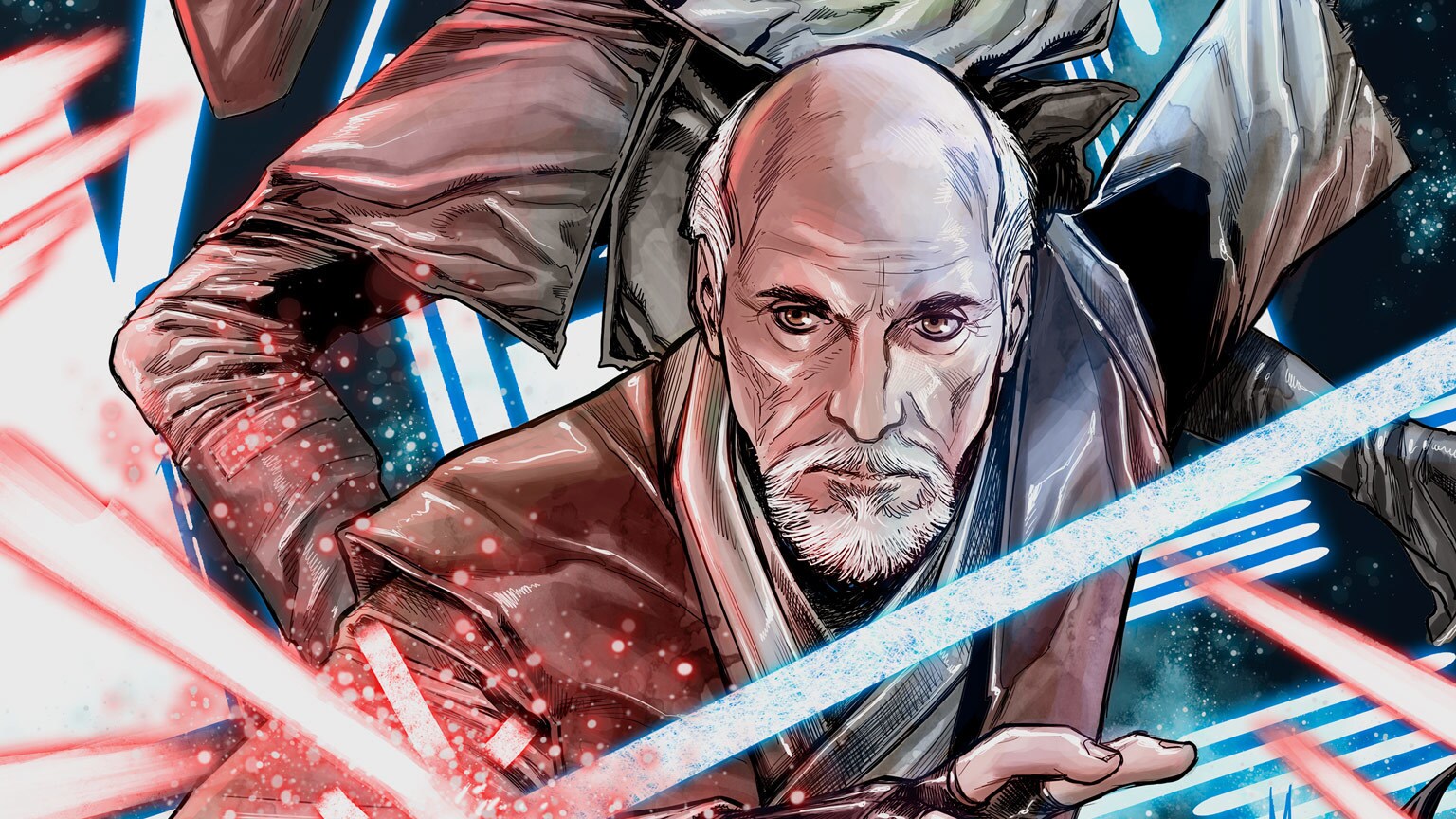
Lucasfilm’s announcement identifies Matthew Rosenberg as the writer and Paolo Villanelli as the artist. This is a useful source for the earliest published depiction of Cordova, separate from his holographic presentation in the 2019 game.
04 / LONG-TERM RESEARCH
Reconstructing the Zeffo civilization
Cordova’s most consequential archaeological investigation concerns the Zeffo, an ancient, Force-attuned civilization that built elaborate temples and technologically sophisticated structures. Their monuments survive on worlds including Zeffo and Bogano. In the first game, Cal uses Cordova’s recordings to learn why those structures matter and how different sites are connected.
His method relies on moving from one trace to another. A symbol in a tomb may point toward another location, while an artifact or inscription changes the apparent meaning of a site already explored. On Zeffo, he investigates sacred architecture associated with ancient sages. Clues connect the society’s history to locations such as Kashyyyk, expanding the project beyond a single planet.
The narrative never grants Cordova perfect knowledge of Zeffo civilization. His work is an ongoing investigation preserved in messages and physical records. That uncertainty makes his approach valuable to the IDS archive: an interpretation must be tested against what remains, and new evidence can reveal that an apparently isolated monument was part of a much larger network.
05 / RESEARCH COMPANION
BD-1 was a field assistant before Cal met him
BD-1 originally accompanied Cordova on expeditions. The small droid could scan objects, traverse difficult terrain, project holograms, and store portions of the scholar’s research. Lucasfilm describes BD units as companions built to support people working in remote environments. Those traits made BD-1 a practical partner for someone who spent so much of his life around ruins and hazardous terrain.
When Cordova prepared for the possibility that the Jedi would be destroyed, he restricted access to parts of BD-1’s stored knowledge. The droid’s recordings were set to become available as a future explorer demonstrated progress. That condition linked information to an investigation rather than leaving a complete, unprotected archive exposed to the first person who recovered it.
The decision also shaped BD-1’s independent life. He remained on Bogano until Cal found him, and thereafter became Cal’s companion rather than simply a device that delivered its original owner’s instructions. Cordova had used technology to preserve knowledge, but the story refuses to make the droid a disposable container. BD-1 develops new attachments while carrying the traces of his previous life.
06 / COLLAPSE OF THE REPUBLIC
A vision of the Jedi Order’s destruction
Cordova experienced a Force vision warning of the Jedi Order’s destruction. He attempted to alert the Jedi Council, but the danger he described did not produce the institutional response he hoped for. Rather than accept the failure of warning as the end of his responsibility, he began preparing to safeguard part of the Order’s future.
Chief Librarian Jocasta Nu is connected in the wider story to his efforts to protect information about Force-sensitive children. A list of such children might help a surviving Jedi rebuild a teaching tradition, but possession of the same list by the Empire could expose those children to abduction, coercion, and persecution.
His response is therefore understandable only by considering two different futures. In one, a trusted Jedi recovers the information after the Order’s collapse. In the other, Imperial agents recover it first. A catalogue designed for education becomes a surveillance tool if its custodians change. Cordova cannot control which future occurs, so he tries to arrange barriers that will prevent casual discovery.
07 / THE INFORMATION AT STAKE
The holocron of Force-sensitive children
Cordova hid a Jedi holocron that held names and locations of young Force-sensitive people. It had a potential public purpose within the Jedi tradition: helping the surviving Order identify future students. Yet the same information could be catastrophic for those children under an authoritarian government committed to hunting Jedi.
That dual use makes the holocron more ethically important than a generic rare artifact. The identities of vulnerable people are not merely pieces of historical knowledge to be published when discovered. They are information with consequences for personal safety, consent, freedom of movement, and the power of institutions to find people who have not chosen contact with them.
Cordova built a process requiring knowledge of Zeffo sites and a rare astrium to recover the holocron. His approach did not guarantee that a worthy person would succeed or that an enemy would fail. It did, however, impose a substantial barrier and encode the message that the object was not intended for casual distribution. Whether the list should ultimately be used becomes one of the first game's central ethical questions.
08 / RESEARCH SITE
Bogano’s ancient vault and the astrium
The Zeffo-built vault on Bogano became the hiding place for the holocron. Cordova left it behind with a sequence of instructions meant to help someone retrace his research. Its interior and the monuments across several worlds provide more than scenery for platforming and puzzles. They are the surviving instruments of his plan to delay access until a capable investigator appears.
Bogano is also where Cal discovers BD-1. The droid's first messages reveal why the vault is important and identify the Zeffo as its builders. Rather than offering the holocron immediately, Cordova directs the investigator toward other sites. Each place supplies evidence required to understand the vault and eventually open it.
The journey demonstrates a practical limit of secrecy through obscurity. A difficult route can prevent premature access, but it can also put the legitimate seeker in danger. Cal travels through occupied worlds, ancient tombs, and hostile environments to reconstruct the route. Cordova’s plan depends on someone else being willing to take risks for people whose names remain hidden.
09 / 14 BBY
Cal Kestis follows the research trail
In 14 BBY, Cal Kestis arrives on Bogano with Cere and Greez Dritus after escaping the Inquisitorius. He initially has no direct relationship with Cordova, yet the older Jedi’s recorded lessons begin to guide his new mission. BD-1 becomes the immediate link between the dead or absent institutions of the Republic and Cal's improvisational survival under Imperial rule.
Cal follows the trail of Zeffo temples and other locations, gathers the knowledge needed for the Bogano vault, and ultimately obtains the holocron. His experience changes the practical meaning of Cordova’s safeguards. What began as an attempt to preserve a future teaching community has become a choice about exposing children during an ongoing campaign of persecution.
The former owner’s instructions supply information but do not settle the moral decision. Cal must use his own judgment about the danger that follows from revealing identities. That transition from inherited records to independent ethical responsibility is one of the important outcomes of the first game.
10 / THE FIRST GAME’S ENDING
Why Cal destroys the holocron
After recovering the holocron from the Imperial Inquisitorius, Cal and the Mantis crew confront the possibility that using its list to rebuild the Jedi Order would make the children visible to the very regime that destroyed the old one. Cal chooses to destroy the artifact rather than assign himself authority over those children's futures.
The act contradicts the most straightforward use Cordova originally imagined, but it does not deny the value of his work. The research helped Cal meet allies, regain confidence, and understand the Order’s history. The protective purpose of the list ultimately outweighs the possibility of using its contents as a plan for recruiting students.
An interpretive account should distinguish Cordova’s intention from Cal’s choice. One Jedi protected the names by hiding them; another protected them by destroying the record. Neither approach provides an absolute rule for all archives. The conflict shows why an object’s appropriate use depends on political conditions and on the consequences for people represented within it.
11 / AFTER ORDER 66
The scholar survives the Jedi Purge
Contrary to a first impression created by the recorded messages in Fallen Order, Cordova survived the destruction of the Jedi Order. He continued living and working while the Empire expanded its persecution of surviving Jedi. The sequel reveals his whereabouts and allows Cal to encounter him in person rather than only through BD-1’s holograms.
The passage from a stored message to a living participant changes how his identity is presented. In the first game Cordova is a guide whose judgments are fixed at the time he recorded them. In the second, he is a person capable of collaborating, revising plans, and responding to Cal’s account of what happened to the holocron.
Survival also connects his personal history to that of Cere Junda. The former Master and Padawan, long separated by the fall of the Republic, reunite in a project very different from their earlier expeditions. Their shared work now has an immediate protective purpose: preserve history while providing shelter for people the Empire is actively hunting.
12 / LIVING ARCHIVE
Cere and Cordova on Jedha
By the events of Star Wars Jedi: Survivor in 9 BBY, Cordova is working with Cere Junda at a Hidden Path safehouse on Jedha. Together they support an archive of Jedi knowledge and cultural materials. Their work is part of a wider effort to help surviving Jedi and others endangered by Imperial power.
The difference from his earlier scholarship is significant. On Zeffo, he investigated the distant past; on Jedha, he seeks to protect a living community whose records might otherwise disappear through deliberate persecution. Books, artifacts, and memory carry both intellectual value and the risk of revealing people who must remain hidden.
Cordova’s presence helps connect Cal’s previous quest with the new story. He recognizes that the younger Jedi's experience matters as evidence, not merely as a report from someone carrying out an assignment. The archive on Jedha is a working institution, supported by trust, practical labor, and the precarious protection of the Hidden Path rather than by the resources of a galactic government.
13 / NEW RESEARCH TASK
Repairing the last Abyss compass
Cal’s search for Tanalorr eventually brings surviving High Republic navigation technology to Jedha. The Abyss compasses were designed by Santari Khri to make travel through the Koboh Abyss possible. Centuries of damage and conflict leave only limited usable examples, and the group needs Cordova’s technical skill to determine whether a recovered device can still guide a ship.
The Jedi Master studies the surviving compass and succeeds in restoring it. This moment brings his archaeological expertise into a contemporary engineering problem. A technology invented by a long-vanished research program can only serve new people if someone understands how to stabilize and interpret it.
The restored compass could open the way to a refuge for people who need protection from the Empire. Its successful repair should have been a turning point for the Hidden Path. Instead, the object’s strategic value makes it a target for a person who has concealed his true loyalties. Cordova has preserved access to a better future, but not control over what happens next.
14 / THE COST OF BETRAYAL
Bode Akuna kills Cordova on Jedha
Immediately after Cordova repairs the compass, Bode Akuna reveals his betrayal. He shoots Cordova, seizes the navigation device, and escapes. The violence removes one of the Hidden Path's leading scholars and directly exposes the precariousness of the Jedha operation.
The same betrayal brings Imperial forces against the safehouse. Cere attempts to defend the archive and dies fighting Darth Vader. These events are linked but should not be collapsed into one undifferentiated outcome: Bode personally kills Cordova, while Cere's death takes place during the subsequent Imperial assault.
Cordova’s death gives the wider story a specific loss. He had protected records across the fall of the Republic, survived persecution, and helped establish a new institutional home for Jedi memory. His practical skill repaired an artifact with the potential to protect refugees, but secrecy and personal trust were still vulnerable to infiltration. The tragedy therefore affects both the archive's people and the political uses of its knowledge.
15 / MATERIAL AND VISUAL CULTURE
Tools, robes, recordings, and preserved worlds
Cordova is usually depicted as an older human man with a partially bald head, gray hair and beard, and Jedi robes appropriate to his status as a Master. His design communicates an academic disposition without removing the fact that he is trained as a Jedi. Promotional artwork for the Dark Temple comics also depicts him with a lightsaber, connecting the scholar to active missions.
His most consequential tools are not his weapons. BD-1, recorded holograms, an astrium, the Bogano vault, and the holocron enable his research to act across years of absence. Each artifact carries a different role: the droid records and assists, the astrium controls access, and the holocron contains information that can empower or imperil vulnerable people.
The archive on Jedha expands the material culture of the story. It demonstrates how fragile records become under political persecution. Preserving a manuscript, machine, or memory is not identical to preserving the community that produced it. Cordova’s work asks later Jedi to care for both rather than treating material objects as complete substitutes for living traditions.
16 / IDS INTERPRETATION
Archaeology, custody, and the power to identify
Cordova's account offers an example of archaeology inside a religious and political institution. The Jedi do not simply retrieve objects to exhibit them. They attempt to understand the relation between sacred practice, social organization, technological skill, and the memories of people who are no longer present. The Zeffo are important not just because they left powerful machinery, but because their monuments show that Force traditions have existed in forms unlike the Jedi Order itself.
His collaboration with BD-1 and Cere illustrates the social basis of research. A field record is produced by people and equipment working together. Information survives when someone designs storage systems, chooses what to document, and decides who may inherit access. The person who later interprets a recording may have needs and values that differ from those of its original author.
The holocron makes the question of custody especially urgent. Its list of Force-sensitive children could support education or persecution. The significance of the data depends on the power of whoever possesses it and on the degree to which the children themselves can consent or refuse. Cal’s decision to destroy it prioritizes their safety and independent futures over the administrative goal of identifying candidates for a revived institution.
On Jedha, preservation takes on another meaning. An archive must remain usable while its keepers protect refugees from surveillance, capture, and death. Cordova’s skill in repairing a compass cannot by itself prevent violence from someone trusted within the organization. Technical competence, physical security, and political judgment have to operate together, yet the story shows how easily those forms of protection can fail.
Finally, his life challenges the assumption that Jedi identity can be summarized by combat. He is a teacher, explorer, researcher, preservationist, and ultimately a casualty of Imperial-era conflict. Those roles change across his life. The same person who preserved a list intended to rebuild an order later works in an archive that protects survivors without requiring that the institution be reconstructed in its old form.
17 / INTERACTIVE STORY ORDER
Follow Cordova across two games
Choose a documented era to see how Cordova’s work changes in purpose. This reconstruction distinguishes older expeditions, the events of Fallen Order, and Survivor.
A Jedi archaeologist and teacher
Cordova trains Cere Junda and investigates the Zeffo with BD-1. His scholarship explores the diversity of Force-sensitive cultures.
18 / INTERACTIVE MATERIAL HISTORY
Study the objects Cordova left behind
Choose an artifact to identify what it stores and how later people use it. The panels do not invent missions or item functions.
A companion and living research record
BD-1 can navigate ruins and retain Cordova’s messages. Cal receives the recordings, but the droid also develops his own attachments beyond the original assignment.
19 / INTERACTIVE ETHICAL RESEARCH
Who should hold the information?
Select a question to compare protection, access, and autonomy. This is IDS interpretation based on the game, not an alternative plot or a new canonical dialogue.
Delay access until a trusted successor appears
Cordova hides the holocron behind a difficult research trail. That reduces casual discovery but does not ensure that every future holder will make a safe decision.
What can this study establish?
The responses identify different stakeholders in recorded events. They do not assert that the children consented, create additional Jedi Council decisions, or change Cal’s actual ending.
20 / COLLECTOR REFERENCE
Collecting this Character
Cordova appears in Star Wars Jedi: Fallen Order, Jedi: Survivor, and Marvel’s five-issue Fallen Order – Dark Temple miniseries. The comic is a distinct physical collecting opportunity with verified publisher credits. Fans can search by series title, publisher, and issue number instead of relying on unverified seller descriptions.
His lightsaber and distinctive Jedi robes also appear in official game and comic artwork. When examining fan-made models or custom props, distinguish personal replicas from officially licensed products. This dossier does not claim a specific LEGO minifigure, Topps character card, or Hasbro figure without a traceable manufacturer listing.
For related releases browse the Star Wars cards archive, Games hub, and the comics collection. Collecting information is kept separate from plot interpretation and source criticism.
21 / EVIDENCE NOTES
Official records, publications, and limitations
Lucasfilm: Eno Cordova Databank confirms the explorer, the Zeffo research, BD-1, his survival of the Purge, and the Hidden Path partnership with Cere on Jedha. Lucasfilm: Cere Junda Databank documents the earlier Master–Padawan relationship. Lucasfilm: Dark Temple announcement confirms the Marvel prequel and the roles of its creators.
The playable stories of Star Wars Jedi: Fallen Order (2019) and Star Wars Jedi: Survivor (2023) are primary sources for Cordova’s recorded messages, the Bogano holocron, Cal’s decision to destroy it, the Jedha archive, the restored compass, and Cordova’s death. The Eno Cordova character index is a secondary source useful for locating game records and related publications, not for inventing missing biographical details.
Continuity: Canon. Earliest published appearance: Jedi: Fallen Order – Dark Temple (2019); first game appearance: Jedi: Fallen Order (2019), primarily through recorded messages; direct presence in Jedi: Survivor (2023). The anthropological analysis concerns evidence and interpretation and should not be confused with additional dialogue or events.