
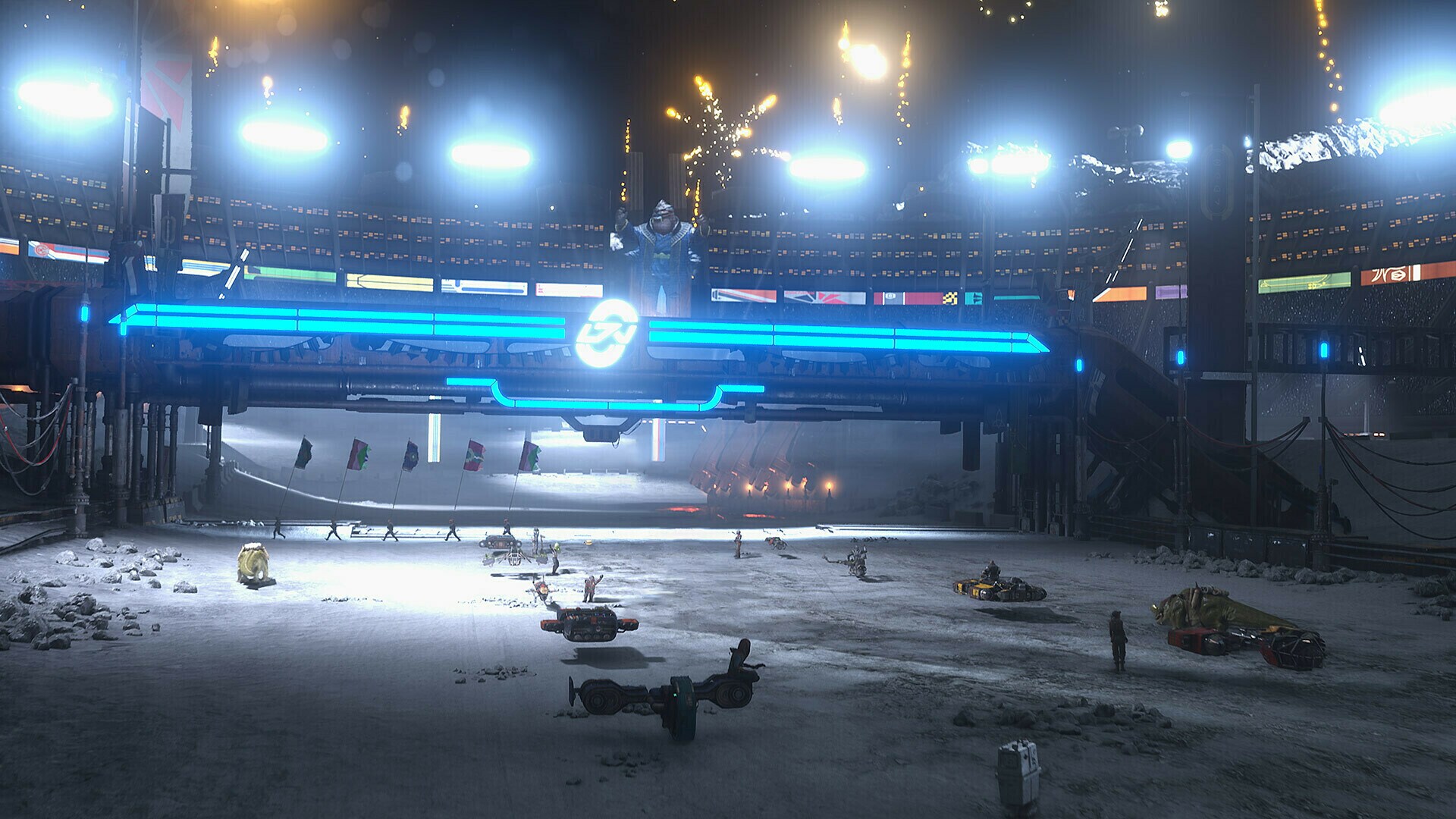
IMPERIAL DARK SECTOR / VERIFIED GAME LORE
An outlaw sport. A contest for power.
When the Empire falls, an underground racing circuit offers freedom on the track—and a new way for a wealthy dynasty to control the spectacle.
01 / FROM IMPERIAL SUPPRESSION TO A NEW CIRCUIT
From imperial suppression to a new circuit
Darius Pax built his career in the old racing economy. He worked as a mechanic for the Hutts and managed racers belonging to Jabba before imperial restrictions forced the sport into the underground. His shift into customizing luxury vehicles preserved his technical abilities and business connections, but it also separated him from the racing world he valued.
The Empire's collapse offered a chance to revive organized competition. Pax spent his own credits establishing the Galactic League, hoping one day to secure the recognition and support of the New Republic. This ambition matters because the circuit is not simply an exercise in smuggling or defiance. Its founder imagines an institution that might eventually become legitimate.
The official Databank describes a period of modest beginnings before the League drew an audience and a talented roster. That early growth depended on spectacle, backers and the movement of racers between worlds. Unsanctioned status allowed activity beyond the ordinary reach of regulation, but did not remove the need for investors and access to circuits.
The official sources do not provide the date of a founding charter, a complete rulebook or a New Republic license. Calling the League a fully legalized governing body would therefore misstate its status. It is a developing racing organization in a period of political transition.
02 / WHO PAYS FOR A SHOT AT GLORY?
Who pays for a shot at glory?
The League's structure requires a backer and a repulsorcraft when a competitor enters a tour. Pax draws sponsors from syndicates, pirates and enthusiasts, and the investors expect profits from racers' success. These relationships make financial access an important condition of entry before the first starting signal sounds.
A pilot's result may look like the achievement of an individual, but engineers, parts suppliers and financiers are essential. Hibi Esuufa's mobile paddock workshop demonstrates that distinction within the story. The mechanic can fit parts obtained through runs or bought from her, changing the vehicle's capabilities between events.
The game's tour structure produces an economy of risk. A competitor travels through a series of planetary events, earns equipment and seeks qualification for the championship. One campaign can involve changing backers and contracts, while actual game upgrades carry gameplay effects that should not be presented as a universal in-universe financial rule.
Backers are not the same as political rulers, and every sponsor should not be assigned an invented identity. The Databank confirms broad classes of investors, not a complete list of their companies, holdings and contract terms.
03 / HOW THE BOOL FORTUNE CHANGES THE COMPETITION
How the Bool fortune changes the competition
Kestar Bool arrived as a promising racer whose family's dynastic wealth seemed useful to Pax. Kestar's resources helped the League grow rapidly, but the price was institutional independence. Tracks moved to planets affiliated with the Bool family, viewership rose, and the champion acquired more influence over the circuit.
The conflict is partly personal and partly structural. Kestar's desire for acclaim makes him a dangerous competitor, while the family enterprise provides leverage beyond speed. Pax's league now has to contend with a champion who can influence the conditions under which opponents compete.
Lucasfilm says Pax is willing to remove Kestar's corruption, whatever the cost. That statement supports an account of a founder who sees his own institution drifting away from its original purpose. It does not specify every method Pax will use or absolve him of every decision made along the way.
The League illustrates how funding can change governance. A sponsor who initially appears to solve financial problems may acquire sufficient leverage to determine venues, expectations and the practical treatment of rivals. Entertainment can thus become another field where private dynastic power is exercised.
04 / HOW AN OUTER RIM TOUR WORKS
How an Outer Rim tour works
The official League Databank describes racers traveling between planets during a tour. Vehicles become faster and stronger through modifications, and one successful competitor eventually earns a chance to challenge the reigning champion on the remote planetoid of Derven Acos.
Released game materials identify multiple settings including Jakku, Sentinel I, Lantaana, Ando Prime, Tatooine, Crait and Derven Acos. The presence of varied environments matters: a successful racer has to adapt driving choices to changing hazards rather than treat all worlds as one identical stadium.
The game supports landspeeders, speeder bikes, skim speeders and podracers, which differ in handling and risk. Lucasfilm's vehicle guide credits Pax with bringing the skim speeder into this particular racing circuit. The same article explains specific driving techniques for individual vehicle classes, but those features should not be converted into regulations invented for the League as a whole.
Campaign, Scenario, Arcade and multiplayer are game modes through which players experience racing. They need not map exactly onto four separate canonical public institutions. This page separates what the story says about the circuit from what the software provides as ways to play.
05 / SPORT, STATUS AND THE SPECTACLE OF RISK
Sport, status and the spectacle of risk
The Galactic League attracts spectators because a race can dramatize risk, technical skill and a sudden change of fortune. On the surface, the finishing order appears to reward only speed. The background story reveals unequal access to vehicles, sponsors, circuit ownership and influence over competition.
A racing paddock is an important social location. Mechanics provide services, competitors negotiate rivalries, fans turn individual pilots into public figures and investors look for returns. These relationships may be hidden by the spectacle of machines on a track but remain part of what makes a champion possible.
Pax and Kestar embody different claims to legitimacy. Pax imagines building an open and enduring racing institution. Kestar wants adoration and uses unfair methods to protect his status. The conflict is not proof that all racers share either outlook, or that every spectator accepts the corruption involved.
Because the official record describes an unsanctioned league under a newly formed government, the meaning of legitimacy is unsettled. Whether a later regulator could make it fair is an open question. The archive can analyze competing visions without manufacturing legislation or a known future for the organization.
CONNECTED RECORDS / INDIVIDUALS ARE NOT INTERCHANGEABLE
The people behind the story
The same institution or homeland can mean different things to each person. Open a related record to distinguish biography, dynastic power and collective identity.
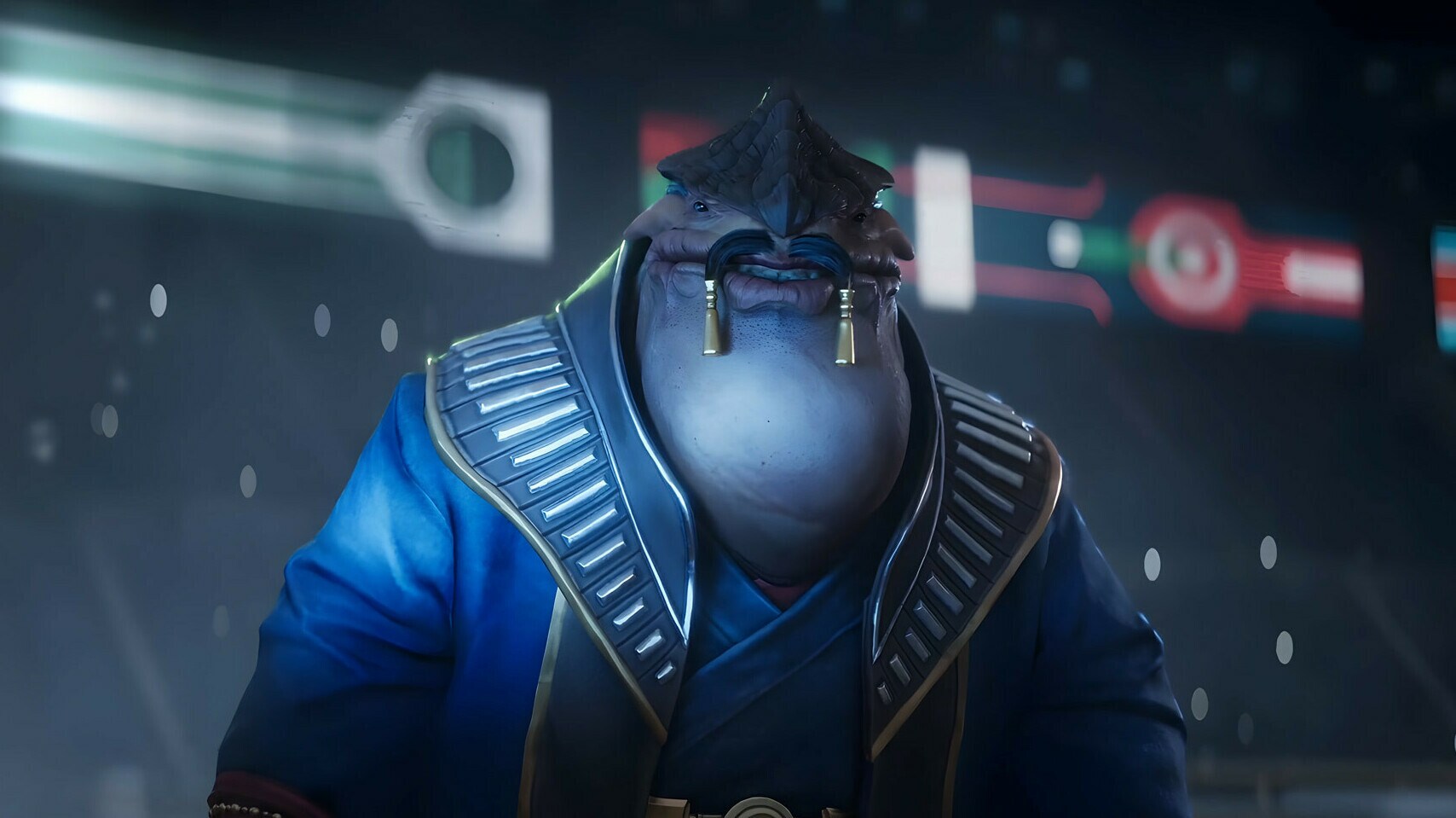 FounderDarius PaxA Besalisk mechanic and promoter whose dream of a new racing age comes under pressure from the Bool fortune.OPEN CONNECTED FILE →
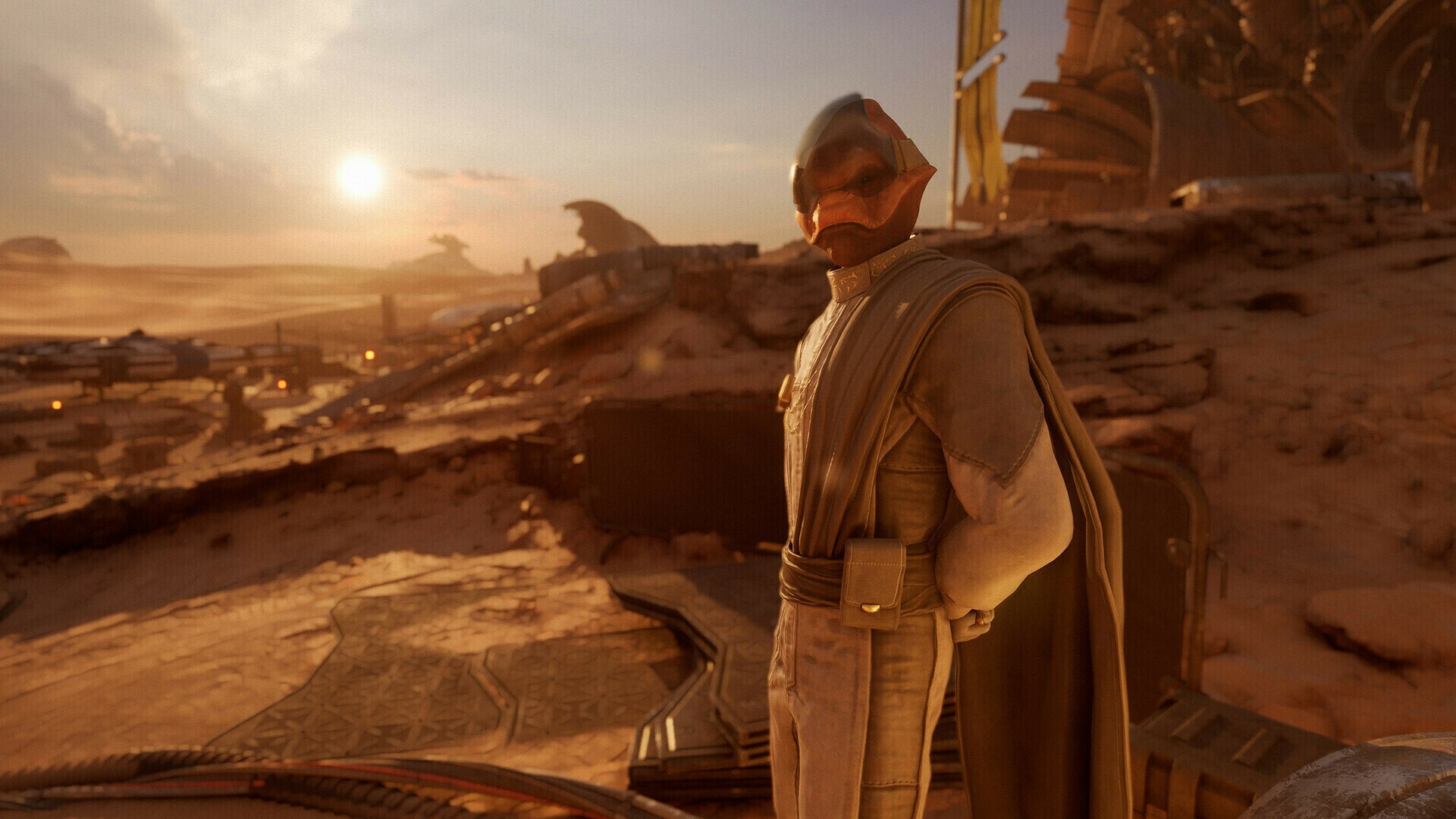 ChampionKestar BoolThe dynasty-backed league star whose reputation depends on controlling the competition.OPEN CONNECTED FILE →
 ChallengerShadeA Gathii cargo pilot with a history of imprisonment and a personal grievance against the Bools.OPEN CONNECTED FILE →
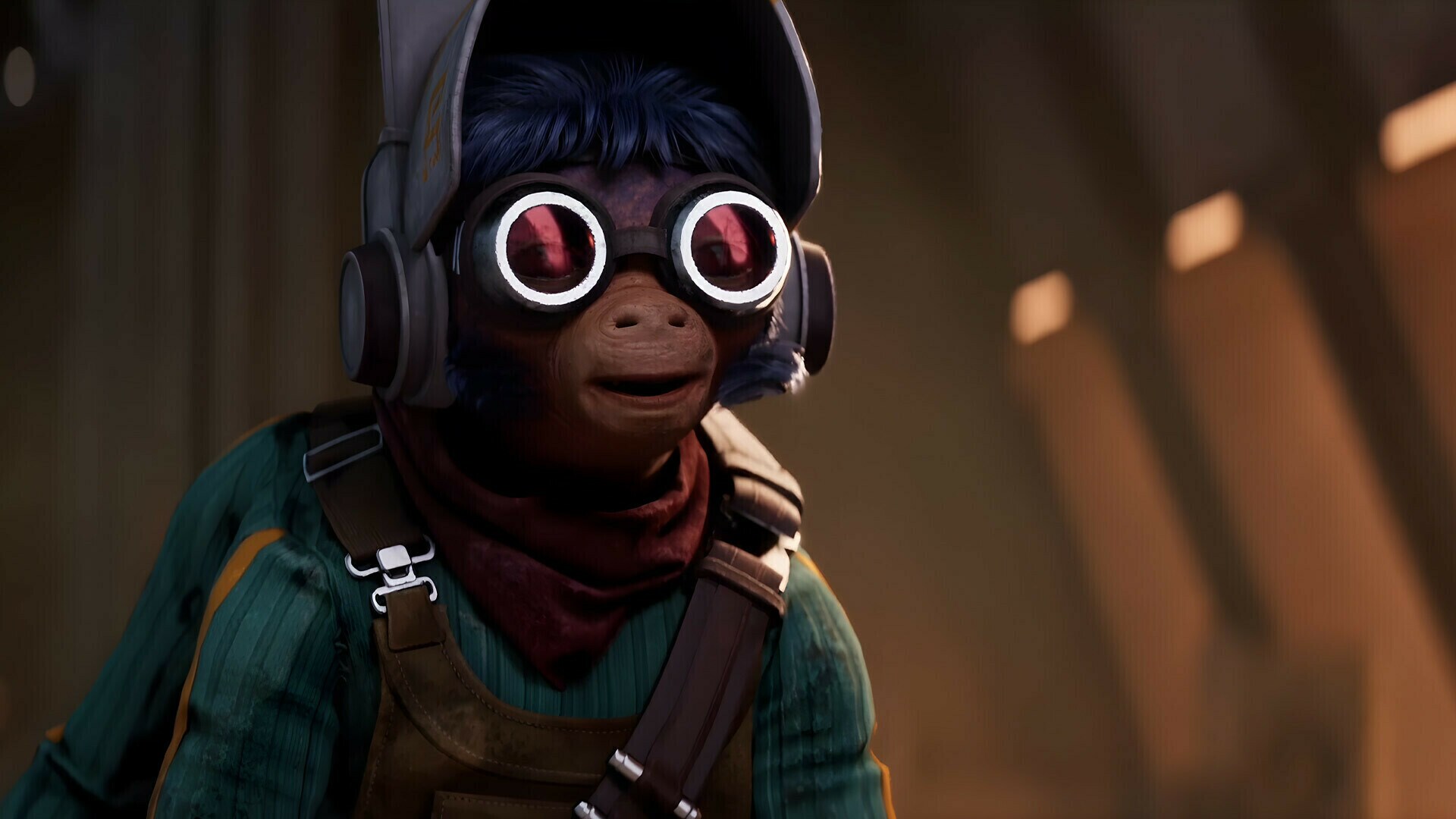 MechanicHibi EsuufaThe Ardennian engineer whose workshop turns practical maintenance into racing advantage.OPEN CONNECTED FILE →
INTERACTIVE IDS RESEARCH LAB / HYPOTHETICAL
Whose vision of the League wins?
Choose a hypothetical response to the growing influence of the Bool fortune. These are institutional interpretations, not selectable endings in the game.
What would this choice mean?
Each option reveals an interpretation grounded in available sources and explicitly separated from invented canonical events.
IDS / INSTITUTIONS, KINSHIP, BELONGING
What the story tells us—and what it does not
Organizations structure opportunity through resources and claims to authority. In Galactic Racer, the Bool conglomerate and the League intersect without being identical, and individual ambitions take form inside inherited power and post-Imperial uncertainty.
IDS distinguishes primary Lucasfilm history from inferred social analysis and hypothetical ethical exercises. The game does not provide exhaustive legal charters, workforce surveys, detailed household rituals or complete records of every person affected. Questions raised by those gaps should be retained as research questions.
The most useful historical perspective does not turn every character into a representative of an entire species or treat a racing victory as a substitute for political reform. It examines the relationship among work, place, public reputation and access to power, asking who can pursue the opportunities a competitive society promises.
PRIMARY SOURCE LOG / DIRECTLY VERIFIABLE
Follow the evidence
Official Databank facts are separated from editorial inference. The simulated choices are analysis tools, not undocumented scenes or in-game branching results.