
The phrase Sith Pureblood often evokes a red-skinned aristocrat serving an ancient dark-side empire. Yet the oldest Sith societies in Star Wars Legends precede the exiled Jedi who established the first Sith Empire. The name that later described a philosophy and an imperial ruling tradition once named indigenous peoples with their own political histories. An anthropological approach begins by asking what existed before conquest, who controlled the new state's institutions, and which parts of the older society endured.
01 · The Sith existed before Sith Lords
Later stories often use “Sith” to mean an initiate of a dark-side order. That meaning is historically too narrow for the earliest Legends periods. The indigenous Sith species lived on Korriban and other worlds of their region before the Dark Jedi Exiles arrived. Their peoples had rulers, rival communities, warfare, ritual authorities, inherited memories, and practices involving the Force. The imported order did not invent those elements. It reorganized them under new claimants to authority. This distinction matters because it prevents the history of a population from being reduced to the biographies of its eventual conquerors.
The surviving reference material offers much more information about kings, sorcerers, armies, and tombs than about the lives of craftspeople, farmers, caretakers, or children. That imbalance is a source problem. Elites build monuments to their own accomplishments, and later stories focus on those who wield visible power. It would be an error to fill the gap by assuming that every indigenous Sith person practiced the same rituals or supported the same rulers. Species describes descent and biological classification in the fictional setting. It does not establish a single political opinion or uniform culture.
Scholars of colonial encounters ask who names a people and whose records survive. In the Sith case, the title of Dark Lord eventually became more visible than the older institutions it absorbed. An imperial inscription naming a ruler can tell us who claimed power. It cannot, by itself, tell us how most subjects regarded that power. The question is not merely who won, but whose version of the past later became authoritative.

02 · King Adas: unification before conquest
Legends assigns King Adas to a much earlier period, approximately 28,000 BBY, with the Rakatan encounter often placed around 27,700 BBY. He united rival Sith communities under his kingship and became the focus of a tradition of extraordinary personal authority. The stories associate him with unusual longevity, martial prowess, sorcery, and the honorific Sith'ari. His authority was therefore a local political accomplishment long before an exiled Dark Jedi adopted the title Dark Lord. [1]
The Rakata of the Infinite Empire then entered Sith history as outsiders possessing powerful Force-related technologies. Legends accounts say they attempted to dominate Korriban, that Adas resisted them, and that the encounter involved the transmission of holocron knowledge. Adas reportedly died in the struggle, but his victory became part of the political memory of the Sith. Such histories should not be flattened into a story of simple technological progress: learning to produce an artifact and gaining control of one's political future are separate matters.
Adas's memory illustrates the difference between an indigenous king and a later imperial founder. In the first story, a local ruler resists outside expansion. In the second, centuries later, newcomers place themselves above local populations. Both narratives concern the control of land, ritual knowledge, and legitimacy, but they are not the same event. Adas never met Ajunta Pall or Marka Ragnos. More than twenty thousand years separate the first two periods in conventional Legends chronology.
03 · The Hundred-Year Darkness and the arrival of the Exiles
After the Hundred-Year Darkness, defeated Dark Jedi were exiled from Republic space. Conventional Legends chronology places their arrival among the Sith around 6,900 BBY. Ajunta Pall became central to the resulting conquest. The Star Wars: The Old Republic codex describes the outsiders' superior technological and Force-related capacities, the veneration they attracted, and the institution of the first Dark Lord. The same source situates Pall's tomb among later rulers in the Valley of the Dark Lords. [2]
The word exile can obscure what happened next. These arrivals had lost political standing in one society, but became conquerors in another. Exile describes the relationship between them and the Jedi; it does not describe the relationship between them and the Sith they encountered. A person expelled by one authority can nevertheless establish domination over someone else.
Religious reverence for the newcomers also needs careful interpretation. The codex portrays locals who came to treat the Exiles as gods. That is the account of a later imperial tradition, not a demographic survey of every Sith community's beliefs. Some may have cooperated, others resisted, and many ordinary people's responses go unrecorded. The story supports the rise of an unequal hierarchy. It does not prove universal consent.
Ajunta Pall's ascension converted a victory into an enduring institution. Command over fighters mattered, but so did titles, sacred architecture, ritual experts, and practices that trained successors. When later Lords honored the dead in monumental tombs, they gave the new regime a lineage that appeared older and more stable than any single ruler. An empire requires more than the power of its founder; it must teach the next generation why its rule is legitimate.
Newcomers arrive with weapons, Force techniques, and political experience foreign to the host societies.
A new elite takes authority over land, titles, ritual specialists, and military followers.
Later generations preserve elements of older Sith society while teaching an imperial definition of Sith identity.
04 · How does a cultural synthesis actually happen?
In anthropology, syncretism refers to the combination and reinterpretation of practices that had previously belonged to different traditions. It does not require equality between the groups involved. Assimilation describes pressure or processes through which one group adopts another's cultural practices. Neither term is automatically voluntary. In this history, cultural change unfolded inside an arrangement of domination. Therefore, both words need the language of conquest and power alongside them.
Authority: an imported title becomes local sovereignty
The Dark Jedi brought an institutional vocabulary shaped by their opposition to the Jedi Order. The indigenous Sith had their own ranks, sacred figures, and political authorities. The eventual Dark Lord was not simply an indigenous king with a new name, nor simply a Jedi master with a new uniform. The ruling office came to occupy a political world in which conquest, dynastic ancestry, dark-side ability, and ritual prestige reinforced one another. Replacing a sovereign may leave local administration intact while changing who benefits from it.
Ritual: borrowed practices acquire new patrons
Sith sorcery and older Force-linked rituals predated the arrival of the Exiles in Legends accounts. The newcomers had learned other techniques in a Jedi-derived tradition. The resulting Sith order incorporated and elaborated older practices while redirecting their use toward imperial competition and domination. A shared ritual need not have the same meaning to a native priest, a newly arrived ruler, and an enslaved laborer assigned to build a temple.
Religious change is not adequately explained as one side possessing superior knowledge. It is better described as a struggle over who could define legitimate practice and authorize the teaching of secret techniques. Control over the archive and initiation process can become as significant as control over the battlefield.
Language: power determines which terms endure
Legends supplies Sith words, honorifics, and fragments of an ancient language, but does not provide a continuous linguistic archive detailed enough to reconstruct everyday bilingual life during the conquest. It is reasonable to investigate linguistic contact, translation, titles, and naming as possible sites of change. It is not responsible to invent a complete fusion language or claim that every Sith subject abandoned their mother tongue.
Terms such as Sith'ari and Dark Lord demonstrate the central problem: a title can travel across historical settings and acquire new ideological uses. The survival of a word does not guarantee continuity in the institution it describes. A conquering elite may use indigenous vocabulary to make new rule appear familiar.
Material culture: old forms support a changed order
Temples, weapons, tombs, holocrons, and monuments show how institutions turn belief into durable objects. Archaeologists would examine construction sequences, reused foundations, burial distributions, inscriptions, imported materials, and shifts in the organization of labor. In the fictional setting, many later tombs symbolize the prestige of the new Sith Lords. Their prominence does not prove that older settlements ceased to exist or that every tomb occupant belonged to one ancestry.
Technology is especially easy to misread. A Force artifact can be transferred from one polity to another without producing political freedom. A weapon can be adopted without its users accepting the donor's religion. A prestigious building style can spread because a ruler commissions it, not because the population spontaneously shares the ruler's preferences.
Kinship and marriage: ancestry is not consent
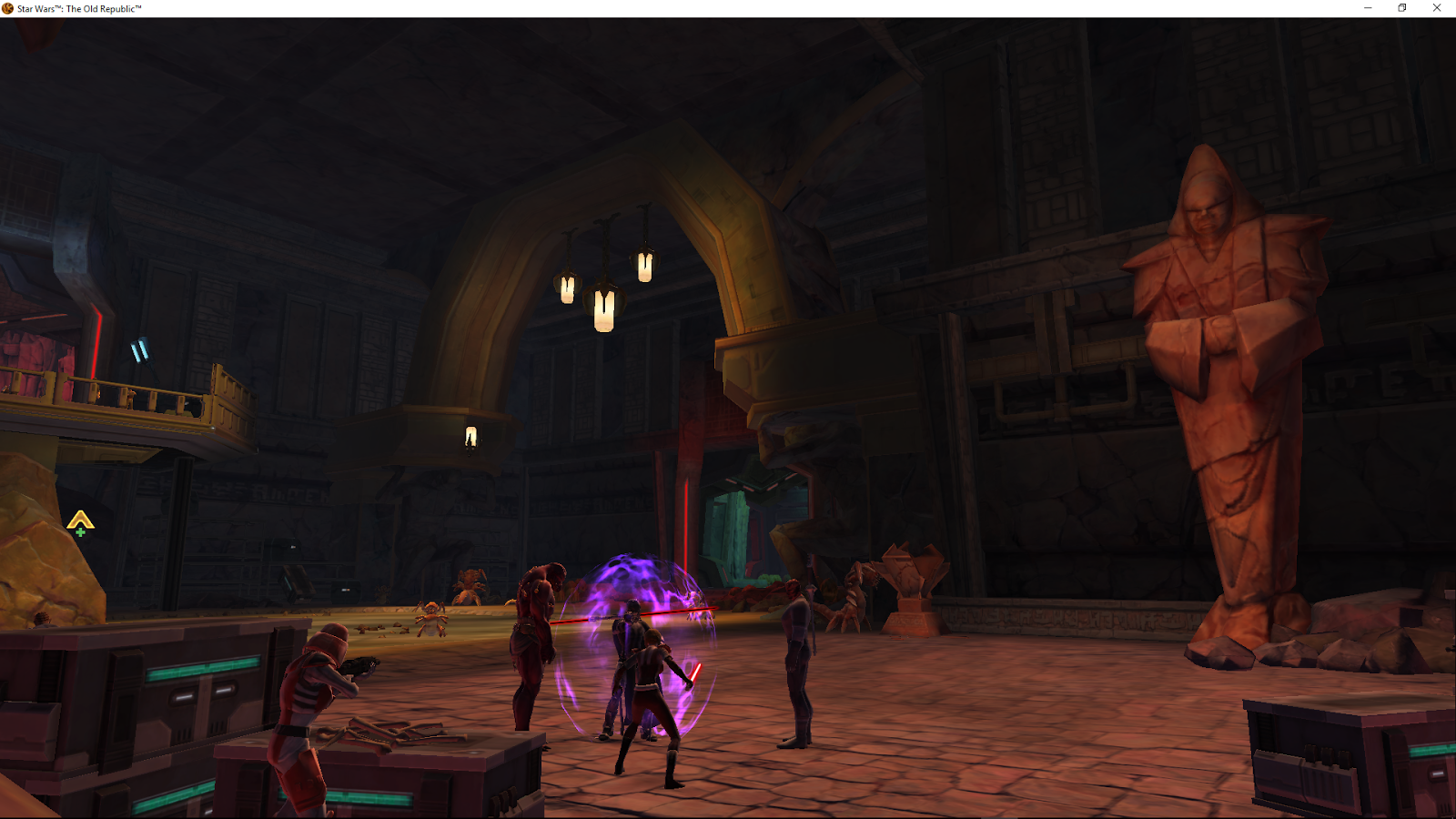
Later Legends works describe intermarriage and descendants of the Exiles and indigenous Sith, a background reflected in the portrayal of Marka Ragnos. [3] Family connections could legitimate a new ruling household or join previously separate social networks. Yet intermarriage under conquest does not by itself establish equal status, absence of coercion, or general acceptance of the new state. Stories concentrating on high-status bloodlines also tell us relatively little about the experiences of most families.
05 · Who gets to be a “pureblood”?
Pureblood is not a neutral cultural description. In Star Wars, it is a historically situated species and ancestry label, and later Sith states use ancestry and prestige in ways that can reinforce hierarchy. The emergence of mixed-descended ruling lines complicates any claim of untouched origins. Even when characters appeal to purity, their political identity has been shaped by migration, conquest, marriage, and education. Biological ancestry, ritual membership, and loyalty to a state are distinct categories.
The archaeological question is not how to find an objectively pure culture. Cultures continually change. The productive question is who gains authority to say that one version of the past is authentic while dismissing others as corrupt or inferior. When rulers make ancestry a credential, they may conceal the institutional decisions that created their dominance in the first place.
It is equally important not to treat all indigenous Sith as one passive category. Their remembered society had political differences before outsiders arrived. A narrative in which the Exiles simply “civilized” a uniform native population would repeat the conquerors' preferred story and erase earlier accomplishments, particularly those attributed to Adas.
06 · Archaeology of empire: reading what survives
If an archaeological team could examine Korriban, its first task would be chronology. Is a tomb earlier or later than the Exiles? Does a shrine stand on a much older ritual site? Have newer symbols been cut into older stone? Those questions matter because the same monument may show continuity in place alongside a sharp break in political authority.
Next would come distribution: are elite goods concentrated in a few graves, or found widely? Which settlements show new fortifications? Whose names appear in inscriptions and whose do not? Where are the workshops and worker quarters relative to ritual complexes? The absence of ordinary people from monumental records would not be proof of their absence from the society. It would reveal the selectivity of the archive.
Finally, investigators would compare independent kinds of evidence. A royal chronicle might praise benevolent rule while signs of forced construction or destruction complicate the claim. An imported technological object might establish contact without proving conquest. A ruler's image on a wall can establish official representation, not the actual degree of popular devotion.
07 · Marka Ragnos: a later heir, not the first ruler
Marka Ragnos belongs to the mature Sith Empire many generations after Ajunta Pall and vastly later than King Adas. His reign near 5,000 BBY demonstrates how thoroughly the earlier encounter had developed into a durable aristocratic institution. The Old Republic codex explicitly describes him as descended from the original Sith inhabitants and the Dark Jedi who interbred with them. He secured rule by defeating rivals and carefully managing competition among powerful lords. [3]
Ragnos is especially revealing because his authority depended on more than descent. His ability to manage rivals mattered to the stability of the state. Soon after his death, Naga Sadow and Ludo Kressh struggled over succession. The later crisis, dramatized in Tales of the Jedi: The Golden Age of the Sith, exposes the weakness of an order built around powerful households and individual command. The empire's cultural integration had not solved the problem of peaceful political succession.
In an anthropological account, Ragnos therefore serves as a case study in the long consequences of conquest. Generations after first contact, a mixed-descended elite could present itself as custodian of a unified Sith political identity. That identity remained contested among rival Lords, and the distinction between ruler and ruled did not disappear.

08 · Compare the Norman and Anglo-Saxon encounter, carefully
The Norman Conquest of England in 1066 offers a useful comparison because it makes visible the separation between conquest and cultural change. English Heritage documents the dispossession of much of the previous English landed elite and the introduction of Norman French as the language of court and government. London Museum shows that people did not suddenly stop speaking English: French, Latin, and English occupied different social roles while the language continued to change. [4] [5]
This comparison brings three specific questions into focus. First, who held offices, land, and military command after conquest? Second, which languages and institutions carried prestige, and who could gain access to them? Third, how did local practices persist even while new rulers imposed their own symbols? These questions transfer productively to Sith history without suggesting the two histories unfolded in identical ways.
Research in medieval English literature also cautions against describing Norman rule as simple one-way replacement. Conquest was coercive, yet interaction involved multilingualism, adaptation, and negotiation. Cultural continuity and political inequality can exist at the same time. [6]
There are strict limits to the analogy. Medieval England has written records, material remains, and historians who can revise conclusions. Korriban is fictional. The Sith stories also involve interspecies reproduction, Force-related technologies, and authorial decisions across decades of licensed publishing. Those elements cannot be mapped onto real populations as though they were equivalent biological or historical cases. The comparison is an exercise in asking better questions, not in proving that one history caused or replicated the other.
Interactive research file 01 · Chronology
Four periods, four different political conditions
Select a period to identify the institutions that existed then. The chronology follows conventional Legends dates, which are sometimes revised across sources.
Sith societies before the Exiles
Indigenous communities developed political structures, conflict traditions, and ritual systems before the Dark Jedi arrived. There was no single imported Sith Order.
Research question: Which features of later Sith rule were already present?
Interactive lore file 02 · Archaeological judgment
Investigate three contested finds
You are comparing fictional field evidence with imperial historical claims. Choose the most defensible inference for each case. You will receive individual corrections and a final assessment of your reasoning.
A later Dark Lord's insignia is carved above an older Sith relief. What does the overlap most directly show?
A holocron technology appears after Rakatan contact. Which historical claim is warranted?
A monument calls one Dark Lord “beloved by every Sith.” What should an investigator conclude?
Archaeological assessment
Historical takeaway: The Sith Empire's origins combine cultural exchange with domination. An object can demonstrate contact or official ideology without demonstrating consent, universal assimilation, or a population's beliefs.
Review the historical comparison →King Adas shows that the indigenous Sith had rulers and traditions long before the arrival of the Dark Jedi. Ajunta Pall represents an imperial transformation, not the beginning of Sith society. Marka Ragnos represents a much later political inheritance. Keeping those periods separate makes room for the most important question: how did those who controlled the empire turn a diverse and unequal history into a single story about Sith identity?
Sources and editorial method
The first six entries identify Legends story and reference material. The final three provide real-world historical comparison. Published descriptions and game codex entries are more reliable for particular story claims than unsupported fan reconstructions. The anthropological interpretations on this page are IDS analysis, not assertions by Lucasfilm.
- George R. Strayton, Tales of the Jedi Companion (West End Games, 1996); Abel G. Peña, “Evil Never Dies: The Sith Dynasties” (2006); Ryder Windham, Jedi vs. Sith: The Essential Guide to the Force (Del Rey, 2007); Daniel Wallace, Book of Sith: Secrets from the Dark Side (Chronicle Books, 2012). These works underlie later Legends accounts of King Adas. Source and publication overview.
- Star Wars: The Old Republic, in-game codex “Tomb of Ajunta Pall” (BioWare / LucasArts, 2011). Read the codex transcript.
- Star Wars: The Old Republic, codex “Tomb of Marka Ragnos.” Read the codex transcript.
- Kevin J. Anderson et al., Tales of the Jedi: The Golden Age of the Sith (Dark Horse, 1996–1997), and The Fall of the Sith Empire (1997). Publication record.
- Ryder Windham, Jedi vs. Sith: The Essential Guide to the Force (Del Rey, 2007), for Legends narrative accounts of Sith lineages and Force traditions.
- Daniel Wallace, Book of Sith: Secrets from the Dark Side (Chronicle Books, 2012), for in-universe treatments of ancient Sith teaching and memory.
- English Heritage, “What Was the Legacy of William the Conqueror?” (2018).
- London Museum, “How the Norman Conquest Changed London.”
- The Cambridge History of Medieval English Literature, “Anglo-Norman Cultures in England, 1066–1460.”
Images: Star Wars: The Old Republic screenshots used for editorial commentary, and the published Golden Age of the Sith comic cover. Depictions from much later eras are identified as such and are not offered as eyewitness reconstructions.