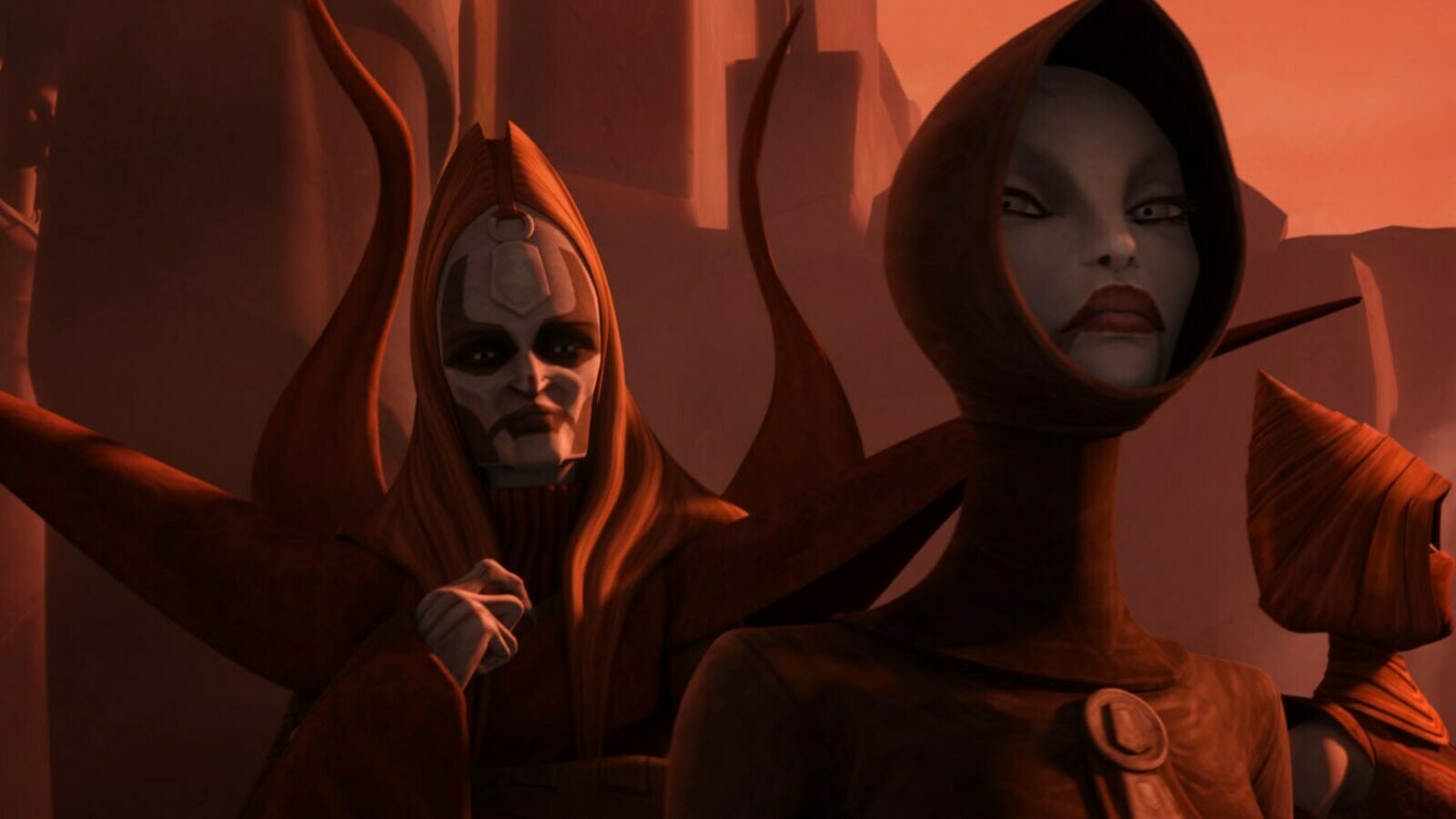
01 · Orientation
Summary
Nightsister culture joins kinship, ritual authority, place, ancestral memory, and distinctive Force practices usually described as magick into a tradition separate from both Jedi and Sith institutions.
02 · Identity
Belonging and social identity
Nightsister identity is produced through coven membership, mentorship, kin relations, ritual knowledge, and connection to Dathomir. It is social and learned rather than simply a biological category.
03 · Worldview & religion
Belief, cosmology, and moral order
Nightsister cosmology understands power through kinship, place, ancestors, ritual knowledge, and the Force practices they call magick. Living and dead members of the community can remain connected through ritual, and spiritual authority is embedded in the coven rather than separated from ordinary social life.
Nightsister religion includes communal rites, magick, healing, divination, transformation, spirit work, resurrection, sacred objects, and ritual specialists led by senior mothers. Dathomir and later Peridea function as ancestral landscapes, making homeland and religious memory inseparable.
04 · Practice
Everyday life, ritual, and material culture
Rituals involving magick, healing, transformation, illusion, divination, the dead, and ancestral power structure community knowledge. Material objects, sacred places, and oral transmission matter alongside individual Force ability.
05 · Institutions
Social organization and authority
Clan Mothers and coven structures organize authority, teaching, dispute, and continuity. Nightsister society also exists in relation to Nightbrother communities and other Dathomiri groups.
06 · Change over time
History and cultural transformation
The Clone Wars brought catastrophic violence to the Nightsisters when General Grievous attacked Dathomir. Later stories reveal survivors, renewed practice, and ancestral links extending to Peridea.
Connected archive