
By Imperial Dark Sector
ARCHIVE DIRECTORY / READ IN ORDER
Three generations, two histories
The documented story begins with Zarah’s betrayal of a Jedi Padawan in the Republic era and ends with later sources remembering her after Zeva’s rise. Use the two interactive investigations to distinguish what the record says from unsupported speculation.
01 / SPICE RUNNER ARCHIVE
The earliest documented Bliss-family leader
Zarah Bliss was a female spice-running pilot and earlier leader of the Spice Runners of Kijimi. Her daughter Zeva Bliss later transformed the network into a more centralized syndicate, and her granddaughter Zorii Bliss commanded it during the First Order occupation. Zarah is the first known generation of a family whose influence spans radically different political eras.
The largest individually documented episode of her criminal activity concerns the Jedi Padawan Lizel Liit. In Alex Segura’s short story Resolve, Lizel describes accepting transport from Zarah before learning that the pilot intended to sell her. The incident gives the early Bliss family history a grave moral dimension that a dossier about smuggling alone would omit.
Her personal life remains fragmentary. There is no independently verified portrait, confirmed birthplace, full list of ships, exact death date or reliable autobiography in the checked publications. Rather than inventing details, this article documents the actions and family relationships actually supported by the stories and explains why those distinctions matter.
Zarah should not be mistaken for the younger Zeva or Zorii. The granddaughter’s burgundy helmet and the daughter’s blue cloak are distinctive portrayals of those people, not evidence of Zarah’s appearance. This file uses official images of the setting and the original story anthology with explicit captions.
02 / SPICE RUNNER ARCHIVE
A smuggler in the age of Qui-Gon Jinn
The story Resolve takes place in the Galactic Republic period before the events of The Phantom Menace. Chronological reference works place the Desinta episode broadly between 42 and 32 BBY, sometimes describing it as approximately 40 BBY. The narrow date remains an approximation, not a calendar day the short story independently identifies.
Qui-Gon Jinn is active as a Jedi Master. The Jedi Order brings young trainees to Coruscant, while the Republic maintains diplomatic and political interests across the galaxy. Those institutions coexist with independent shipping networks that can move passengers and contraband away from more closely supervised routes.
Zarah’s position as an illicit pilot is established; an official Republic office or Jedi allegiance is not. Her social standing is grounded in access to a ship, information about destinations, and the capacity to offer transit to people who need to leave familiar institutions.
The galaxy in this period is not the same political landscape as the post-Endor environment Zeva later exploits. Describing both eras simply as the reign of an unchanged Empire would obscure the very different governments and trade relationships involved.
03 / SPICE RUNNER ARCHIVE
Lizel Liit leaves the Jedi Temple
Lizel Liit is a young Jedi Padawan whose doubts about her future lead her to run away from the Jedi Temple on Coruscant. She wonders whether she deserves or wants the identity others expect her to assume. That emotional uncertainty is central to the story, not an indication that she desires a criminal career.
She boards a spice-running ship departing toward the Outer Rim. The vessel’s pilot, Zarah Bliss, appears willing to assist her. Lizel trusts the promise because she urgently needs help making her way outside the Jedi institution.
The incident is documented through Lizel’s account to Qui-Gon after she has already been taken captive. We hear the victim’s description rather than a filmed confession or personal diary from Zarah. A careful archive recognizes the source of the information without diminishing the underlying betrayal.
Lizel’s Jedi training does not give her automatic access to reliable intelligence about every transporter. The contrast between her formal education and the pilot’s knowledge of routes demonstrates how different forms of expertise become important when someone crosses unfamiliar social boundaries.
04 / SPICE RUNNER ARCHIVE
The journey ends on Desinta
Instead of transporting Lizel to a safe destination, Zarah takes her to Desinta, an icy Outer Rim world. Political conflict there involves the nominally elected Prefect Aminar and a rival group known as the Dan’Gar. The planet is not Kijimi; it is a separate site where local rivals compete for power.
Zarah sells Lizel to the highest bidder, and the Dan’Gar faction acquires custody of the Padawan. The young passenger has moved from believing she was receiving assistance into a situation where armed political actors treat her as a valuable captive.
The local setting matters because the purchaser does not simply need a commodity. A Jedi Padawan carries political significance through her connection to an influential galactic institution and through the abilities people believe she has. That significance creates demand among groups hoping to strengthen a contested local position.
The sources do not supply a verified sales price, ship registration, delivery receipt or a complete account of who negotiated the payment. Zarah’s role in the sale is established, but assigning a fictional sum of credits would be a false addition to the story.
05 / SPICE RUNNER ARCHIVE
A promise of help becomes trafficking
Zarah’s conduct is not an ambiguous passenger dispute. Lizel agreed to travel and did not agree to be auctioned. Presenting transport as a favor and then transferring a person to buyers is a deliberate violation of trust and an act of human trafficking within the narrative.
IDS distinguishes consent to a journey from consent to captivity. A person may knowingly board a ship without having any knowledge of the pilot’s concealed arrangement with armed recipients. The ability to fly away from one place is not the same as retaining control over where or to whom one is delivered.
The story shows how asymmetric information creates vulnerability. Zarah controls the destination and the contacts at the other end of the route; Lizel lacks reliable means to verify the arrangement once she is aboard. A commercial transport becomes a coercive relationship even without a documented prison cell aboard the vessel.
Political anthropology can describe the mechanisms through which people are made available to violent organizations. Such analysis should never imply that the Padawan bears responsibility for the sale because she chose to leave an institution that felt restrictive.
06 / SPICE RUNNER ARCHIVE
Qui-Gon Jinn investigates and hears the account
The Jedi Order sends Qui-Gon Jinn to locate the missing Padawan. On Desinta, he must contend with the competing local powers and the dangers posed by the factions holding Lizel. The story’s main direct action follows the investigation and rescue, not a documented personal duel between Qui-Gon and Zarah.
When Qui-Gon finally reaches Lizel, she explains why she ran away and how the spice-running pilot betrayed her. Her description provides the link between the initial transport from the Republic’s center and the captivity in the Outer Rim.
Qui-Gon’s response is important because the narrative takes Lizel’s uncertainty about her Jedi future seriously without treating the criminal betrayal as an inevitable punishment for leaving home. Recovery from exploitation and deciding whether to remain in the Order are different problems.
Nothing in the cited passage establishes that Zarah was arrested, sentenced or killed in consequence of this specific operation. Recording her responsibility for the sale is supported. Adding an invented revenge scene or a completed prosecution would not be.

07 / SPICE RUNNER ARCHIVE
The earlier Spice Runners of Kijimi
Later sources identify Zarah as a leader in the Spice Runners of Kijimi. The earlier organization brought independent smugglers into a looser trading network before her daughter Zeva introduced more centralized command. It had recognizable leadership, yet its members still worked through crews and local contacts.
A loosely connected organization may coordinate shipments, prices or routes without controlling every employee in the same way as a navy. Its authority may derive from repeated transactions and relationships rather than a formal written charter. That institutional reading is based on how the syndicate is described, not on an invented constitution.
Zarah was herself a pilot capable of arranging long-distance transportation. Her position was therefore not necessarily confined to a palace or an office. The Desinta episode shows direct engagement with the practical work through which a smuggler can gain standing.
The records do not demonstrate that Tomasso, Vigilch or the Ragged Claw crew involved in the later Free Fall events all served beside Zarah in her early days. Projecting that later roster backward by several decades would create false biographical links.
08 / SPICE RUNNER ARCHIVE
Zeva Bliss rises with outside assistance
Zarah had a daughter, Zeva Bliss. The later leader becomes associated with a much more unified Spice Runner syndicate and with the political opportunities created by the Empire’s collapse after Endor. This organizational transformation is one of the most important legacies of the older leadership.
Comic references link Zeva’s rise to assistance from Bib Fortuna, a powerful underworld intermediary known for his association with Jabba the Hutt. The account suggests that the daughter did not obtain power simply by waiting for a peaceful family inheritance. Rival ambitions and outside relationships mattered.
The political downfall of Zarah and the timing of her death should not be conflated. The stories establish that Zarah was no longer alive by the period around 4 ABY and that Zeva succeeded her; they do not provide a reliable, detailed death scene establishing the exact method.
Zorii Bliss later becomes Zeva’s daughter and another Spice Runner leader. A three-generation family association does not demonstrate a universal succession law. Each transition occurred in a different political setting and involved different kinds of authority and conflict.
09 / SPICE RUNNER ARCHIVE
What Gen Tri and Marinda Gan remember
Poe Dameron: Free Fall preserves a revealing argument about Zarah even though she is no longer alive. Gen Tri invokes her memory while questioning whether the organization ought to accept certain payments associated with Imperial power. Marinda Gan responds that Zeva is now the leader and is responsible for turning the Spice Runners into a united force.
The exchange is evidence of disagreement inside the network. Gen Tri uses the predecessor’s memory to criticize present conduct; Marinda uses the successor’s accomplishments to demand loyalty. Both statements arise within a contemporary dispute rather than from a neutral official commission studying the past.
A member’s assertion about what Zarah would have wanted is not proof that she opposed every possible bargain with every branch of the Empire. Memory can be sincere and selective. It can also function as an argument about the identity of an organization.
These scenes offer an unusually useful glimpse into criminal institutional continuity. Zarah’s leadership still shapes members’ language after Zeva takes command, but different people draw different lessons from it.
10 / SPICE RUNNER ARCHIVE
What her death record can and cannot establish
Zarah Bliss is dead by the early Endor-era events referenced in the Marvel comic Return of the Jedi — The Rebellion #1. That establishes a clear upper boundary for her life while leaving the earlier date of her death unresolved.
The comic connects discussion of Zarah’s passing with Mon Mothma and people familiar with the Spice Runners on Desinta. The significance is that news about an underworld leader reached people beyond the syndicate itself, including individuals tied to the Rebel Alliance.
Other stories connect Zeva and Bib Fortuna to Zarah’s fall from power. A fall from command and a subsequent death are both consequential, but the sources gathered for this dossier do not securely describe the precise cause of death or a final confrontation.
There is no verified last message, named burial site, personal will, documented funeral or full inventory of her equipment. Recording those unknowns is more faithful to Canon than filling them with plausible but unsupported speculation.
11 / SPICE RUNNER ARCHIVE
What is missing from Zarah’s visual record
The early story identifies Zarah as a ship pilot who transported a traveler toward Desinta. That establishes an ability to move through the Outer Rim and find paying contacts. It does not establish a particular make of freighter or a distinctive named vessel.
The later Zeva Bliss comic cover shows Zeva wearing blue armor and a white fur-lined cape. The film depicts Zorii Bliss wearing burgundy armor and a bronzium helmet. Neither design is a portrait of Zarah, even though the three figures belong to the same family.
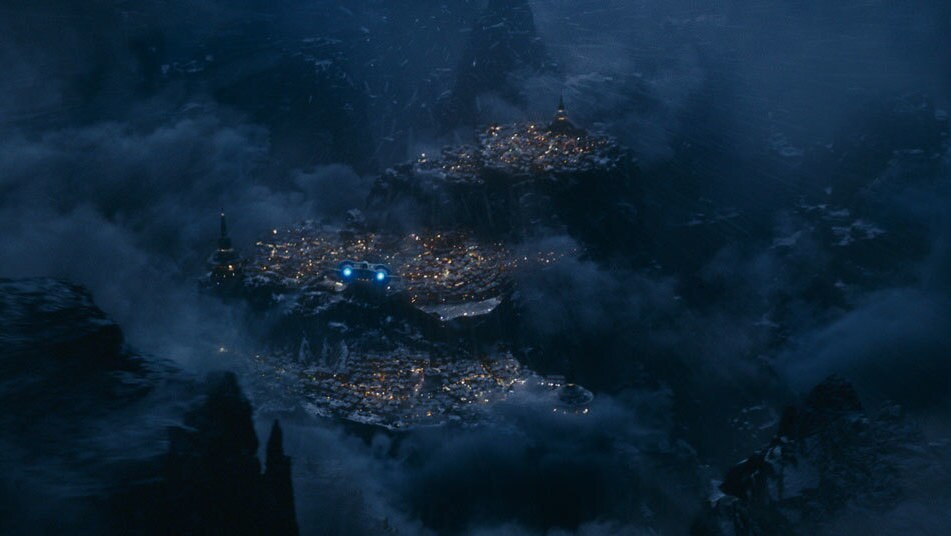
This dossier therefore places an official Kijimi city image beside her name and uses the Disney–Lucasfilm Press anthology cover to identify the original story. Both pictures are clearly described as context, not as an invented reconstruction of an undocumented face.
Her material power is still demonstrable: a ship, access to offworld buyers and control of a traveler’s destination are tools through which she exerted influence. A missing portrait does not imply a missing history.
12 / SPICE RUNNER ARCHIVE
Anthropological assessment: trust, trade and inherited power
Zarah’s actions demonstrate how a commercial relationship can be turned into coercion through unequal access to information. Lizel perceives the pilot as a helper. Zarah controls the actual destination and knows that an armed faction intends to purchase the passenger.
Her story also shows how travel across political jurisdictions can intensify a person’s vulnerability. A Padawan leaves an institution on Coruscant and becomes captive on a distant world where local factions compete for authority. The criminal pilot makes those jurisdictions economically connected.
The Spice Runners provide a second case: loosely affiliated economic specialists eventually become a more centralized syndicate. That movement changes the power of individual workers as well as the leader’s ability to enforce decisions. It is a political development, not merely the adoption of a more impressive title.
Kinship complicates institutional succession. Zarah, Zeva and Zorii are related, but those ties do not erase conflict. Zeva’s reported use of an outside ally during her mother’s downfall shows that lineage and practical authority may pull in different directions.
The later argument about Zarah’s intentions illustrates memory as a political resource. Members who disagree about future alliances cite the departed leader to justify their preferred policy. Even an absent figure can influence a group through the way others describe her.
These interpretations remain separate from Canon events. The sources do not tell us exactly what Zarah thought when she made every decision, whether her motives were religious or ideological, or how she might have judged the First Order decades after her death.
NETWORK / RESEARCH CONNECTIONS
The family, the Padawan and the political brokers
Later crime boss whose consolidation of the group followed Zarah’s fall.
Later leader in The Rise of Skywalker, decades after Zarah’s death.
Runaway passenger sold to the Dan’Gar on Desinta.
Investigates the Padawan’s captivity and hears her account.
Linked to Zeva’s later ascent and Zarah’s downfall.
An evolving criminal network rather than a single unchanging family government.
INTERACTIVE 01 / HISTORICAL CHRONOLOGY
Trace Zarah across the eras
Select a period. The entries distinguish an approximate literary setting, a firm date boundary and later family history. No controls change the Canon narrative.
Lizel Liit’s journey
In Resolve, the young runaway identifies Zarah as the pilot who took her to Desinta and sold her to the Dan’Gar. The exact year is not independently established by the brief reference.
Is there a confirmed scene showing Zarah’s death?
No verified source used here supplies an exact date or cause. The comic references establish that she was already dead by about 4 ABY.
INTERACTIVE 02 / COERCION AND TRUST
When does passage become exploitation?
Examine the stages of the encounter as Lizel describes them. The point is to study the documented abuse of trust, not to introduce alternate game outcomes.
Passage on the ship
Lizel boards believing she is being helped. The apparently trustworthy invitation precedes her loss of control over the journey.
Did Lizel consent to being sold because she boarded the ship?
No. Accepting transportation is not consent to sale or captivity. The short story identifies a deceptive offer of help.
COLLECTING / VERIFIED PUBLICATIONS
Collecting this Character
No dedicated Zarah Bliss trading card, LEGO minifigure, or licensed portrait was independently verified. These are genuine stories containing her mention or later legacy, not merchandise depicting her face.
Alex Segura’s “Resolve” includes Lizel Liit’s account of Zarah’s betrayal.
Publisher record →A later source establishing Zarah’s death before the relevant Endor-era events.
Marvel creator and series record →Contains references relevant to Zeva’s earlier succession history.
Marvel issue record →Later Spice Runner story that retains arguments over the earlier leadership’s legacy.
Lucasfilm excerpt →SOURCE REGISTER / CONTINUITY
What the sources prove, and what remains unknown
Disney Books: Stories of Jedi and Sith identifies the 2022 anthology containing Alex Segura’s Qui-Gon Jinn story “Resolve.” Resolve plot and bibliography is a secondary route to the short story’s references to Lizel Liit, Zarah and Desinta. Lucasfilm: Poe Dameron: Free Fall verifies later personnel and the novel’s setting.
Marvel: The Rebellion comic, Marvel: Battle of Jakku — Insurgency Rising #2 and the Zarah Bliss secondary continuity index identify the later mentions and guide cross-checking. Lucasfilm: Kijimi City establishes the group’s larger home setting.
Canon continuity. Desinta encounter: Republic era, approximately 42–32 BBY. Death: by 4 ABY. Exact species, birth date, ship class, face and cause of death are not independently established by these checked materials. Imagery is publication and setting context, never mislabeled as a verified portrait. Institutional and anthropological readings are original IDS interpretation rather than invented lore.