
By Imperial Dark Sector
ARTICLE DIRECTORY / TOP OF FILE
From Kijimi to the post-Endor underworld
Zeva appears in two connected periods: the immediate aftermath of Endor in Marvel’s Battle of Jakku comic crossover, and Poe Dameron’s youth in the novel Free Fall. The chapter order keeps those periods separate while the investigations test competing interpretations of her leadership.
01 / SPICE RUNNER INTELLIGENCE
The woman who commanded the Kijimi underworld
Zeva Bliss was a human crime boss who led the Spice Runners of Kijimi during the early New Republic period. Her story has two distinctive chapters. Marvel’s Star Wars: Battle of Jakku comics place her among opportunistic syndicates and Imperial remnants after the Battle of Endor. Alex Segura’s later-set novel Poe Dameron: Free Fall follows her ruthless management of the organization and a confrontation with the young Poe Dameron that divides her own family.
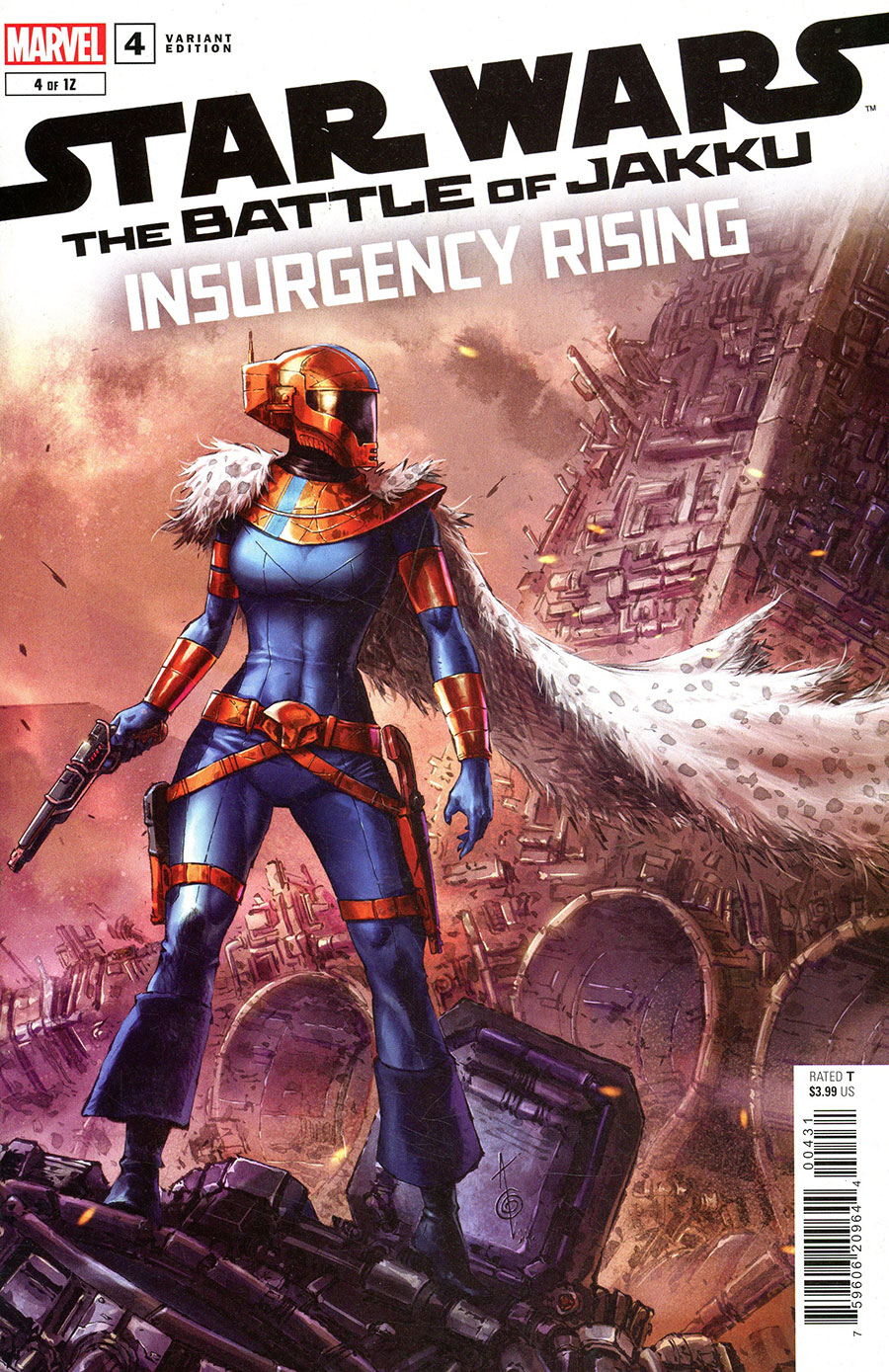
Zeva is neither a generic masked bounty hunter nor Zorii Bliss under another name. She is Zorii’s mother and a distinct leader in a longer history of Kijimi smuggling. Her equipment includes a temperature-regulating flight suit, metallic mask, blaster pistol and close-combat blade, recognizable in the licensed Marvel art from the Battle of Jakku period.
Unlike leaders whose authority depends on an inherited state office, Zeva controls an organization that earns its position through illicit trade, contacts, secrecy and force. The Spice Runners operate across systems and rely on individual ship crews with their own specialists. Her career exposes how fragile that network becomes when an executive leader treats loyalty as something that can be compelled through intimidation alone.
This dossier separates events depicted in the 2024 Marvel comics and the 2020 Canon novel, and it keeps her eventual death distinct from the novel’s climax. A character can survive one confrontation and still die later, before the events of The Rise of Skywalker.
02 / SPICE RUNNER INTELLIGENCE
Inheritance from Zarah Bliss
Zeva was raised on Kijimi and was the daughter of Zarah Bliss, an earlier figure in the history of the Spice Runners. Zarah organized independent smugglers working through the planet into a loose trading network. That precursor arrangement matters because Zeva’s later command was not created from nothing.
Expanded Canon references, including Marvel’s later comic material, establish that Zeva succeeded Zarah by 4 ABY. The transition involved conflict rather than a reliably documented peaceful inheritance: Bib Fortuna assisted Zeva’s rise as Zarah fell from power, though the precise circumstances of Zarah’s death remain unverified. Zeva then transformed a looser federation of independent operators into a much more centrally directed syndicate. Read the dedicated Zarah Bliss dossier for the earlier Republic-era trafficking episode on Desinta.
Family succession did not mean every smuggler suddenly accepted a private monarchy. Individuals still needed to run vessels, guard cargo, negotiate dangerous arrangements and decide whether the new central organization served their interests. Zeva sought to turn such dependencies into authority, making the syndicate harder for outsiders to challenge while reducing the independence of its members.
The older Spice Runners should not be conflated with the Melitto Ashiga Clan. They occupied the same broader planetary setting in different periods, but had different membership, leadership, and trading arrangements. Political history on Kijimi is a sequence of overlapping institutions, not a single continuous organization that merely changed its label.
03 / SPICE RUNNER INTELLIGENCE
Creating a powerful spice-running syndicate
Spice running depends on mobility. Goods have to travel through ports, official inspections, competing private territories and the uncertainties of a changing galactic government. An individual courier can make a profit on a favorable trip, but a coordinated syndicate can control information, call on multiple crews and impose penalties when a partner violates an agreement.
Zeva’s consolidation of the Spice Runners served those ends. A common leadership could pool intelligence and direct force when needed. It also made the organization dependent on whether subordinates believed the leader’s judgment was reliable. Every attempt to centralize command created the possibility of defections and rival interpretations of the group’s interests.
Her administration is visible through figures such as Tomasso, Vigilch, Marinda Gan and Gen Tri, who appear in the accounts of Spice Runner operations. They perform different functions, and they do not all react alike when Zeva suspects betrayal. The published sources support these distinct roles but do not provide a full organizational census or a definitive salary system.
Zeva cultivated a reputation for harsh enforcement. It would be mistaken to treat that reputation as proof that every transaction under her control involved killing. What the documented episodes show is a leader prepared to make exceptional examples of people she believed had betrayed her, even when her information was incomplete or manipulated.
04 / SPICE RUNNER INTELLIGENCE
The political opening after Endor
After the Emperor and Darth Vader died at Endor, the Empire fractured into competing centers of military authority. Grand Moff Ubrik Adelhard held power in the Anoat sector under an Imperial blockade. His position offered organized smugglers both danger and commercial opportunity.
In the Marvel Battle of Jakku crossover, Zeva’s Spice Runners enter this unstable political environment. Their contact with Adelhard demonstrates that criminal trading networks can become useful to an authoritarian remnant without ever forming part of its official military chain of command.
The alliance is opportunistic. Zeva deals with those who can provide resources or access, even if their political goals differ from hers. This is one reason to distinguish patronage from formal enlistment: the leader of a smuggling network may accept a mission from a Grand Moff while retaining her own subordinates and priorities.
The relationship also expands the geography of her life. Although Kijimi is Zeva’s institutional base, the matters she handles touch worlds elsewhere in the galaxy. The syndicate’s influence is not confined to its street-level meeting places. It travels with information, armed clients, cargo routes and agreements.
05 / SPICE RUNNER INTELLIGENCE
Bounties, intermediaries and contested information
Marvel’s Battle of Jakku: Republic Under Siege gives Zeva a more direct role in the violent politics of the Imperial remnant. The story includes assassination plots directed at opponents of Adelhard and features bounty hunters working in the orbit of Zeva’s organization.
Accounts of the sequence identify the Trandoshan Kranor and the Arcona cyborg Lan-Drus as operatives engaged in attacks against figures important to the New Republic. These events belong to the comics, not to Poe Dameron: Free Fall. They demonstrate what it means for a syndicate to sell coercive services in addition to moving contraband.
Such outsourcing changes the visibility of responsibility. A target may see the assassin rather than the patron who authorized the violence. A crime boss can exercise influence through retainers whose individual names are known only to a small number of participants.
Zeva’s position also has limits. If an Imperial patron becomes increasingly unstable, keeping that relationship can endanger the syndicate. Sources discussing the later comics describe her willingness to work through intermediaries and adjust alliances as Adelhard’s situation deteriorates.
These episodes should not be treated as a license to attribute every assassination in the post-Endor galaxy to Zeva. The dossier records the specific operations associated with her in published material and identifies the wider model of deniable violence as IDS political analysis.
06 / SPICE RUNNER INTELLIGENCE
A command vessel and the people who keep it moving
During Free Fall, Zeva operates from a Centurion-class battlecruiser. The vessel is large enough to awe characters accustomed to more ordinary smuggling craft. Its role is not merely transportation: it is an instrument through which the syndicate’s central leader can arrive, summon people and enforce decisions.
The Ragged Claw, in contrast, represents the distributed workplace of an ordinary crew. Vigilch supervises its immediate operations, while figures such as Zorii Wynn, Marinda Gan and Gen Tri have distinct practical tasks. Poe’s arrival as a talented pilot changes what the crew can attempt, but does not instantly make him a trusted executive.
This contrast between a powerful flagship and a vulnerable working freighter illustrates organizational hierarchy. Commanders can issue orders at a distance, yet shipboard survival still depends on workers who can fly, repair and improvise when the leader is absent.
The ships and communication systems also organize space. The same person may be secure aboard a vessel with friendly guards and vulnerable in a city where rival gangs or authorities control access. The leader’s physical presence can change how a local captain interprets orders, but it cannot erase the need for skilled labor.
07 / SPICE RUNNER INTELLIGENCE
Tomasso and the problem of trusted lieutenants
Tomasso serves as a veteran intermediary in Zeva’s wider organization and is important to the period when Zorii and Poe develop their relationship. He represents a form of continuity that predates Poe’s arrival and survives individual missions. Underworld institutions, like more formal governments, often depend on experienced people who know the group’s unwritten routines.
The novel also shows how suspected betrayal can destroy such relationships. Zeva believes that Tomasso has passed information to the New Republic and kills him. The climax later reveals that the evidence against Tomasso was manipulated, while Marinda Gan had in fact traded intelligence to secure her own freedom.
These details are important because they prevent an overly simple portrayal of Zeva as an all-knowing mastermind. Her power is substantial, but she acts on incomplete information and can be deceived by others. Killing a suspected traitor is both an act of violence and a permanent loss of an experienced member.
The death affects Zorii and Poe differently. Zorii is tied to the organization through family and work; Poe increasingly regards its treatment of members as morally unacceptable. The episode helps make their eventual disagreement over the Kijimi summit intelligible.
Zeva’s suspicion also raises an institutional question: how does a leader verify information when employees expect severe punishment for admitting mistakes? Fear can make a syndicate seem disciplined while also encouraging secrecy and unreliable reporting.
08 / SPICE RUNNER INTELLIGENCE
Zorii Wynn: the leader’s daughter inside the crew
Zorii is Zeva’s daughter, but she does not initially advertise that identity to the young Poe Dameron. In Free Fall she presents herself as Zorii Wynn while serving aboard the Ragged Claw. This concealed relationship gives her an opportunity to work without immediately being treated as the leader’s heir.
Zeva views the daughter’s abilities and ambitions as resources for the syndicate. Yet Zorii does not simply repeat every decision her mother makes. She develops a close relationship with Poe, shares dangerous assignments with him and begins to consider what an independent future might look like.
The mother–daughter relationship combines affection, rivalry and political calculation. The family tie grants access but also produces expectations about loyalty. Zeva has reasons to believe Zorii should protect the syndicate. Zorii has reasons to disagree about whether the group can continue under the same methods.
These tensions culminate in the attempted mass killing on Kijimi. Zorii ultimately intervenes to stop her mother from finishing Poe. However, she still wants Poe to join her in challenging Zeva’s rule, rather than abandoning the Spice Runners altogether.
The difference matters: Zorii’s refusal to let Poe die is not an immediate wholesale rejection of the organization. She imagines changing who commands it. Poe instead chooses to leave that life.
09 / SPICE RUNNER INTELLIGENCE
The Kijimi summit disguised as diplomacy
The climax of Free Fall revolves around a gathering Zeva convenes on Kijimi. Criminal organizations and other underworld figures are invited under a promise of negotiations. Her real plan is to trap and execute potential competitors, turning a diplomatic performance into an attempted demonstration of overwhelming force.
A gathering like this has practical and symbolic dimensions. Guests must be persuaded they will be protected long enough to attend. Invitations and a formal meeting place suggest recognized conventions of negotiation. Zeva seeks to exploit those expectations, replacing a promise of cooperation with controlled violence.
Poe learns the plan and refuses to participate. His opposition is not simply a momentary dispute over a shipment. He sees that the people assembled have become targets because they trusted the syndicate’s invitation.
The plan also jeopardizes the organization’s future credibility. If potential partners believe Spice Runner negotiations are traps, it becomes harder for later leaders to conduct ordinary exchanges. Zeva aims to eliminate rivals in one dramatic action but risks making every subsequent agreement suspect.
An armed confrontation unfolds as an intervention by the New Republic officer Sela Trune overlaps with Poe’s effort to free the prisoners. The event demonstrates how competing claims to authority can collide: Zeva asserts coercive control, Trune seeks violent revenge, and Poe tries to prevent an execution.
10 / SPICE RUNNER INTELLIGENCE
The failed execution of Poe Dameron
Zeva confronts Poe directly during the summit’s collapse. The ensuing fight ends with him wounded and overmatched. She is ready to kill him because he has challenged her orders, disrupted the operation and assisted people whom she intended to eliminate.
Zorii arrives and prevents that final blow. The daughter’s intervention forces Zeva’s family conflict into the same space as the organization’s public failure. Poe survives, and the carefully designed summit no longer functions as the demonstration of power Zeva intended.
Zorii asks Poe to take control of the syndicate with her rather than leave. This is the decisive point of disagreement. Poe does not treat replacing one boss as a sufficient answer to the violence he has witnessed. He chooses escape and a return toward his previous life.
Zeva does not definitively die during this scene. The novel establishes that Poe leaves the syndicate after the failed summit, while later Canon material indicates Zeva died sometime before Zorii’s leadership in The Rise of Skywalker. The available record does not supply a verified exact date or universally documented cause of death.
Treating the attempted coup as Zeva’s immediate death would distort Zorii’s motivations and produce a contradiction in the larger chronology. IDS keeps a clear distinction between defeat, removal from power and confirmed death.
11 / SPICE RUNNER INTELLIGENCE
A legacy that outlived its founder’s daughter
Zeva inherited a smuggling network and transformed it into an organization whose influence extended beyond Kijimi’s districts. Its members and customers became accustomed to dealing with central figures capable of making binding decisions. That concentration of authority was an achievement and a risk.
Her contacts with the Imperial remnant show that the syndicate could become a participant in galactic conflicts without holding a seat in a senate or a formal command. Her actions during the Kijimi summit show how ambition and fear could erode the trust that gave the network practical value.
By the time Poe returns as a Resistance leader decades later, Zorii commands the Spice Runners. The group is still recognizable, but its environment has changed: Kijimi is under First Order occupation and Zorii must decide whether neutrality can protect her people.
Later Zorii and Babu Frik survive the destruction of Kijimi and help the Resistance’s wider effort at Exegol. Those later events do not establish Zeva as a Resistance sympathizer or erase the violence of her earlier career. They demonstrate the ability of an institution to outlive and change beyond one leader’s political choices.
Zeva’s most durable consequence is not a single battle. It is the complex inheritance left to a daughter who has to decide what loyalty to the syndicate means when her personal history and its official priorities have diverged.
12 / SPICE RUNNER INTELLIGENCE
Material culture: flight gear, mask, ship and blade
Marvel’s official variant-cover artwork presents Zeva in a fitted blue flight suit with prominent orange and metallic equipment, a temperature-regulating layer and a fur-lined cape. Her bronzium-finished face mask makes the wearer socially recognizable while limiting the exposure of personal identity.
She carries weaponry associated with a smuggling commander: an E-851 blaster pistol and a close-combat vibroblade. The combination of expensive protective equipment and portable arms marks both status and vulnerability. A leader who wants to move through hostile space cannot rely solely on an armed entourage.
Her Centurion-class battlecruiser communicates another layer of standing. Owning and commanding a large vessel creates possibilities for movement, negotiation and intimidation that do not exist for a single unaffiliated pilot.
Material anthropology focuses on what these objects allow people to do. The mask conceals, the weapon threatens, the ship transports, and the meeting space lends credibility to Zeva’s attempted summit. Their significance arises from their use inside social relationships, not from a fictional list of magical abilities.
13 / SPICE RUNNER INTELLIGENCE
Anthropology: familial succession and organized coercion
Zeva Bliss’s story illustrates the difference between kinship and political authority. She follows her mother Zarah and later expects a degree of loyalty from her daughter Zorii, but family relations do not automatically settle the question of how an organization should be run.
Consolidation changes the meaning of membership. In a decentralized trading network, individual pilots have greater freedom to reject a particular job. Under a dominant leader, they may gain greater resources and protection but also face severe penalties for defection. Neither arrangement is inherently stable without a credible way to resolve disputes.
The death of Tomasso shows how a centralized organization may become vulnerable to bad information. If enforcement is arbitrary and irreversible, members can become more likely to deceive the boss, while the boss becomes more dependent on a narrow circle of informants.
Zeva’s post-Endor dealings demonstrate the concept of patronage: outsiders pay, supply or protect a criminal network in exchange for services that political institutions cannot openly perform. Such arrangements enable action while complicating responsibility when harm occurs through hired intermediaries.
The summit poses a question about the moral economy of negotiation. Underworld groups may violate official laws but still rely on shared expectations that an invitation or agreement is meaningful. Turning talks into a mass execution attacks those conventions and can destroy the organizer’s long-term reputation.
Finally, Zeva’s relationship to Poe highlights the costs of refusing a coercive institution. The pilot can abandon the syndicate, but he does so wounded and pursued, after his friend demands he choose between love and belonging. His eventual role in the Resistance is not the outcome Zeva sought.
These analyses describe social mechanisms illustrated by the stories; they do not imply that Star Wars contains a documented universal smuggler constitution or that every member of the Spice Runners shares Zeva’s views.
INTERACTIVE 01 / POST-ENDOR POWER
How does Zeva exert authority?
Choose a mode of influence. Each analysis is grounded in her documented career and does not invent extra missions.
Control movement, not just territory
Zeva turns separately operating spice merchants into a more centrally controlled syndicate. Access to ships, safe routes and trusted contacts becomes leverage over people who need to move cargo.
Did Zeva become an Imperial officer?
No. Dealings with Grand Moff Adelhard do not convert the independent Spice Runners into a department of the Imperial military.
INTERACTIVE 02 / KINSHIP AND SUCCESSION
Can family loyalty determine a criminal succession?
Compare three people who influence the meaning of leadership within the same family and organization.
Inheritance is not identical to legitimacy
Zeva succeeds Zarah and centralizes an older smuggling network. The family link supports a succession, but ongoing authority depends on whether members accept her leadership and enforcement.
Does Free Fall show Zeva killed at the summit?
No. Zorii saves Poe and he leaves the Spice Runners. Later continuity establishes that Zeva died before the film-era events, but the precise date and cause are not established here.
COLLECTING / VERIFIABLE APPEARANCES
Collecting this Character
Zeva’s best-documented illustrated collectible is Marvel’s Alan Quah variant cover for Battle of Jakku — Insurgency Rising #4, where she appears in her blue flight gear and fur-lined cape. She also appears within the main story of Insurgency Rising #2 and related Battle of Jakku issues. The collected Marvel paperback contains the full twelve-part crossover, but its cover should not be confused with an individual Zeva portrait.
Character-specific variant cover depicting Zeva Bliss, identified in the official comic’s character appearance list. She appears only on this particular issue’s variant cover, not every cover.
View cover identity ↗Collects all twelve issues of Insurgency Rising, Republic Under Siege and Last Stand. Zeva’s post-Endor story appears in this run.
Publisher’s book record ↗Alex Segura’s original novel provides the extended story of Zeva, Zorii, Poe and the Kijimi summit. It is a primary narrative, not a character-branded action figure.
Read Lucasfilm’s excerpt ↗No dedicated Zeva Bliss LEGO figure or Topps card is independently confirmed by the sources used for this file. IDS does not invent those products or display another character’s card as Zeva’s.
SOURCE REGISTER / NOVEL AND COMICS
Research record and continuity notes
Lucasfilm’s 2020 excerpt from Poe Dameron: Free Fall documents the Ragged Claw, Zorii Wynn, Marinda Gan, Gen Tri, Vigilch and Poe’s early experience. The complete novel by Alex Segura supplies Zeva’s leadership, the death of Tomasso and the failed summit. Marvel: Insurgency Rising #2 issue record, Marvel: Republic Under Siege issue record, and publisher’s collected-edition description document the post-Endor comic context.
Grand Comics Database: Republic Under Siege #3 identifies Zeva’s comics appearances and other characters; Alan Quah variant-cover record identifies the image used above. Lucasfilm Databank: Poe Dameron and Lucasfilm Databank: Zorii Bliss verify their later lives and the syndicate association. Lucasfilm Databank: Kijimi City anchors the institutional setting.
Continuity: Canon. Fiction chronology includes an earlier post-Endor comic period and later 18–19 ABY Free Fall narrative. The sources used here do not confirm Zeva’s exact death or a formal written succession law. Political anthropology, patronage and reputation analysis is independent IDS interpretation and not presented as additional dialogue or invented events.