Settlement, fighting grounds and separated authority
Interpretive reconstruction · select a visible feature
Clone Wars · distinct Nightbrother community
Training circle
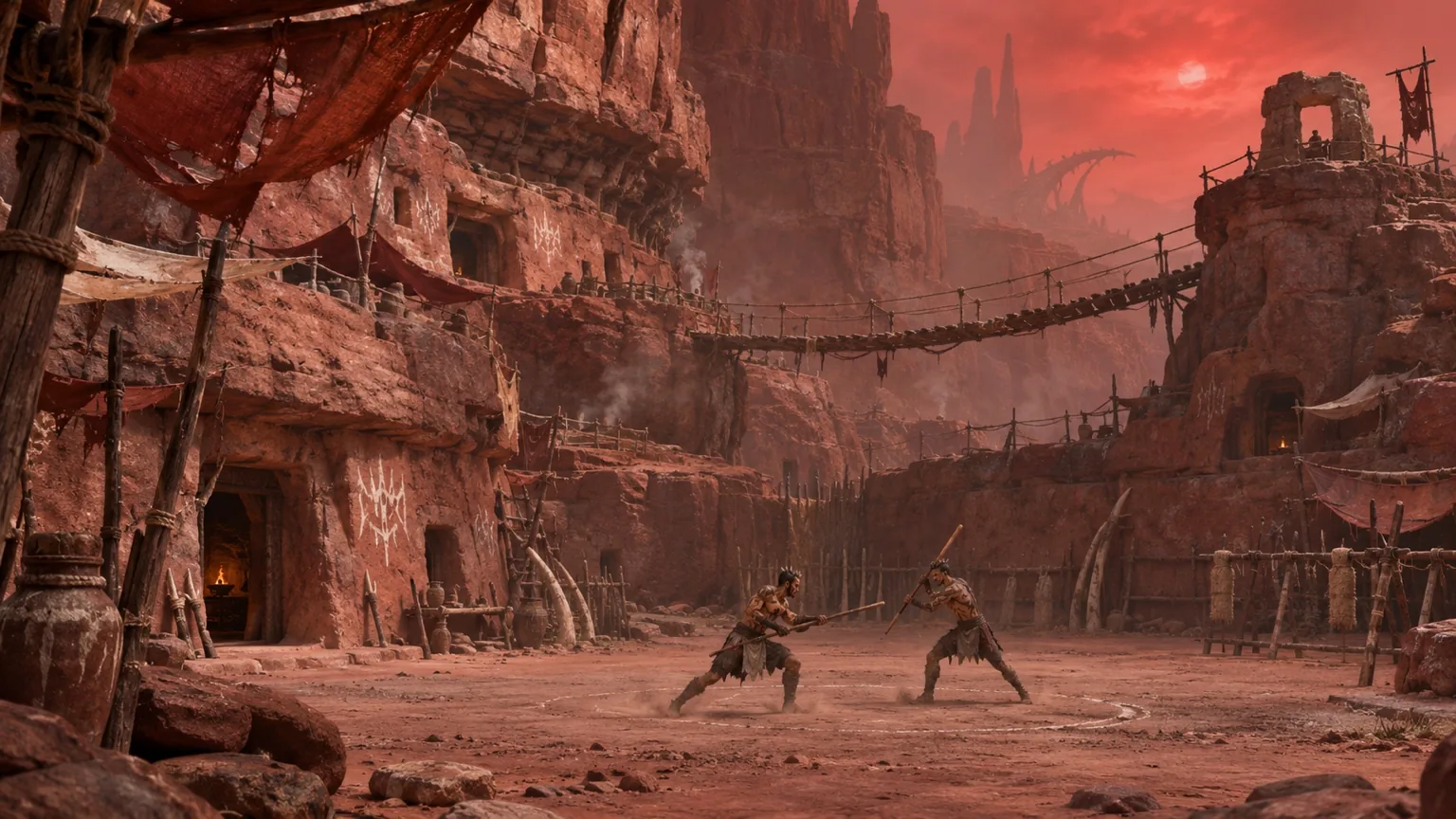
The visible clearing suggests a practice ground. Nightbrothers were skilled fighters, and Asajj Ventress tested warriors before choosing Savage Opress. This is an interpretive training circle, not a documented arena with known dimensions.
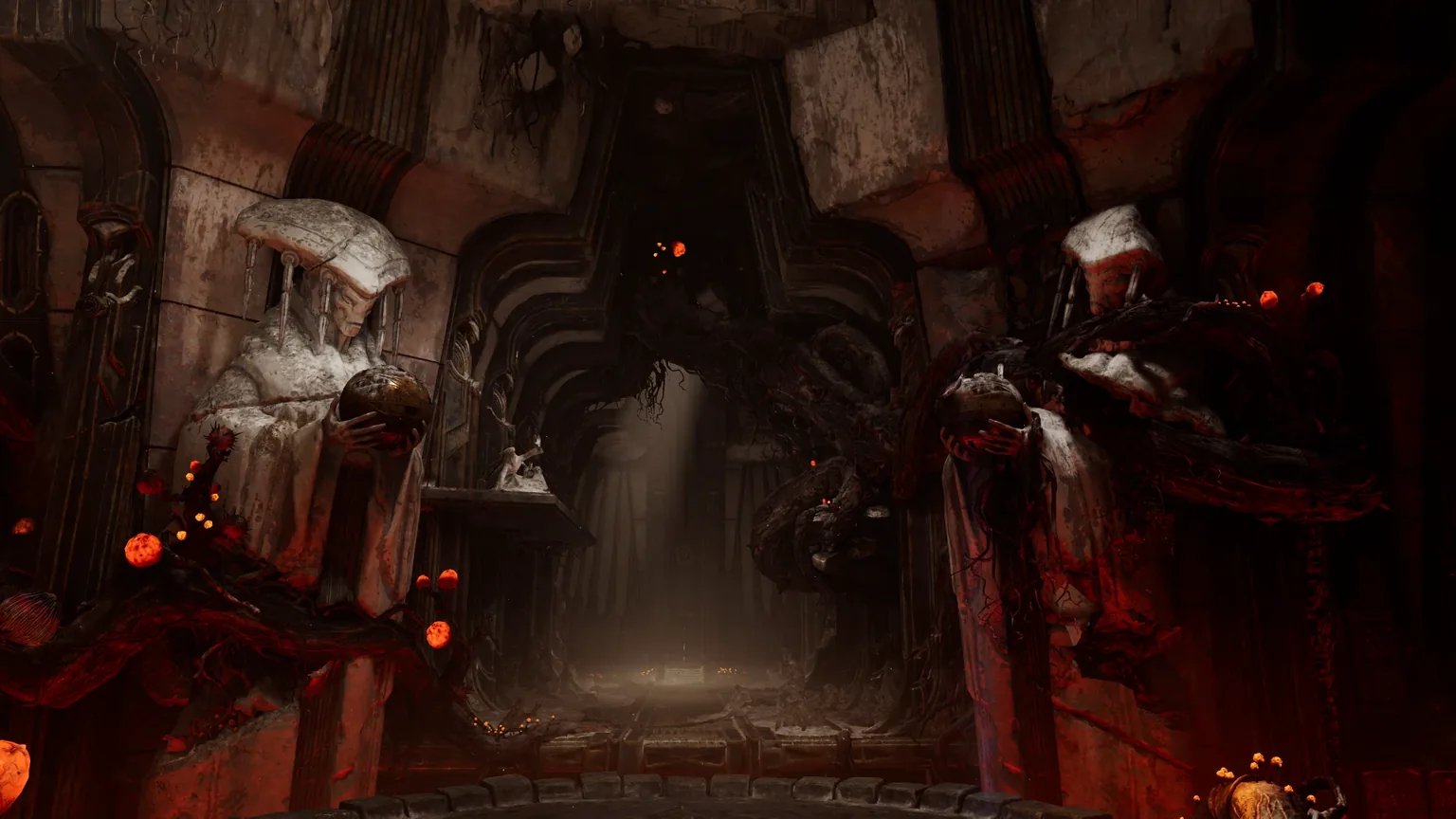
A canyon settlement interprets the documented Nightbrother community. The Star Wars Databank places the Nightbrothers away from the Nightsisters, not beside the fortress shown in another scene. The illustration is an original reconstruction rather than a named or surveyed village.
A community apart
The Nightbrothers were a community of male Dathomirian Zabraks who lived separately from the Nightsisters. Official references characterize the division as one of unequal power: the Nightsisters governed their counterparts and could summon warriors for their own purposes. The visual difference between a fighting village and an enormous ritual fortress helps illustrate separate social roles, but no source establishes the exact route between those places. The scene therefore treats the settlement as a self-contained environment, not as a courtyard inside the Nightsister stronghold.
Training, selection and agency
Dathomir’s warriors developed exceptional physical skill and fighting techniques. During the Clone Wars, Ventress selected Savage Opress following an assessment of potential recruits. Mother Talzin then transformed him with Nightsister magic, and the mission into which he was drawn served the witches’ political objectives. That sequence gives the training grounds their historical relevance. It should not be generalized into a complete calendar of Nightbrother initiation rites or a precise architectural blueprint. The pictured duel and weapons are artistic details that illustrate a culture in which combat ability mattered.
Social authority and the wider planet
The Nightbrothers’ relation to the Nightsisters was shaped by kinship, gender hierarchy, and selective intervention by witches. It would be inaccurate to describe them as merely a faceless army, because the community persisted and its members had their own daily responsibilities and relationships. Yet the available Canon emphasizes exceptional fighters rather than ordinary economic or domestic activity. Those gaps remain gaps. The buildings, bridge, and awnings help visitors imagine a lived settlement while the site keeps those unverified architectural details clearly separate from established events.
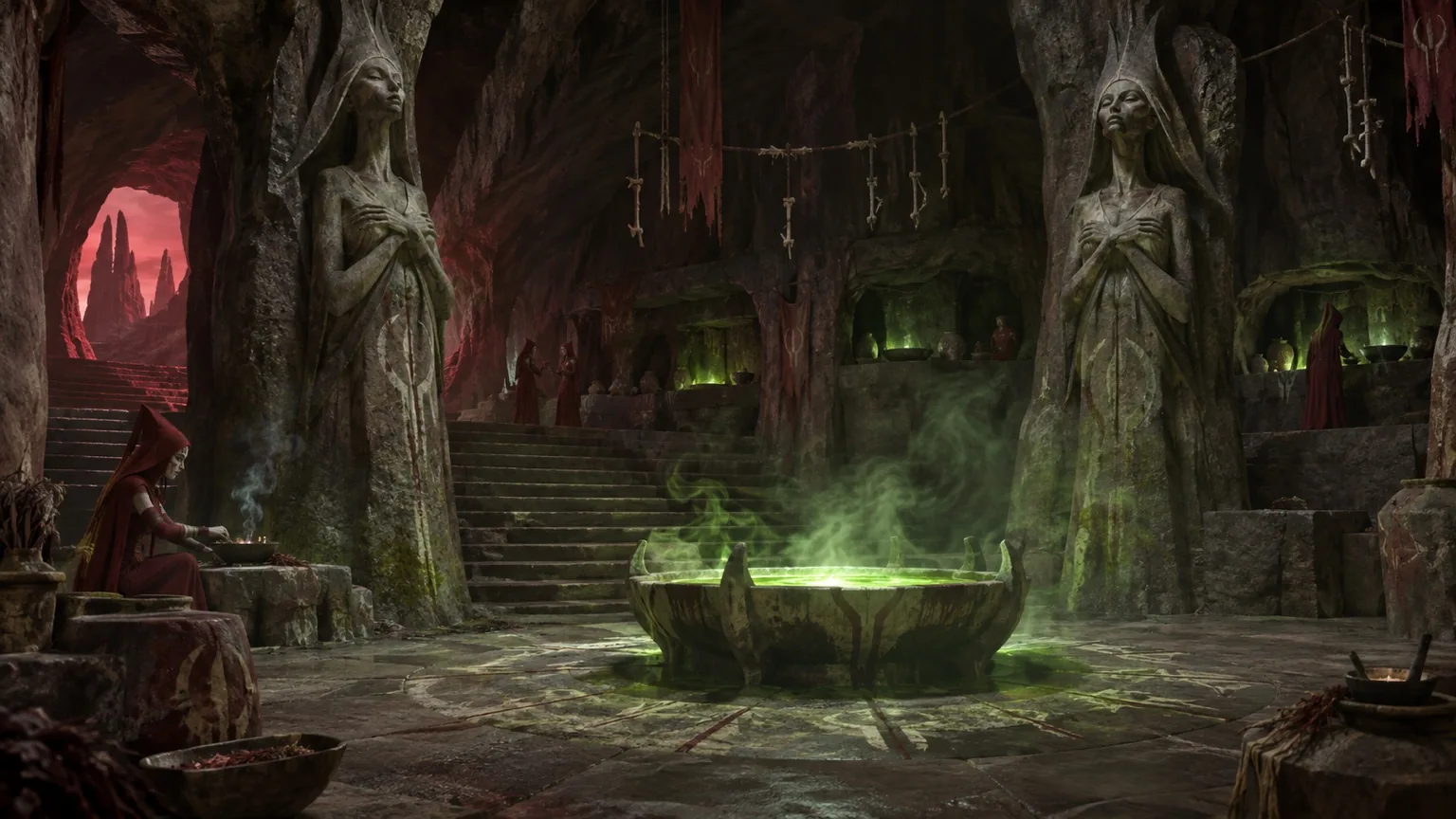
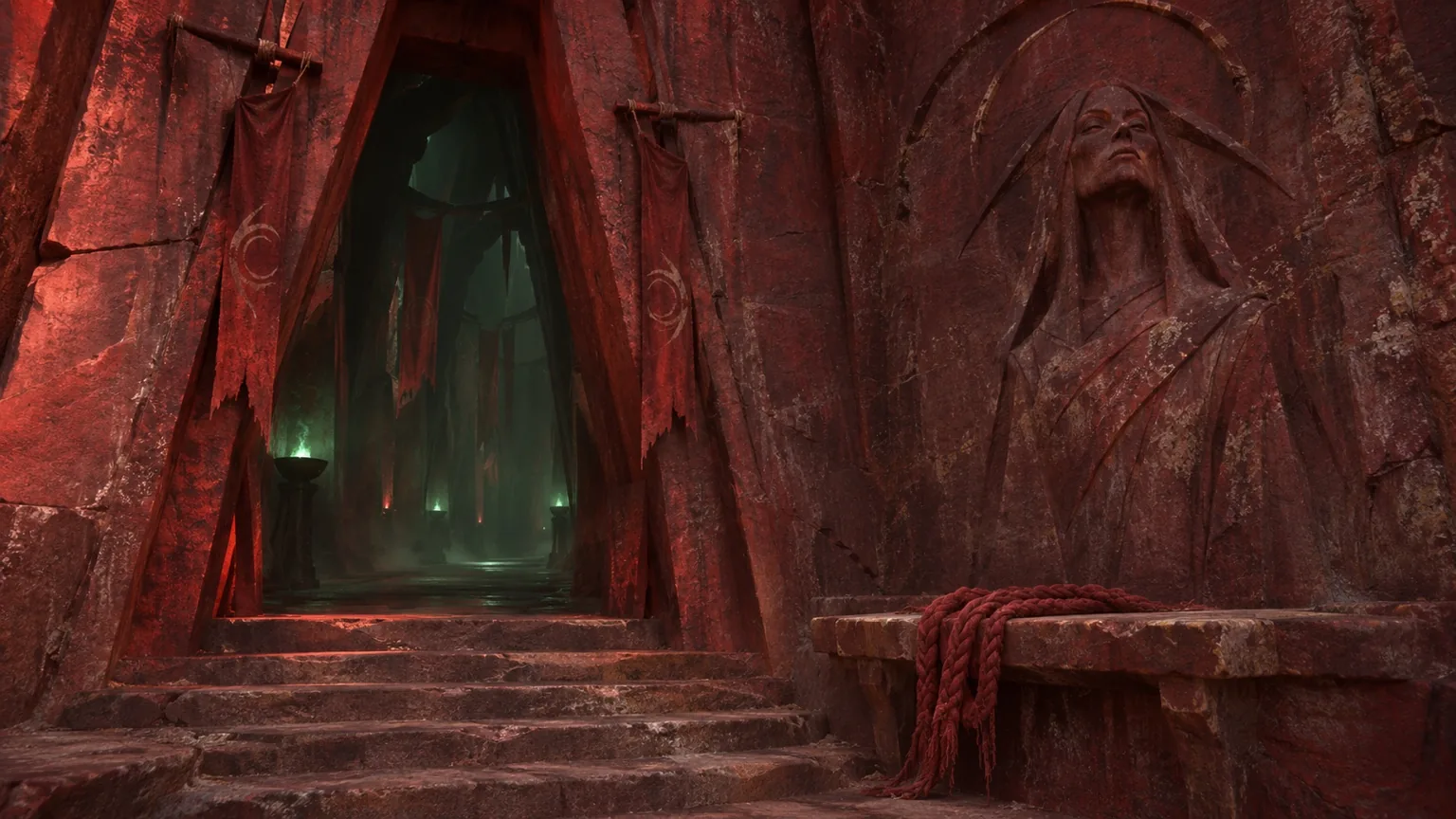
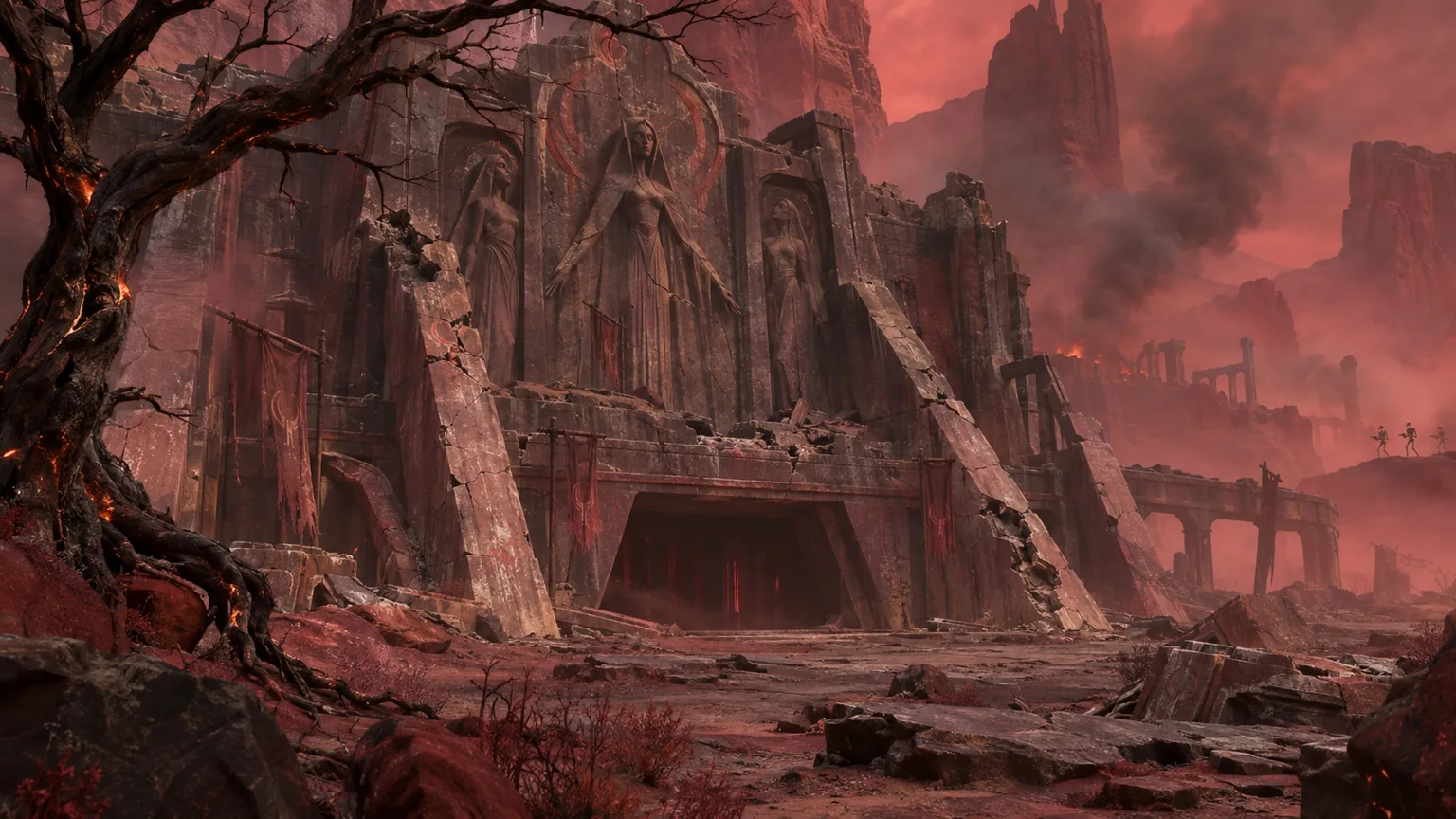
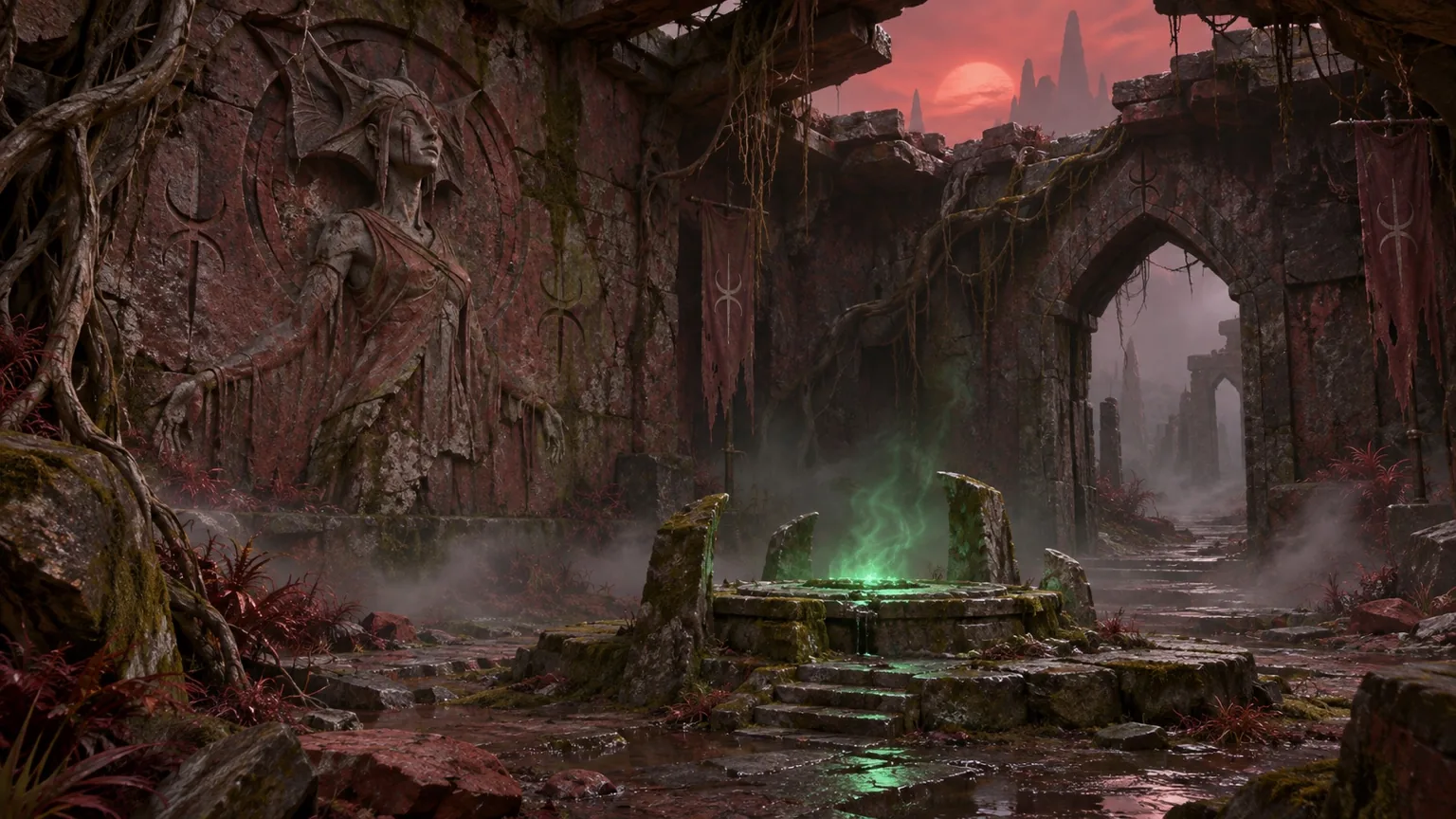
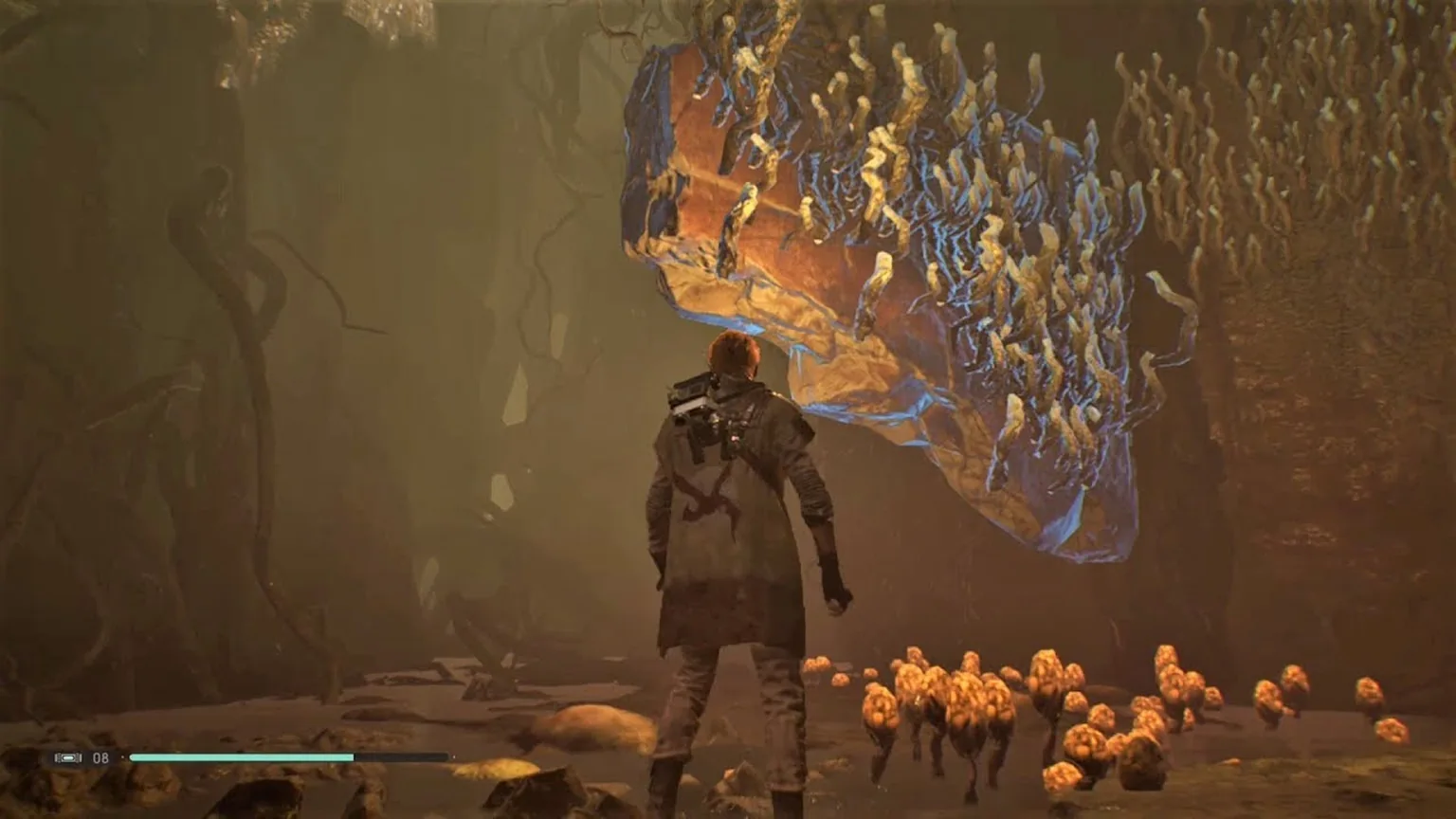
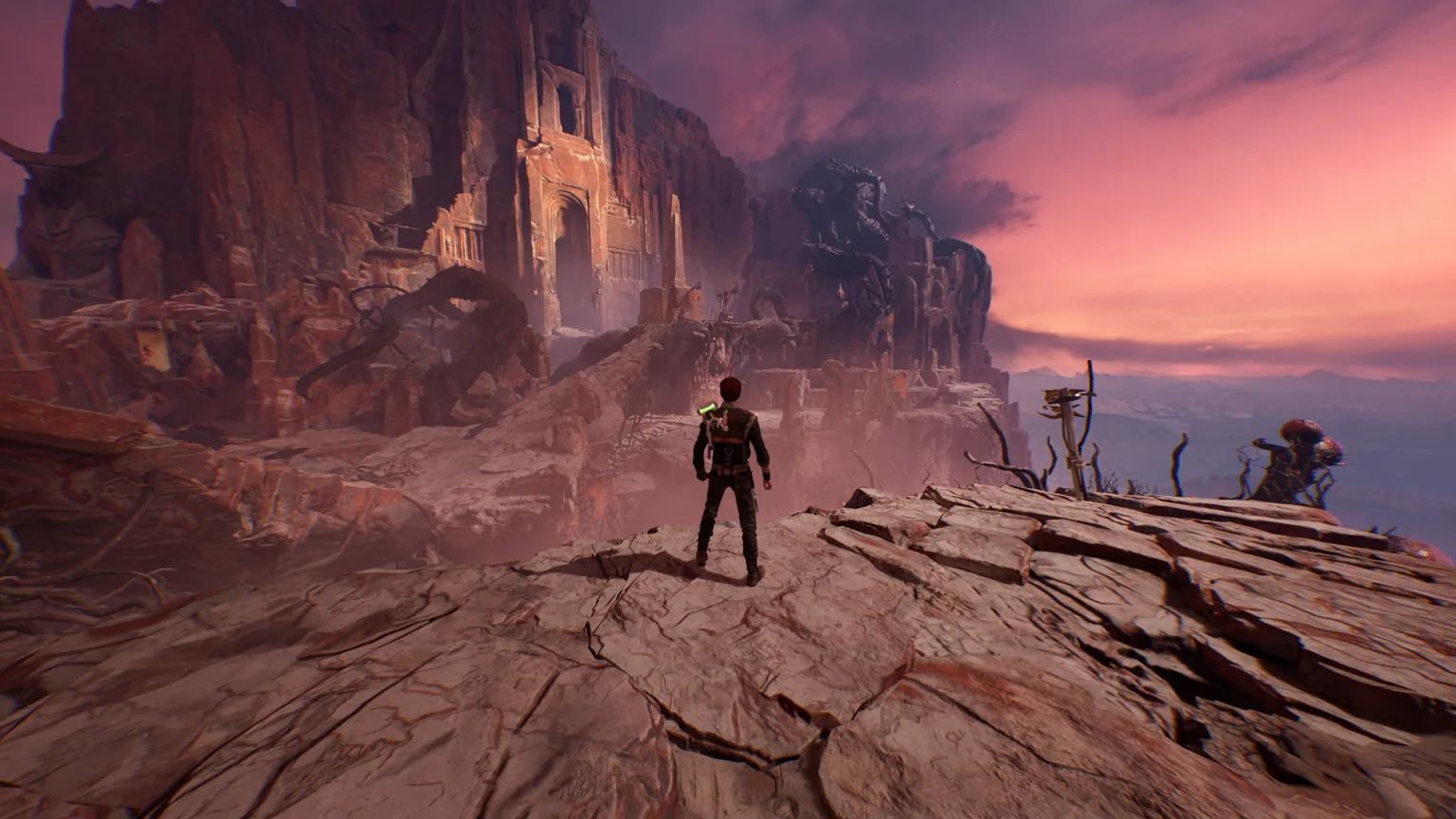
The supporting visual shows a separate Dathomir setting and does not establish that these locations are adjacent; generated reconstructions and sourced game screenshots are distinguished on their destination pages.

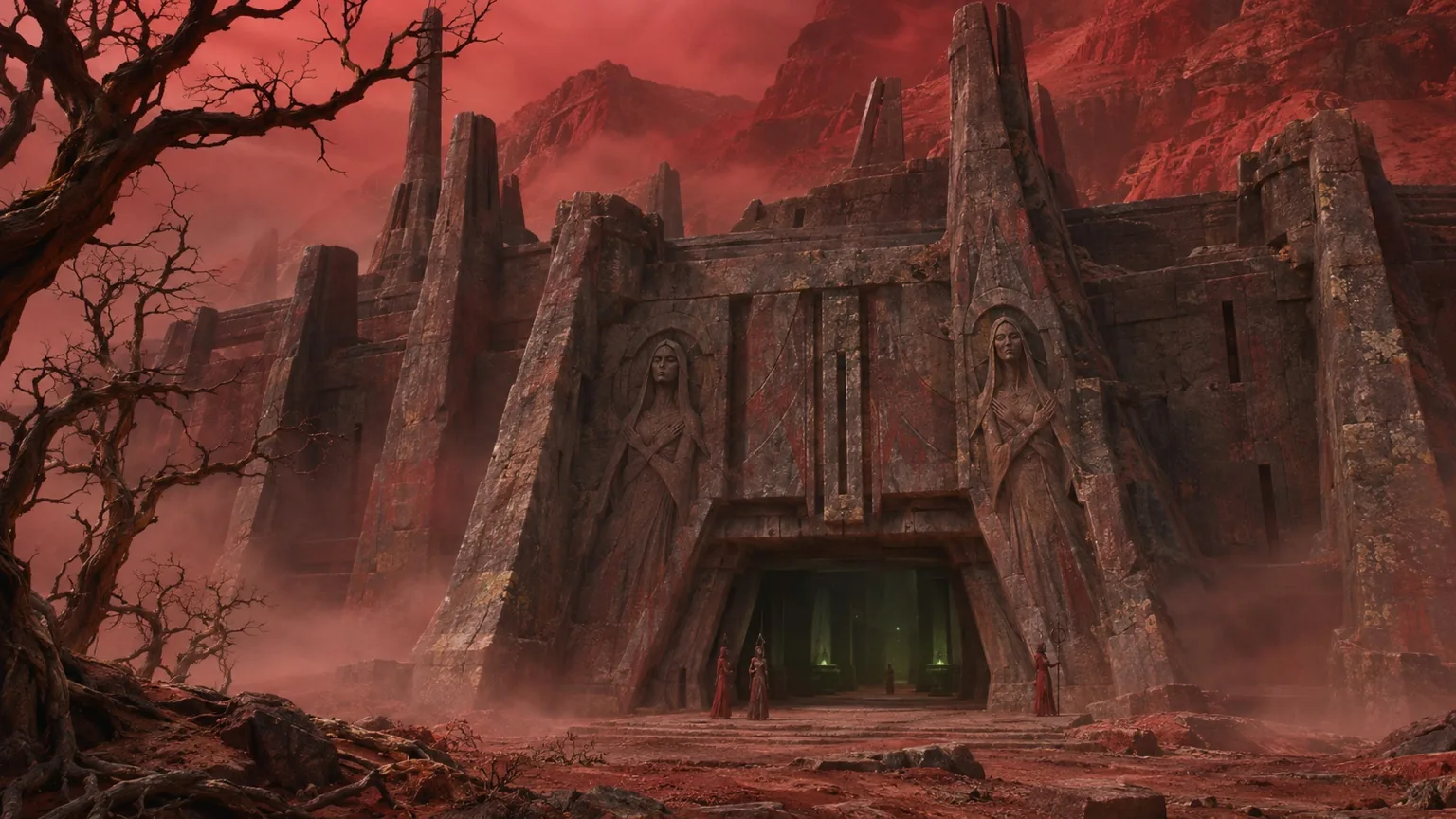 Nightsister fortress ↗