
Carved female figures
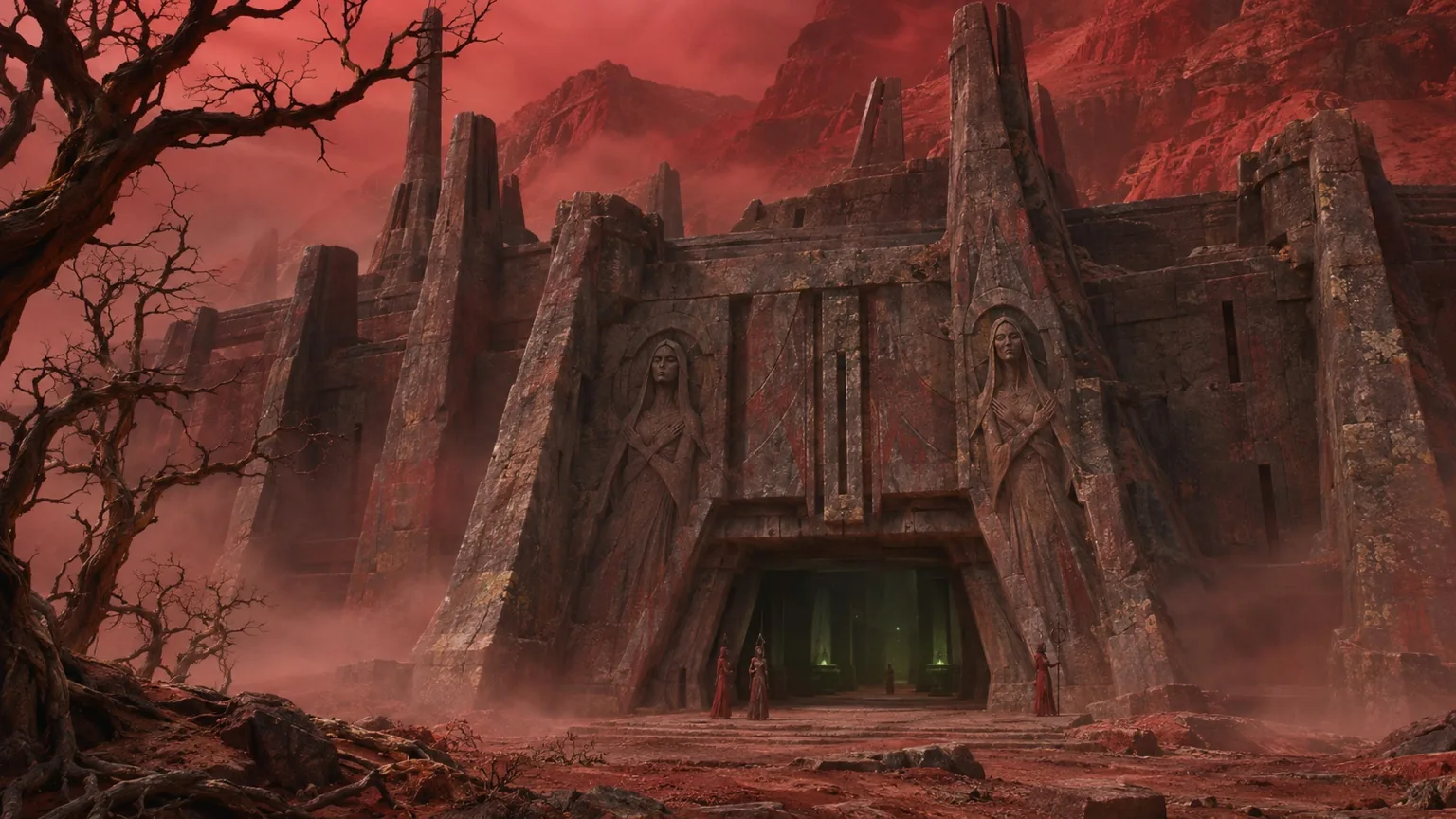
The official Dathomir history gallery specifically describes female figures carved into Nightsister stone fortresses. The two pictured sculptures evoke that established feature, but their individual identities are not attested.
An institution of women, stone and the Force
 Interpretive reconstruction · select a visible feature
The official Dathomir history gallery specifically describes female figures carved into Nightsister stone fortresses. The two pictured sculptures evoke that established feature, but their individual identities are not attested.
The Nightsisters ruled from great stone fortresses carved with female figures. This original wide image interprets the fortified exterior; its precise facade, number of statues, and approach road are not confirmed Canon architecture.
The Nightsisters’ great stone fortress was an institution rather than a single witch’s private residence. It was a place for communal life, training, political decisions, and magickal practice. The official Databank specifically identifies sculpted female figures as part of its architecture. That gives the dominant carvings in this interpretation a documented basis, although neither their facial identities nor their precise arrangement is verified. A visitor should read the facade as a reconstruction of a known category of landmark rather than a photograph or a measured elevation.
The Nightsisters were Force users who understood and worked with the Force differently from the Jedi and Sith. Their practices combined ritual, material objects, inherited knowledge, and the exercise of social authority. Mother Talzin directed the order during the Clone Wars. Her dealings with Dooku, Ventress, Maul and Savage exposed the coven to wider galactic conflicts, but the fortress retained its specific cultural importance. Explaining these relations through places and people is more useful than assigning invented function names to every arch or window.
Before the massacre, the fortress symbolized a powerful and insular community. The assault ordered by Count Dooku and carried out by General Grievous changed its meaning. In later stories, surviving physical spaces and ritual sites bear witness to a community devastated by violence. An intact sanctuary and a ruined one must not be displayed as contemporaneous. This reconstruction represents the earlier period; the separate ruin scene presents an interpretive aftermath. The site does not claim that those two artworks are exact before-and-after views of the same stone wall.
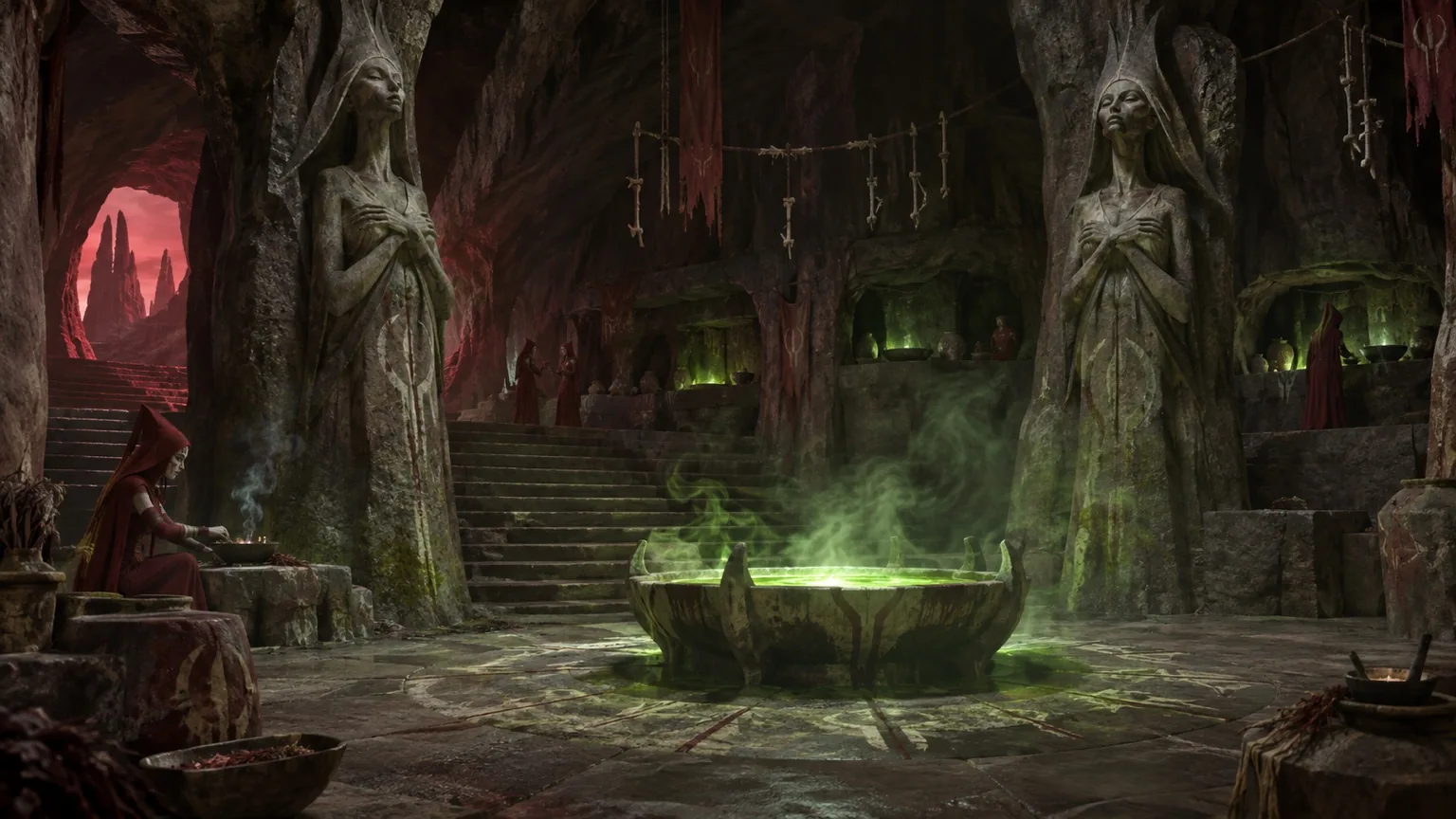 Ritual chamber ↗
The supporting visual shows a separate Dathomir setting and does not establish that these locations are adjacent; generated reconstructions and sourced game screenshots are distinguished on their destination pages.
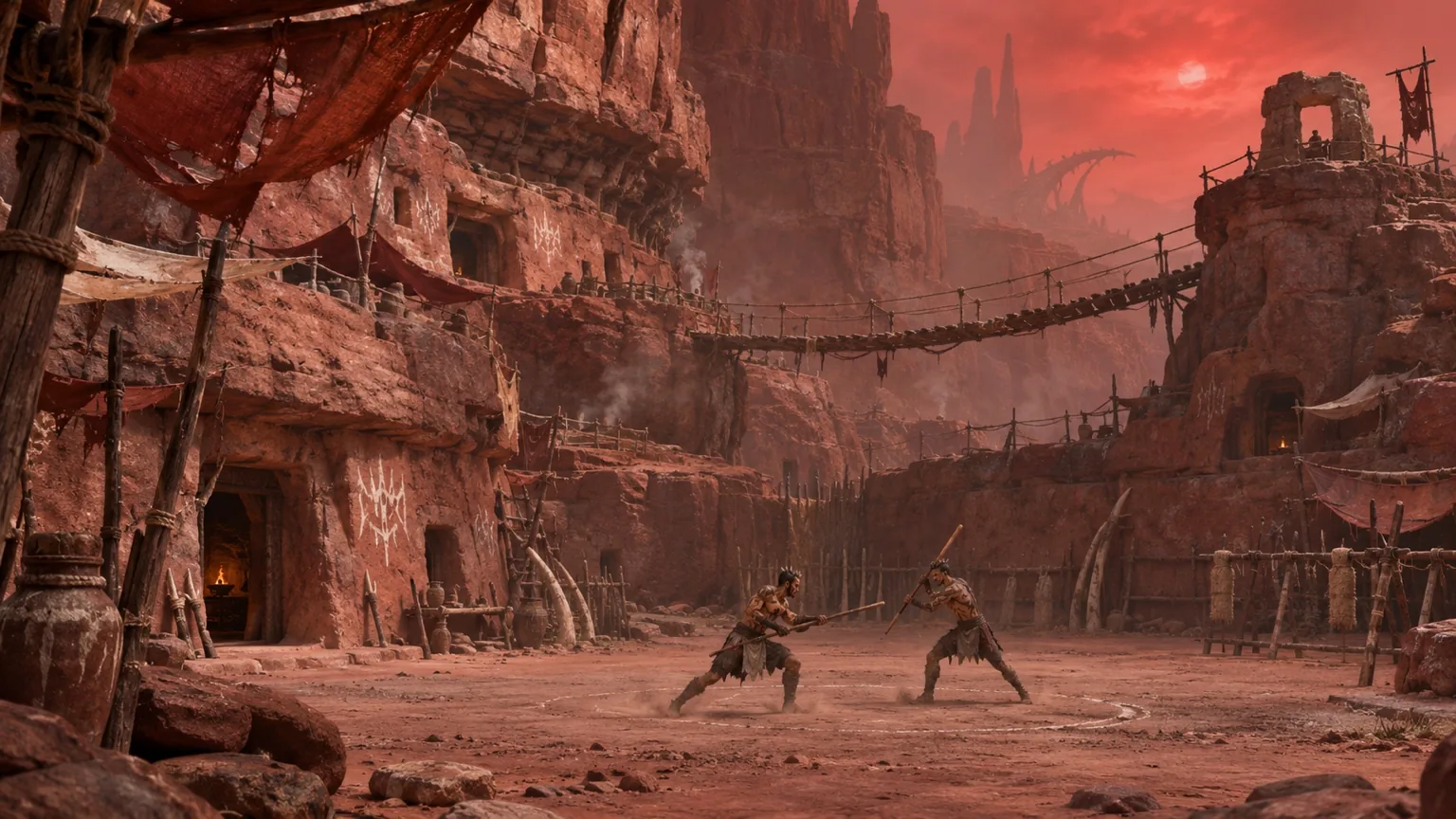 Clone Wars · distinct Nightbrother communityNightbrother villageSettlement, fighting grounds and separated authorityExplore this location ↗Clone Wars · before the massacreNightsister fortressAn institution of women, stone and the ForceExplore this location ↗Clone Wars · Nightsister ritual traditionRitual chamberMagick, initiation and ancestral knowledgeExplore this location ↗
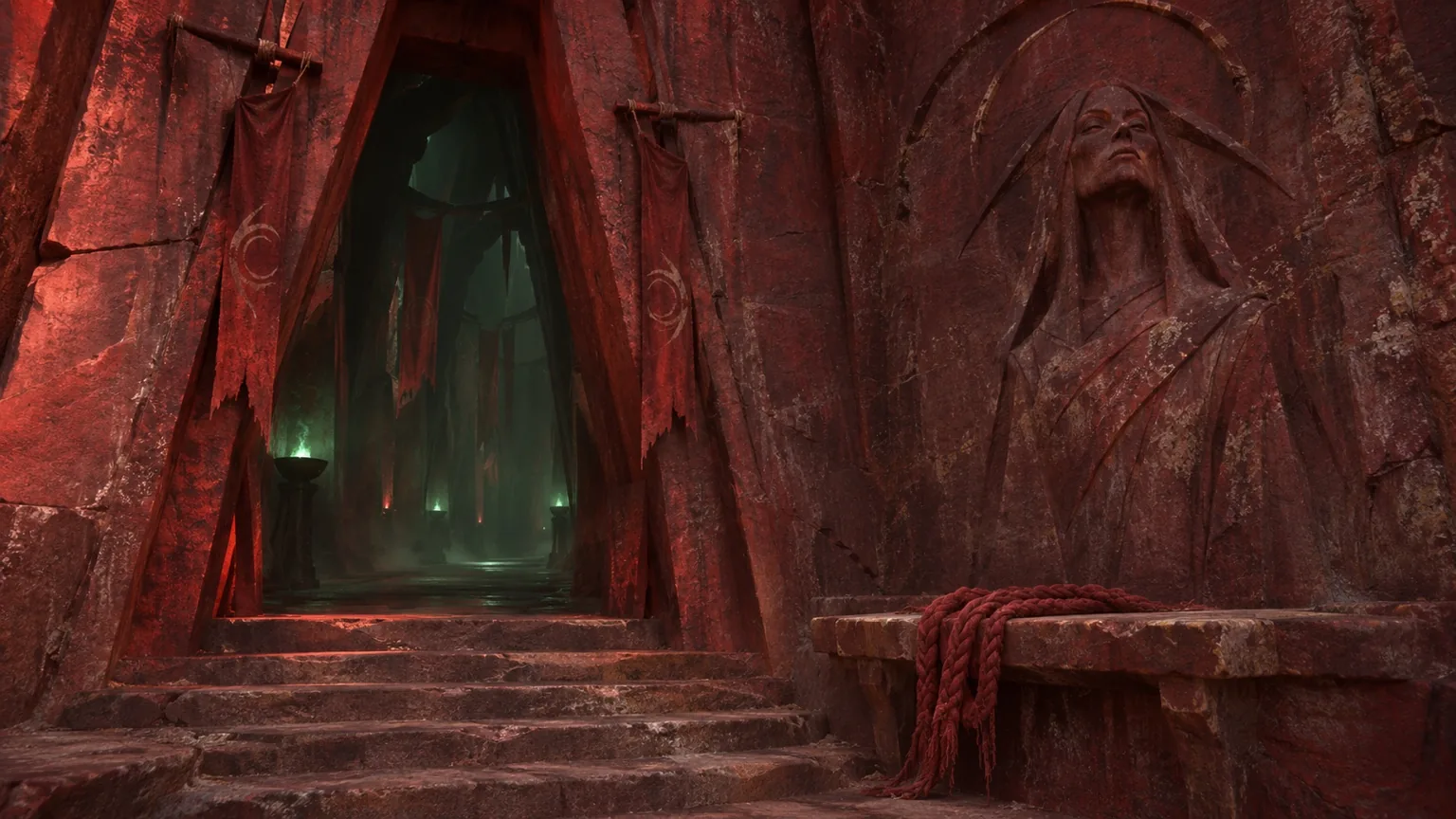 Clone Wars · spatial interpretationFortress thresholdPassing from the exterior into sacred spaceExplore this location ↗
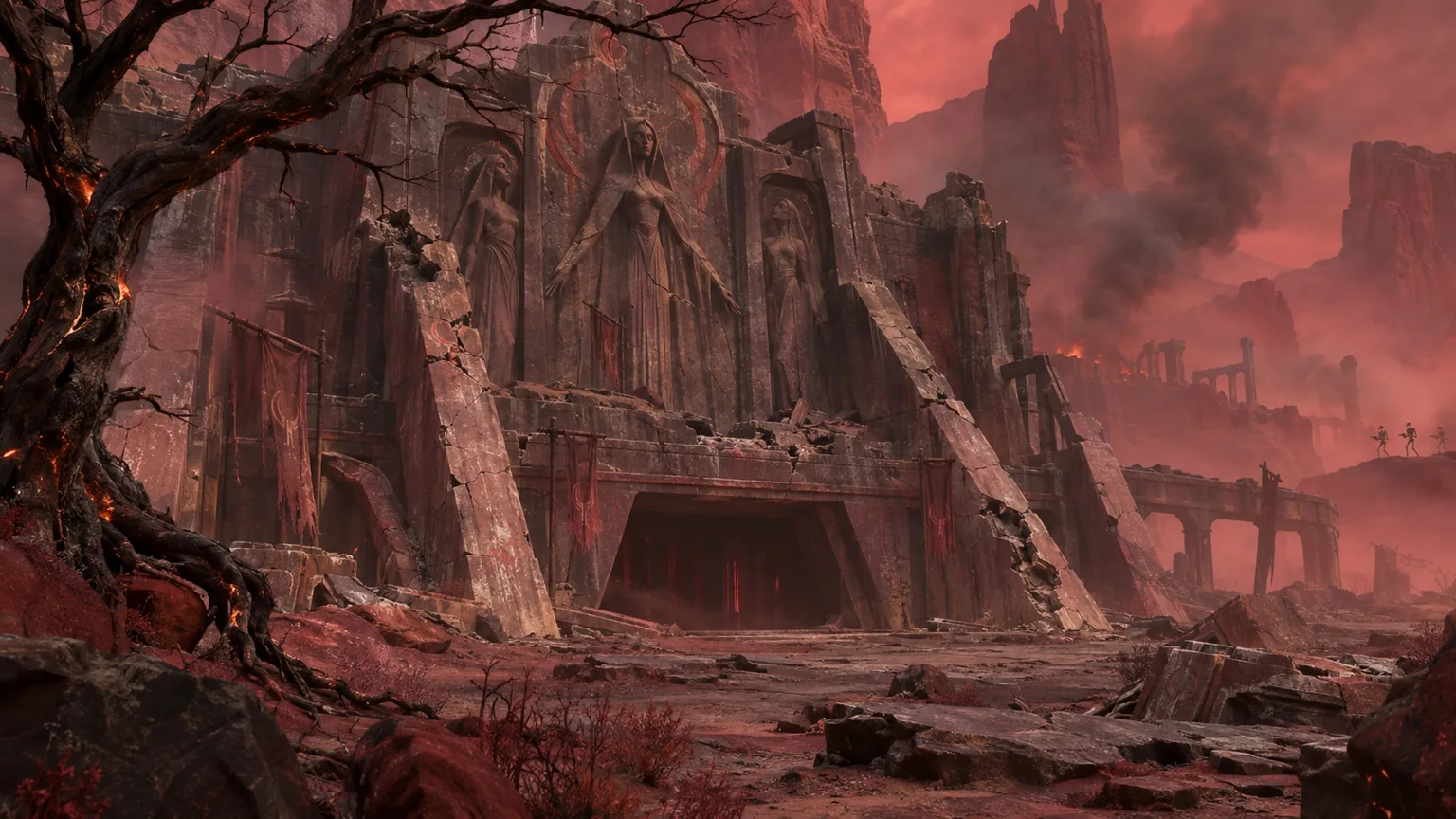 After the Nightsister massacreFortress ruinsDestruction, memory and survivalExplore this location ↗
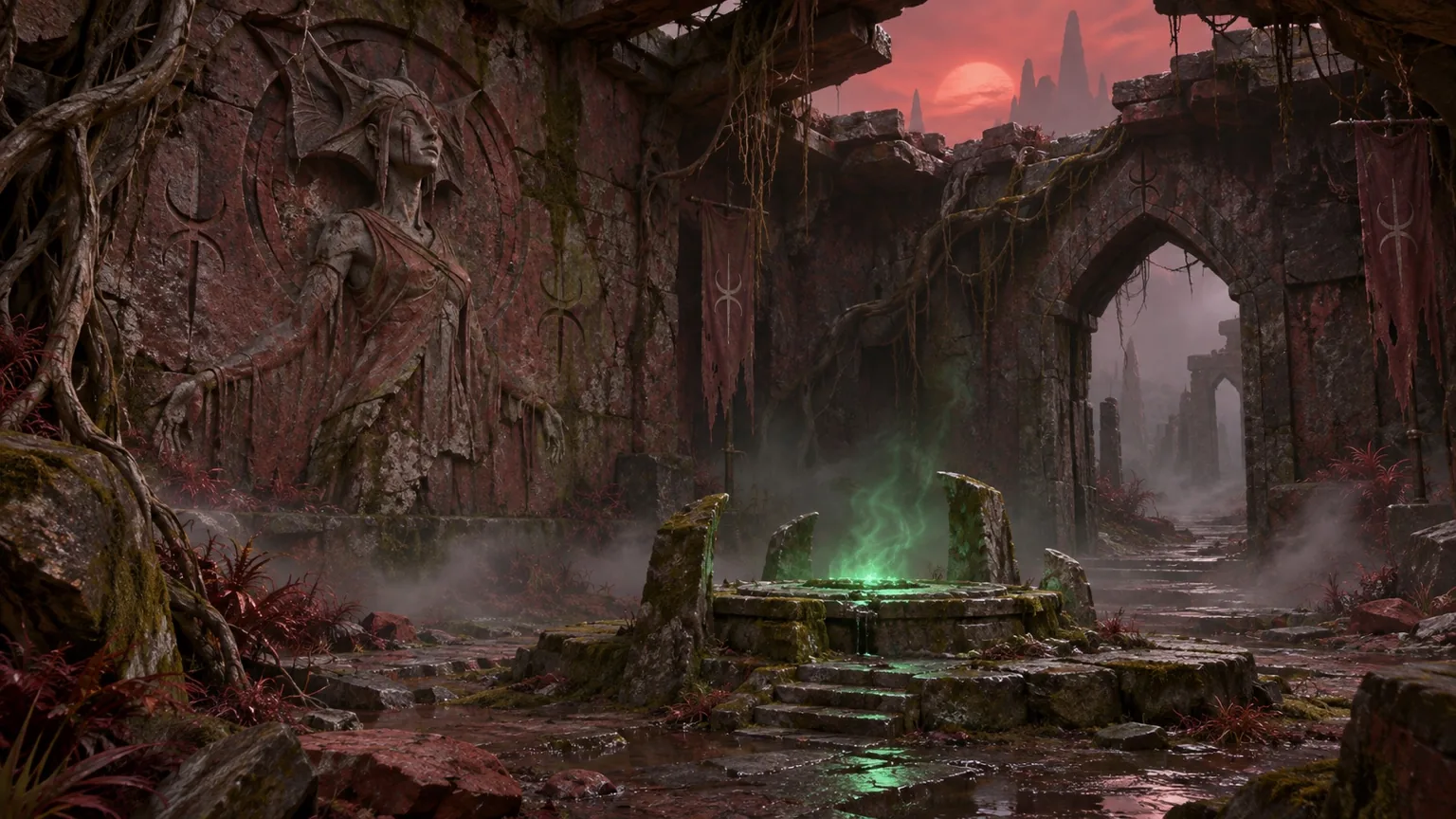 Later ritual traces · RebelsNightsister altarSpirits, sacred objects and later encountersExplore this location ↗
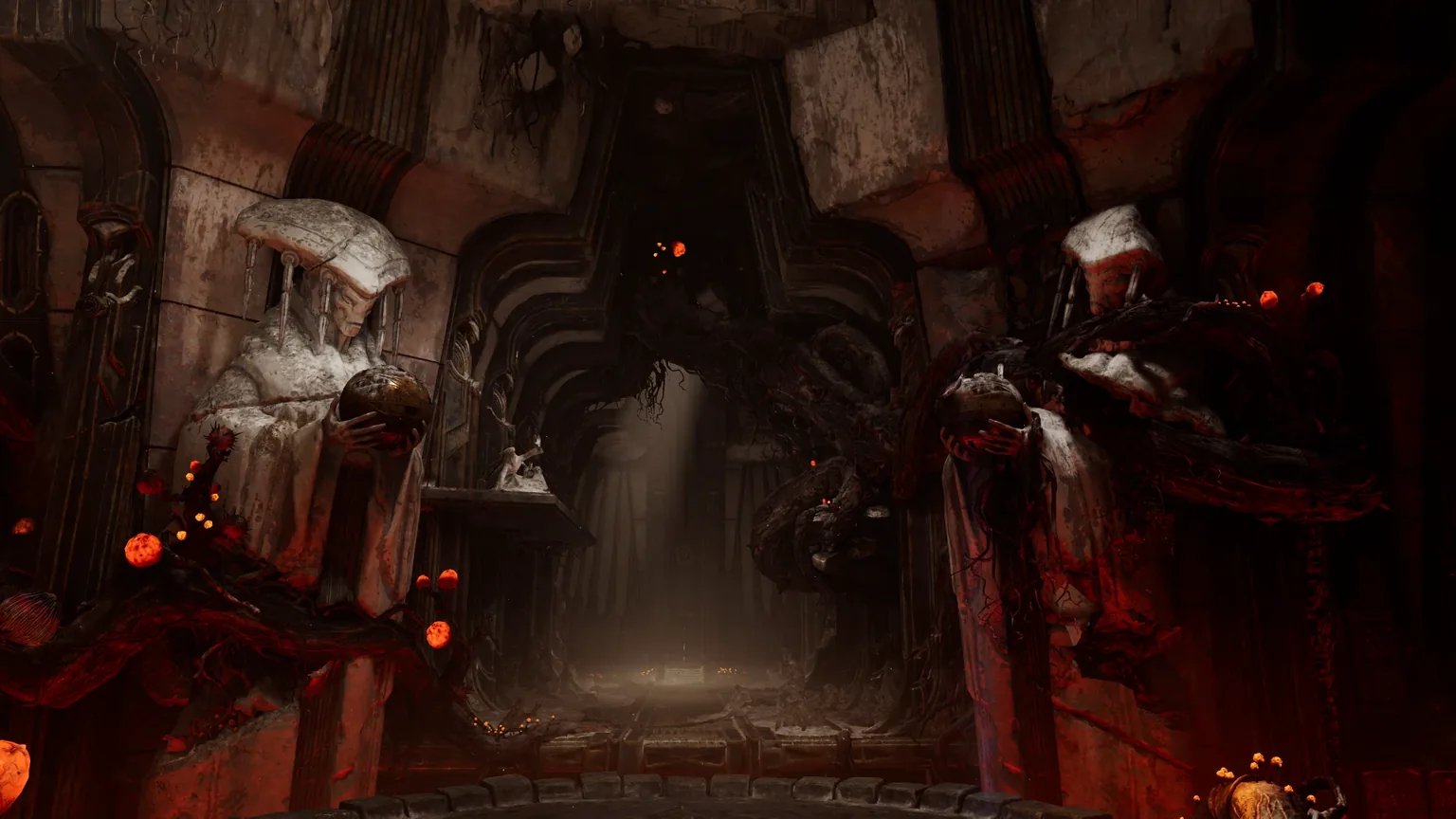 Jedi: Fallen Order · Imperial eraTomb of KujetZeffo funerary power, Malicos and MerrinExplore this location ↗
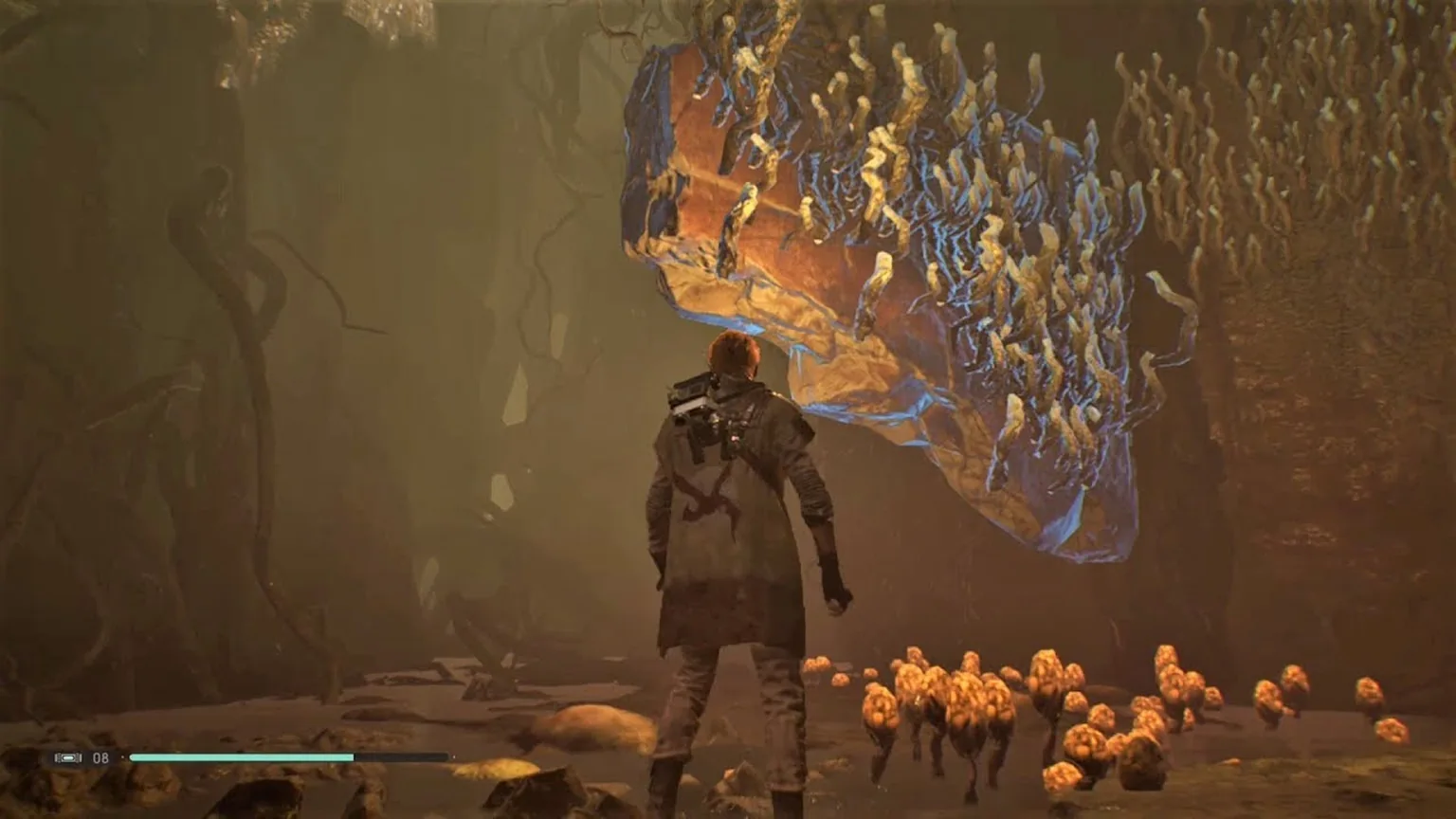 Jedi: Fallen Order · Imperial eraSwamp of SacrificeFungal wetlands, hazards and an abandoned arenaExplore this location ↗
 Jedi: Fallen Order · Imperial eraWitches HornHigh cliffs, ritual traces and Gorgara’s lairExplore this location ↗
Mentioned in this file